
Cooking together, tasting and exchanging stories: At the workshop „Traditional Regional Recipes from Sustainable Cultural Land Use I“ on October 14, 2026 at the Three Eichen Environmental Center in Buckow, the project partners explored the culinary traditions of the German-Polish project region. At the same time, they gathered ideas for a joint recipe book in the Interreg-6A project „Kulturland Spuren Lebus / Kulturowe Ślady Ziemi Lubuskiej“.
Get active together with ingredients from the forest
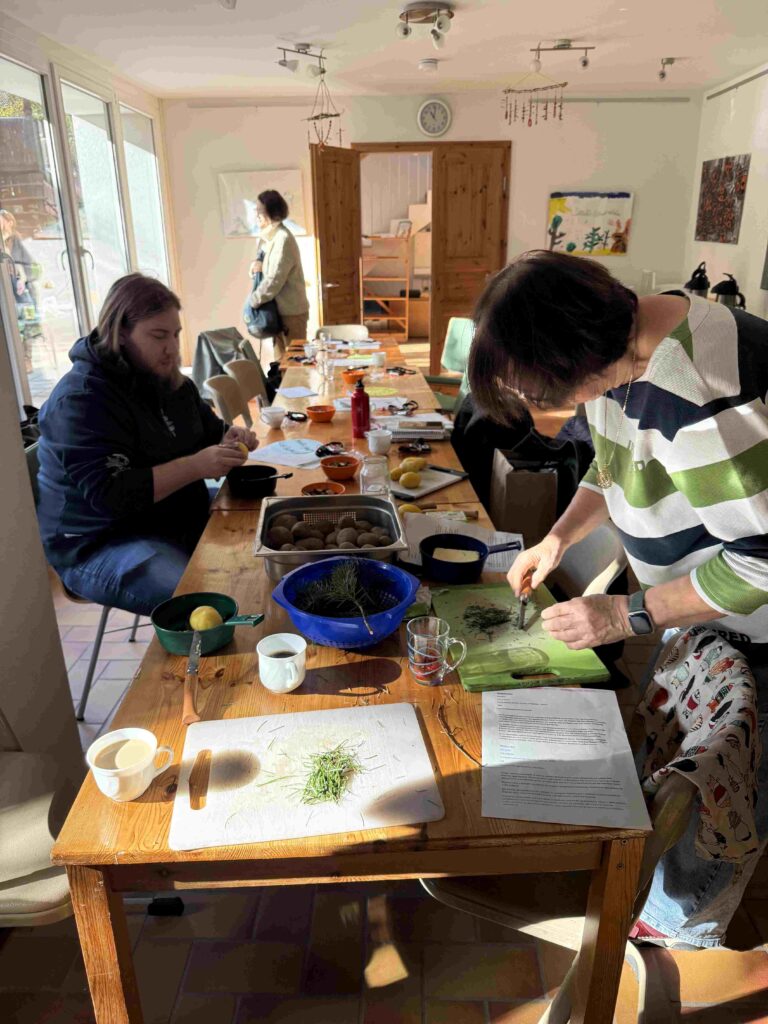
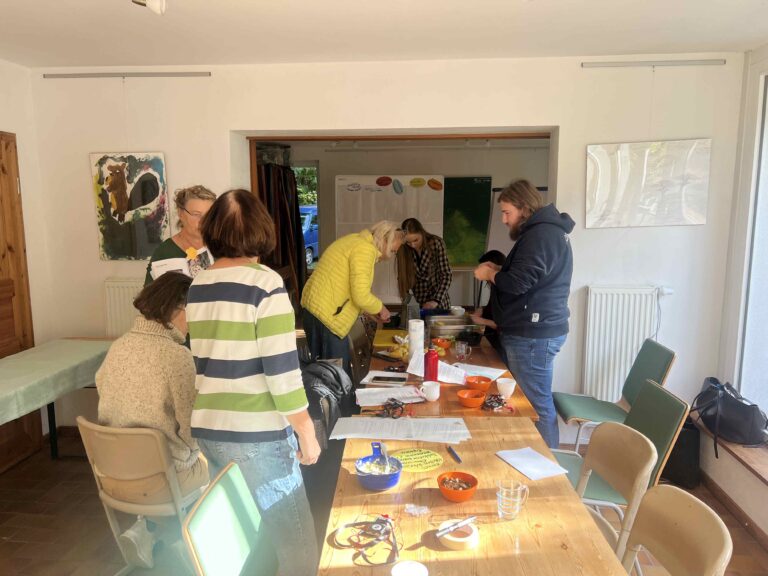
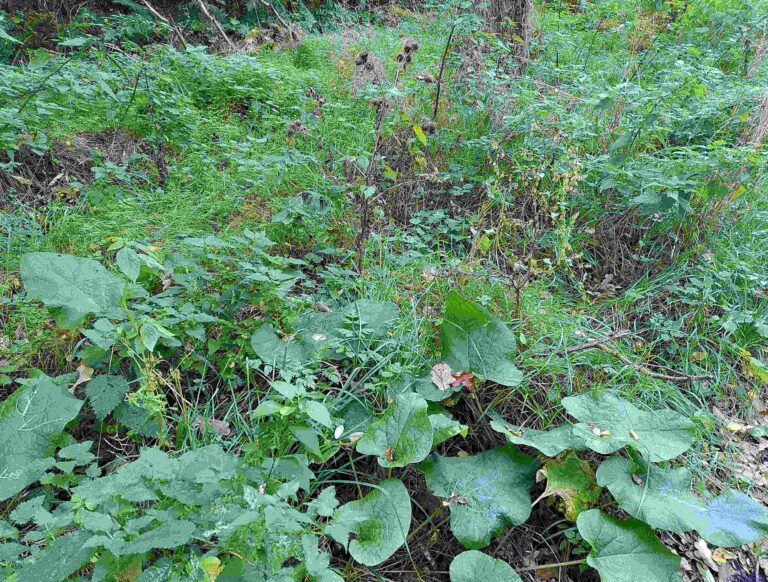
As a kick-off, Charlotte Bergmann opened the door to the Education and Didactics workshop in March: Learning with all the senses, curiosity, and joint action also characterized this day. In three small groups, the participants prepared butter using the needles of various conifers, nettle soup, and a vegetable side dish made from the roots of the Great Knotweed. The guided activities made the topics „Wild Kingdom“ and „Forest“ practically tangible.
The group formation through counting brought people together who would not necessarily work together otherwise. In addition to the culinary results, the exchange was also at the center of the event. For the project partners, the joint preparation also served as an example of how they can translate their own project topics into participatory offerings.
A buffet as a starting point for stories
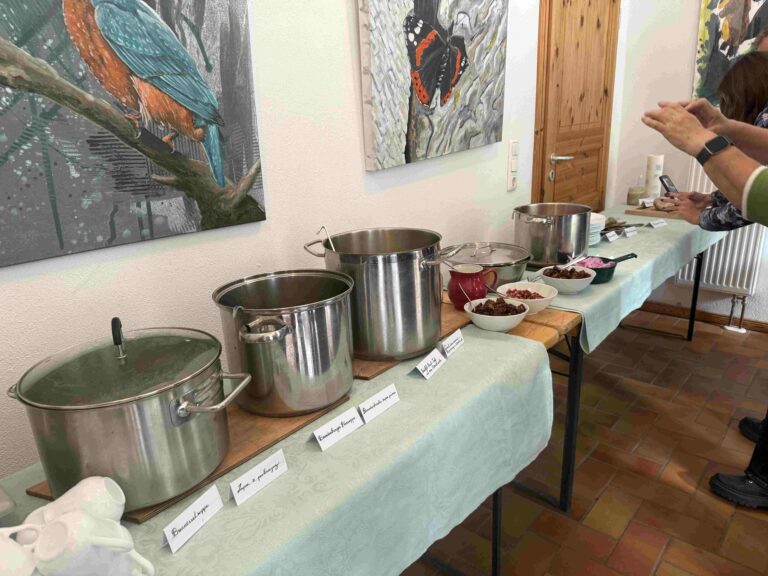
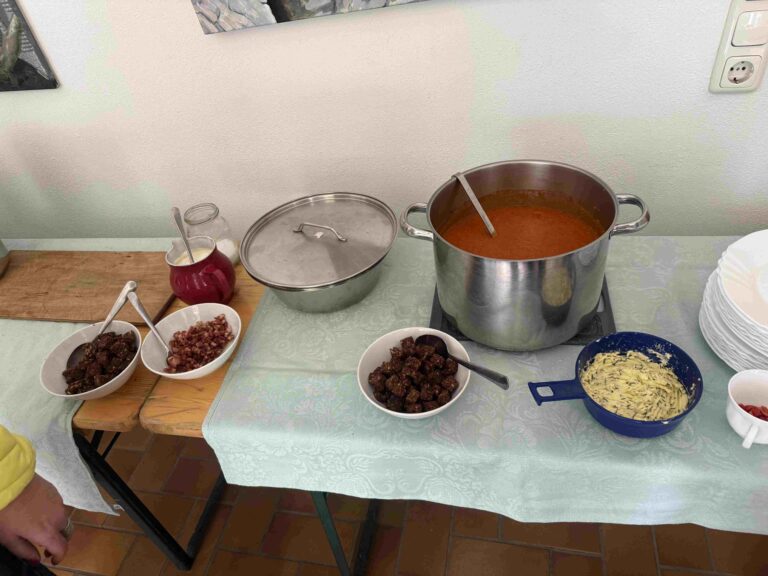
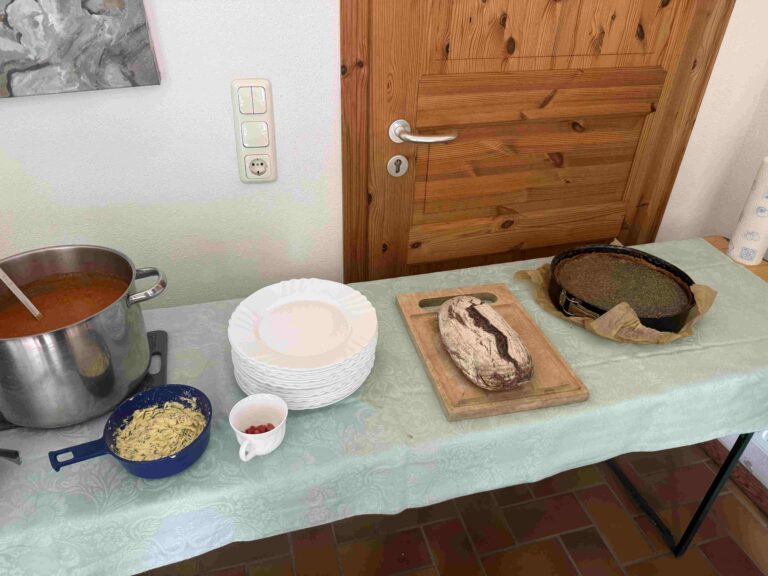
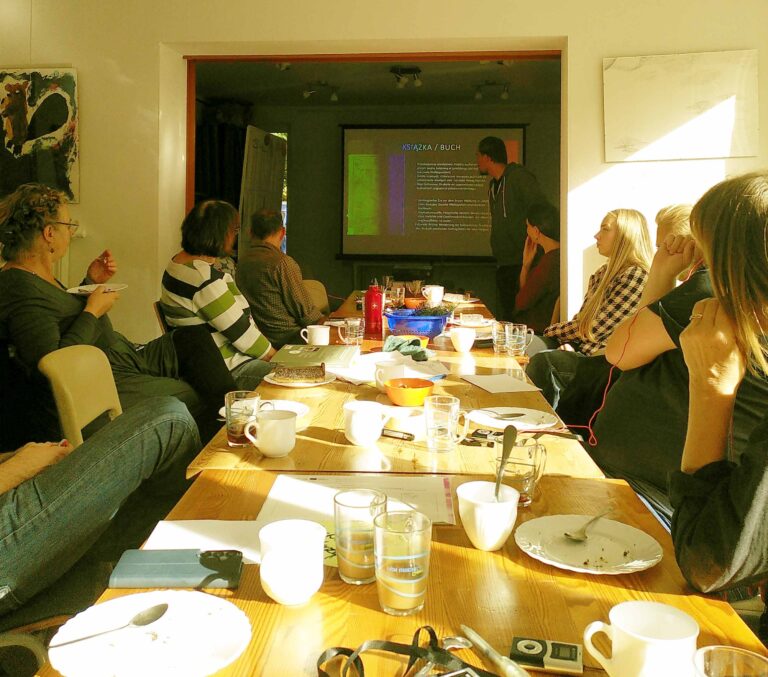
For the shared lunch, Miriam Nicolai from Waldcafé had prepared a selection of recipes submitted earlier. The tasting included beer soup, chocolate soup with baked potatoes, potato-herb stew, wild boar mince with homemade rye sourdough bread, tomato-corn soup with dandelion blossoms, and the Benthi burger made from a white fish ball. An (old-fashioned) Berlin poppy cake prepared according to historical recipe completed the offer.
During the tasting, Miriam Nicolai explained her experiences with the preparation and justified adjustments to the recipes. Subsequently, the project partners reported on why they had chosen their dishes, what memories they associated with them, and what significance they have for the region. Discussions included changes in serving sizes, taste preferences and dietary habits, as well as differences in fish consumption in Germany and Poland.
The topic also included the handling of regional traditions: How can historical recipes be communicated when family connections are lacking or ingredients are no longer in demand? The discussion turned these questions into an important starting point for further work on the recipe book.
Insights from Santok: Wine, Food and Regional Cooperation
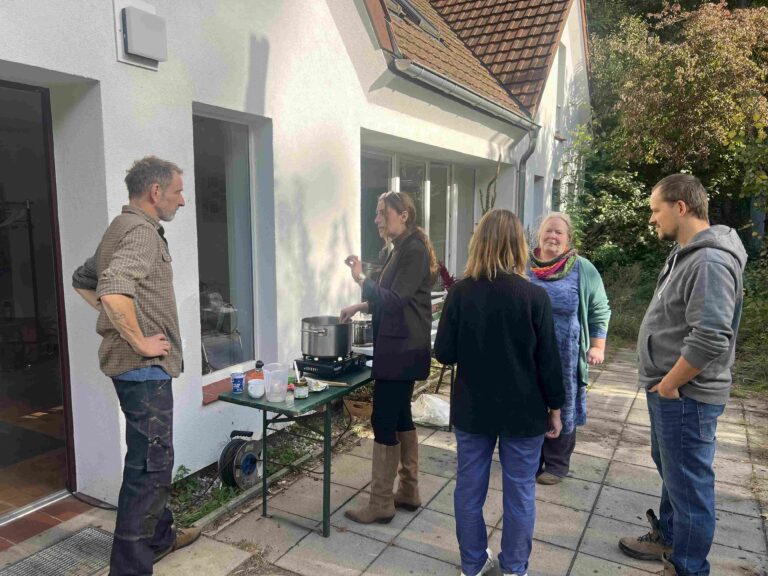
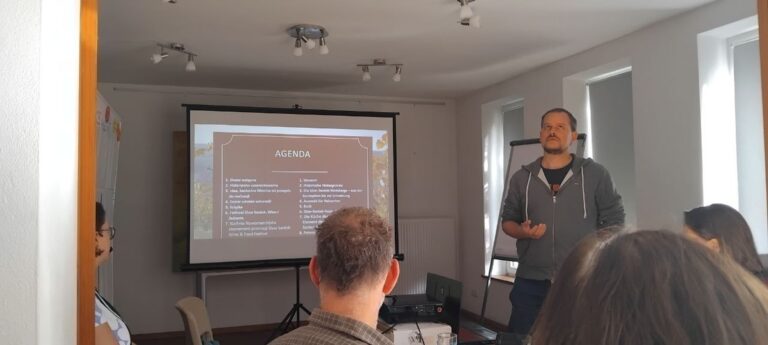
Piotr Połomski and Hanna Połomska from the Santoker Winzer Association presented their project and their experiences with historical Landberg recipes and regional wine. Participants were able to sample red wines brought with them for the poppy cake. Particular interest was focused on the combination of tradition and quality as well as the cooperation between the wine association and the rural women at the annual wine festivals in Santok.
A recipe book with more than cooking instructions
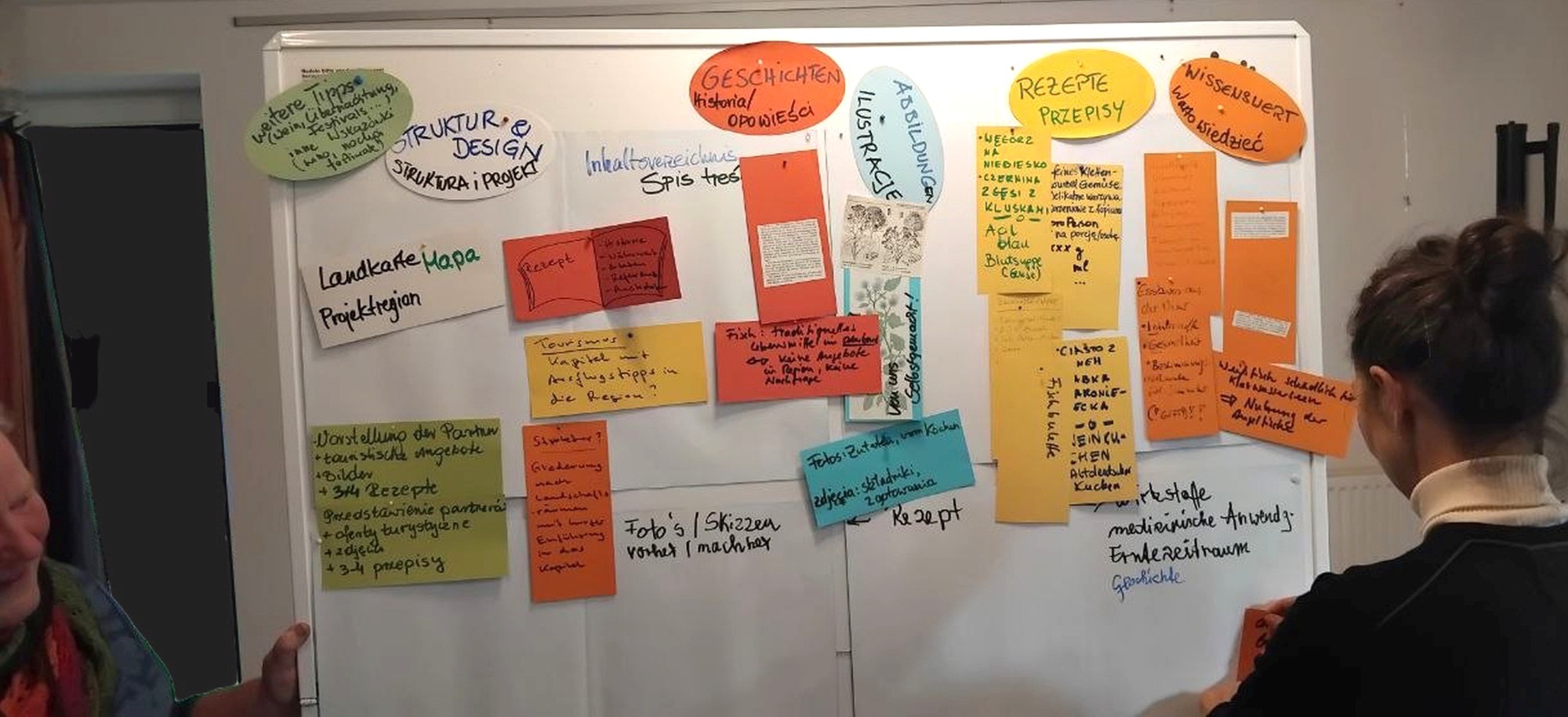
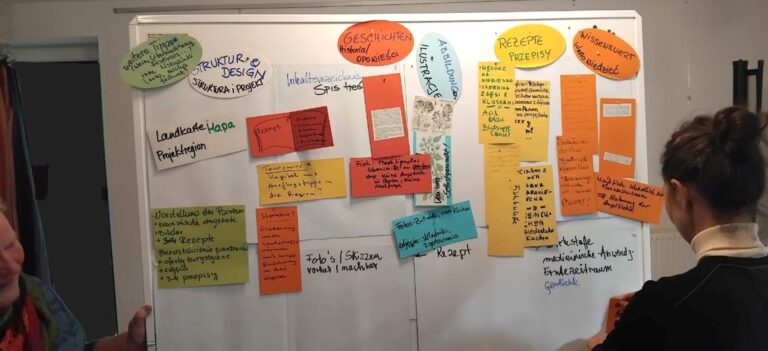
To conclude, the project partners gathered ideas for the joint recipe book. In addition to recipes with clear quantities and relatable sources, historical background, personal anecdotes, and illustrations are intended to be included. As further possible content, information about ingredients, regionality, seasonality and shelf life, as well as references to regional suppliers, excursion destinations, and events were compiled.
Various approaches are being discussed for the structure and design: a division into regions or project partners, or an arrangement of the recipes along a historical timeline. A summary map could spatially organize the culinary contributions. The idea of combining each recipe and the associated information on a double page was also retained.
A digital and a printed edition are being sought. Among other things, the exact online format, the funding for design and printing, the edition size, and the decision between a bilingual edition and two monolingual books remain to be decided. The project partners are now invited to further consider the ideas gathered for their respective region and their focal theme.
The workshop combined practical experiences in the kitchen with an interdisciplinary exchange on food culture and landscape. The dishes and stories shared formed the basis for presenting regional cuisine in a versatile way in the planned recipe book.


Leave a Reply