
Cross-border history trail in the footsteps of the war events in spring 1945
The beginnings of National Socialist tyranny were gradual, as was the case everywhere in Germany, and were accompanied by hope and euphoria among the wider masses. Opponents of the regime were persecuted and imprisoned early on, e.g. in the Sonnenburg (Słońsk) penitentiary and concentration camp, one of the first of its kind.
The advance of the Red Army and its allies from the east towards Berlin brought the war to the Order-Warthe region in January 1945 at the latest. On 31 January 1945, the first units of the Soviet army reached the Oder and established themselves there. Heavy fighting developed along what is now the border river, which led to countless casualties and serious destruction of towns, villages and infrastructure until the end of April 1945.
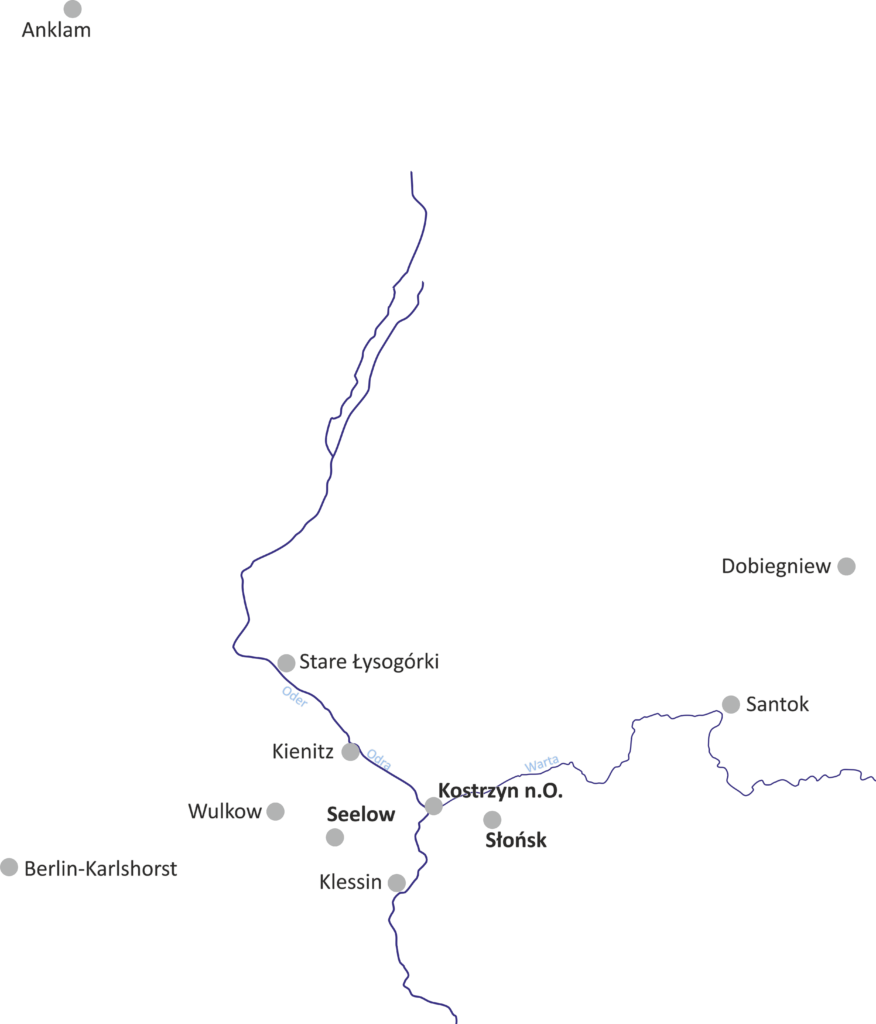
The locations of the 1945 War Events History Trail vividly convey the dramatic events at the end of the Second World War. These include former prisons and camps such as the Sonnenburg prison in Słońsk, the Oflag IIC Woldenberg in Dobiegniew, the Wehrmacht prison in Anklam and the subcamp of the Theresienstadt ghetto in Wulkow. Places such as Klessin, Kienitz, Kostrzyn nad Odrą, Santok or Seelow also represent the most severe destruction and heavy losses in connection with the last major Soviet offensive towards Berlin. Nazi Germany finally surrendered on 8 May 1945 in Berlin-Karlshorst.
The Oder-Warthe 1945 cross-border history trail commemorates the events of that time and offers fascinating insights from different perspectives. It provides information about the events of 1945 with audio files, signs and publications in at least 3 languages. The locations involved in the history trail are in chronological order:
- 25 January 1945: Museum Woldenberg in Dobiegniew, PL
- 27 January 1945: Ruins of the Netze position in Santok, PL
- 31 January 1945: Martyriums Museum Słońsk, PL
- 31 January 1945: Bridgehead memorial and tank memorial in Kienitz, DE
- February 1945: Wulkow memorial site, a subcamp of the Theresienstadt ghetto in Wulkow, DE
- 29 March 1945: Battlefield Klessin Castle 1945, Podelzig, DE
- 30 March 1945: Küstrin Fortress Museum, Kostrzyn nad Odra, PL
- 16 April 1945: Military cemetery and museum of the 1st Army of the Polish Armed Forces in Stare Łysogórki, PL
- 16 April 1945: Memorial and Museum Seelower Höhen and Museum Geschichtsstation Seelow (Mark) in Seelow, DE
- 27 April 1945: Former Wehrmacht prison Anklam, DE
- 8 May 1945: Museum Berlin-Karlshorst, DE
MUSEUM WOLDENBERG in DOBIEGNIEW
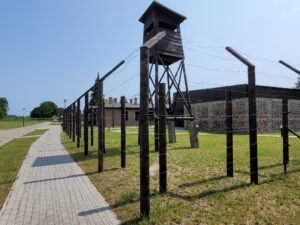
Oflag IIC Woldenberg was a German prisoner of war camp for Polish officers during the Second World War. Despite its imprisonment, it became a place of learning, culture and resistance, demonstrating the strength of spirit, solidarity and patriotism of the prisoners.
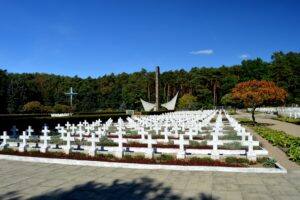
MUSEUM AND MILITARY CEMETERY OF THE 1ST POLISH ARMY
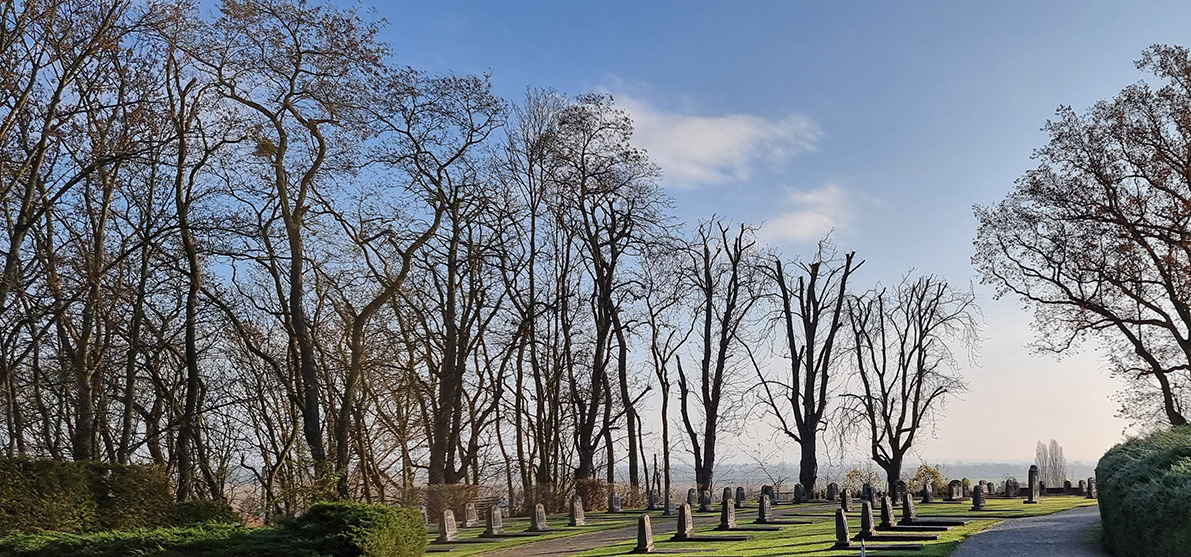
The military cemetery of the 1st Polish Army in Stare Łysogórki is a place of silence and contemplation on the Oder, where history and landscape merge. The necropolis commemorates the dramatic endeavours of the soldiers who fought shortly before the end of the Second World War.
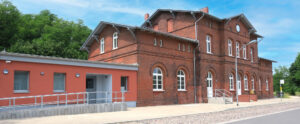
MUSEUM HISTORY STATION SEELOW (MARK)
The Seelow (Mark) History Station uses authentic exhibits and biographical details to document the transformation of the region over the course of a generation around 1945 and thus offers a vivid insight into its eventful history.
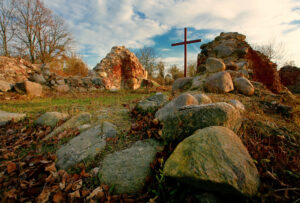
MUSEUM OF THE KÜSTRIN FORTRESS
A unique area monument on the Oder: On 31 January, the Red Army reached Küstrin, an important location with a railway and road bridge over the Oder. From 24 March, the old town was bombed so heavily that no building survived...
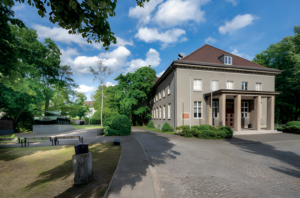
MUSEUM BERLIN-KARLSHORST
Site of the German surrender in May 1945 The Berlin-Karlshorst Museum is located at a site of world-historical significance: this is where the Second World War in Europe ended on 8 May 1945. In the museum building [...]
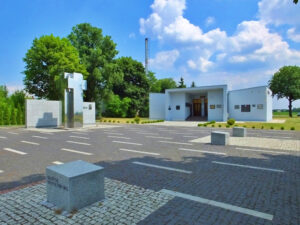
MARTYRDOM MUSEUM IN SŁOŃSK
Former Sonnenburg prison and concentration camp: Słońsk, the former Sonnenburg, is a place with a tragic past. Between 1933 and 1934, it was the site of the first German concentration camp and later a prison. To this day, the full list of people imprisoned and murdered in Sonnenburg is unknown.
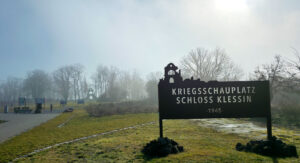
THE THEATRE OF WAR CASTLE KLESSIN 1945
The village of Klessin and the manor house were completely destroyed in the spring of 1945. A natural memorial and remembrance site has been created on the grounds of the manor. In addition to the historical reappraisal, an interesting, scenic area has also been recultivated.
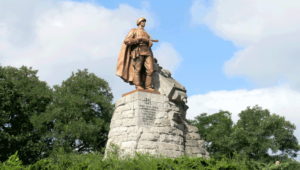
SEELOW HEIGHTS MEMORIAL AND MUSEUM
The Battle of the Seelow Heights was one of the last and largest battles of the Second World War on German soil. It took place from 16 to 19 April 1945 and marked the beginning of the Soviet attack on the German capital.
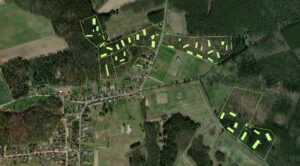
PLACE OF REMEMBRANCE WULKOW
The Wulkow memorial site has been a digital memorial since 2024. It commemorates the subcamp of the Theresienstadt ghetto of the same name, which existed from 1944 to 1945. Almost 400 Jewish prisoners performed forced labour there for the construction of a secret alternative site for the Reich Main Security Office (RSHA).
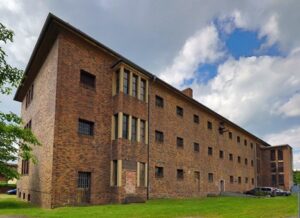
FORMER WEHRMACHT PRISON ANKLAM
From 1940 to 1945, the prison served as a detention centre for members of the Wehrmacht. Sentences included desertion, disobedience, homosexuality, subversion of military power, theft, unauthorised removal, self-mutilation and murder.
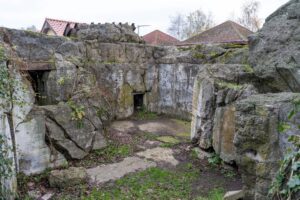
FORMER NETWORK POSITION IN SANTOK
The ruins of the former network position in Santok are silent witnesses to the dramatic upheavals in Europe in 1945. They are an impressive reminder of war, flight and new beginnings - and of how fragile peace and freedom in Europe can be.
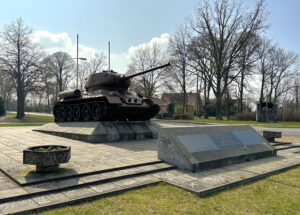
MONUMENT ENSEMBLE KIENITZ
The small village of Kienitz symbolises the events of the final phase of the Second World War. On 31 January 1945, in the early hours of the morning, lightly armed advance units of the Red Army reached the Oder near Kienitz and formed a bridgehead to the west bank of the Oder at the ferry station and the harbour mill.
To mark the 80th anniversary of the end of the Second World War, commemorative events were held from January to May 2025 at the historical dates along the history trail. The history trail is embedded in the cross-border tourism brand "Memory connects"which was founded in Seelow in 2023 and connects places of remembrance in the Oder-Warthe region on various historical topics. This German-polish network "Remembrance connects" works closely with the European Cultural Route of Liberation 1944-45 (Liberation Route Europe).

The Liberation Route Europe is a certified cultural route of the Council of Europe that connects people, places and events to commemorate the liberation of Europe from occupation during the Second World War. With hundreds of stations and stories in more than ten European countries, the route connects the most important regions along the Allied advance in the years 1943-1945.
Thanks to our project, the 7 stations of our cross-border history trail War Events 1945 are now also stations on the Liberation Route Europe: History of the Oder-Warta Region in 1945.
To mark the 81st anniversary of the end of the Second World War, 5 additional stations were integrated into the history trail and equipped with information material and commemorative vectors.
The development and establishment of the „History Trail War Events 1945“ was funded as part of the projects „Remembering Together - 80 Years of the End of the Second World War 2025“ and „Remembering Together, Extension of the German-Polish History Trail War Events 1945“ as part of the Small Projects Fund (KPF) 2021-2027 of the Euroregion PRO EUROPA VIADRINA within the framework of the INTERREG VI A Brandenburg-Poland 2021-2027 cooperation programme.



Leave a Reply