
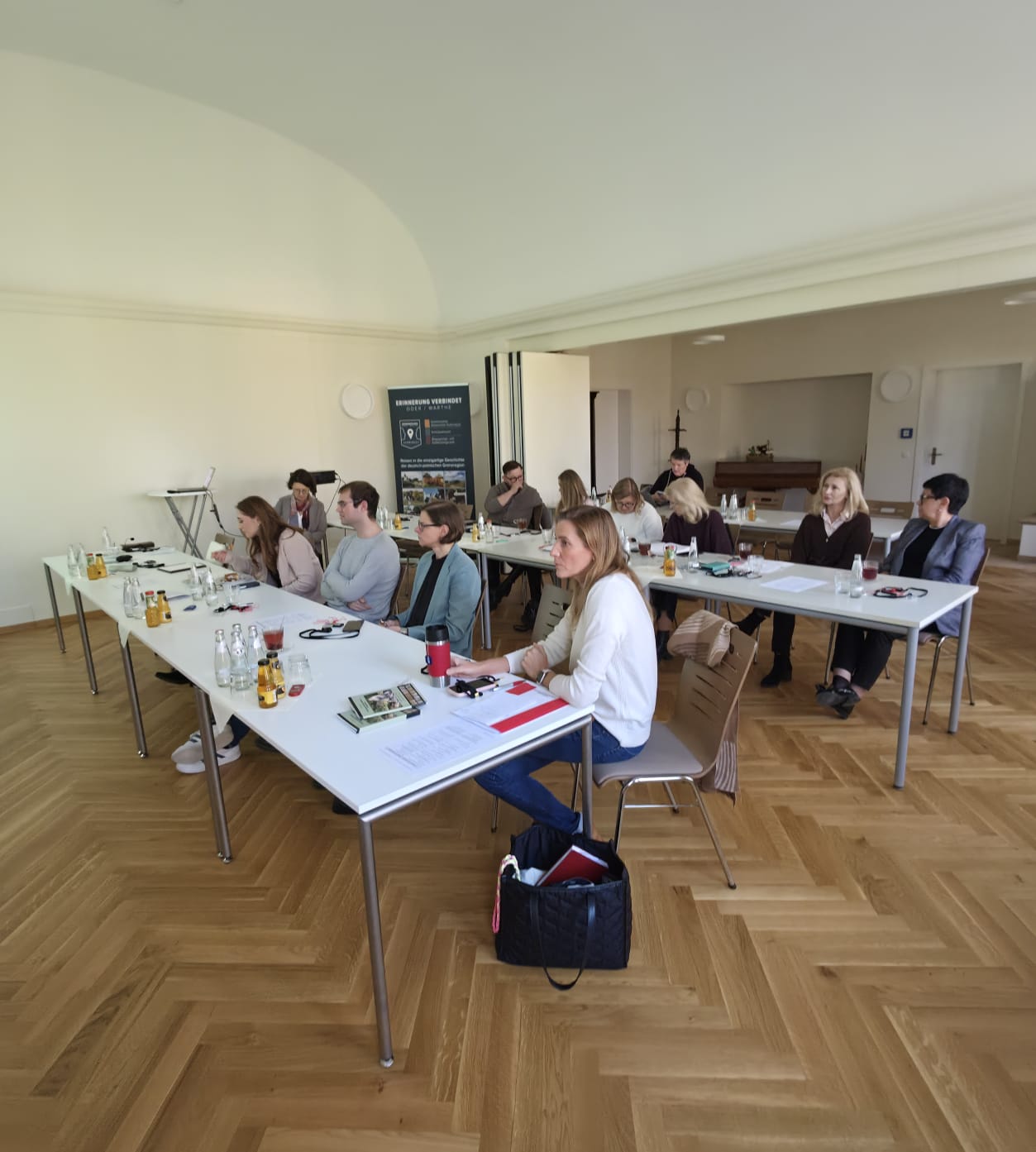
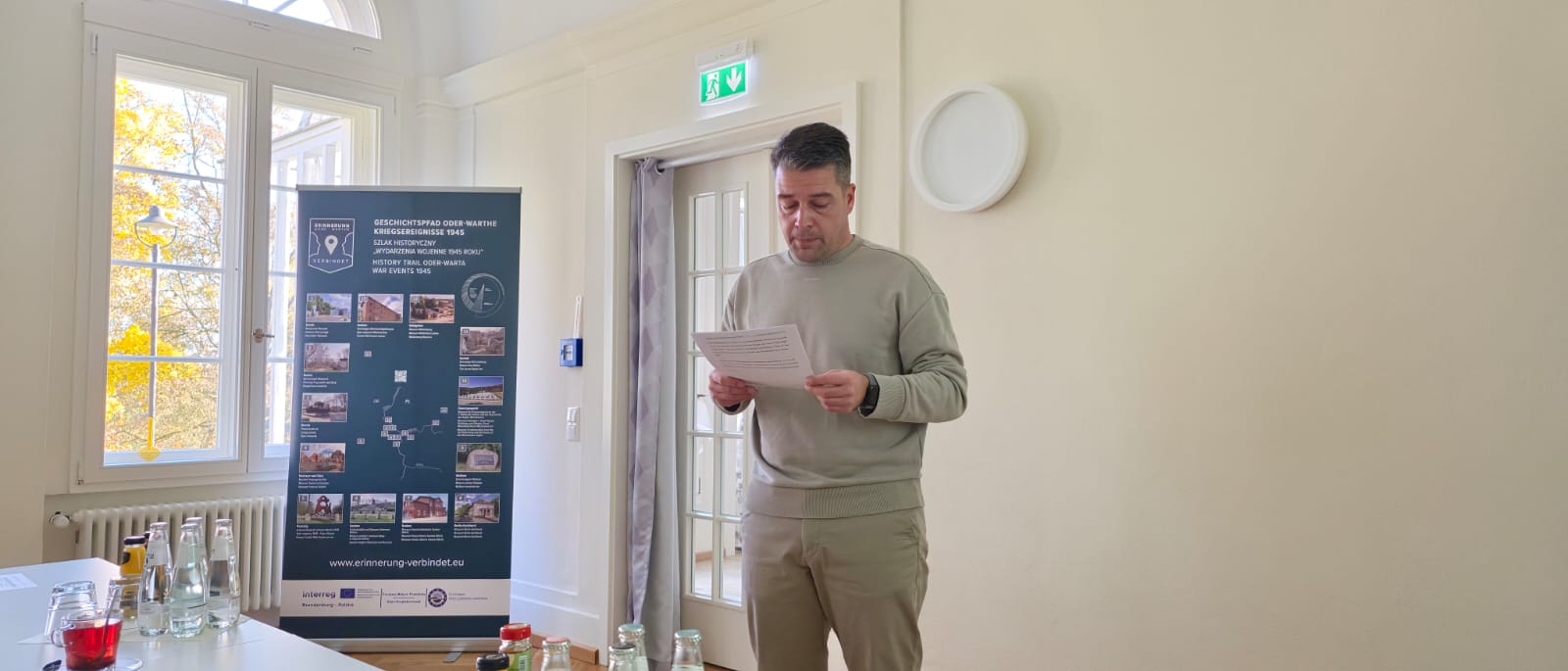
How can the traces of Jewish life in the German-Polish border region be preserved, made visible, and communicated to today’s generations? This was the question addressed by a German-Polish expert workshop held at the Schweizerhaus Seelow on November 17, 2026. The event took place as part of the project „Living Memorial Sites / Żywe miejsca pamięci“ and brought together experts and project partners from Germany and Poland.
The focus was on exchanging local experiences in memory work and the development of contemporary educational tourism offerings. The project partners Seelow, Ueckermünde, Międzyrzecz and Berlin-Charlottenburg-Wilmersdorf presented different approaches for communicating Jewish history in public spaces. The goal is to develop common foundations for cross-border networking in this area.
Seelow: Making Jewish history visible in concrete places
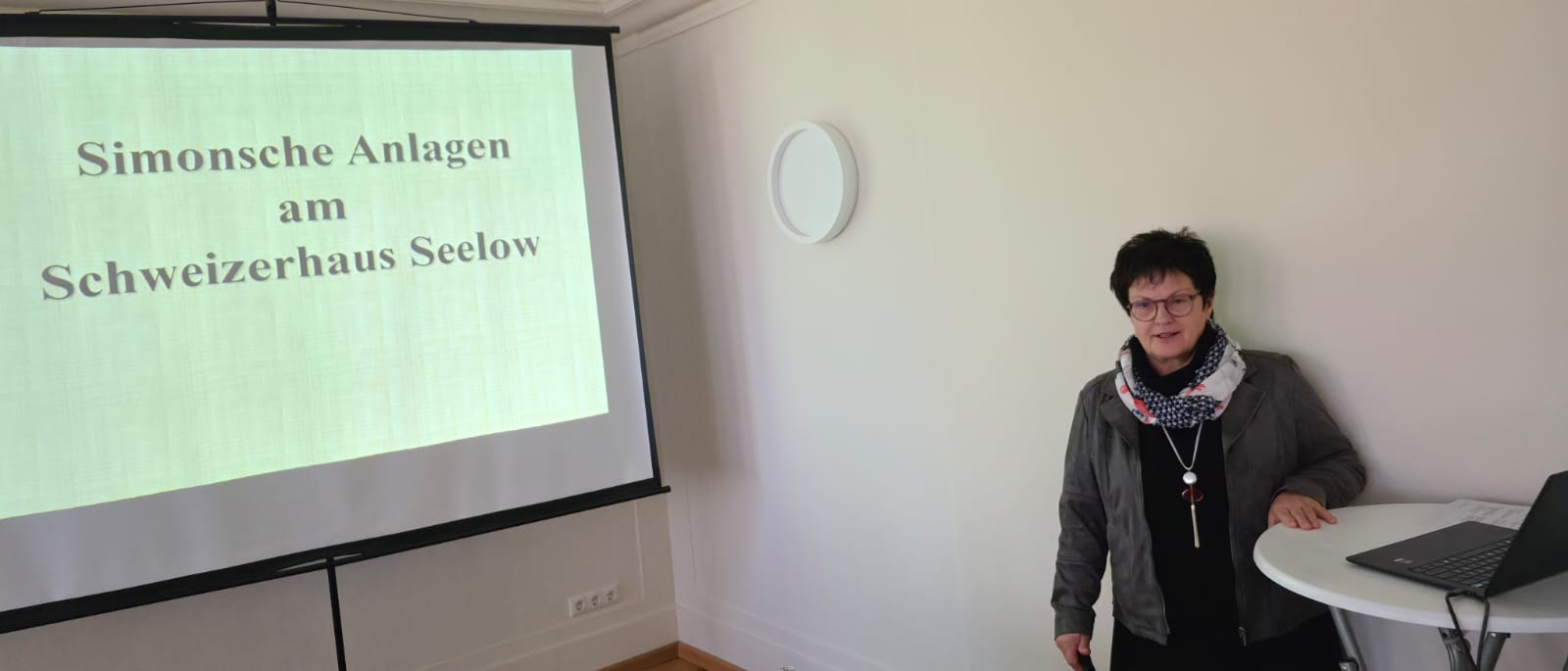
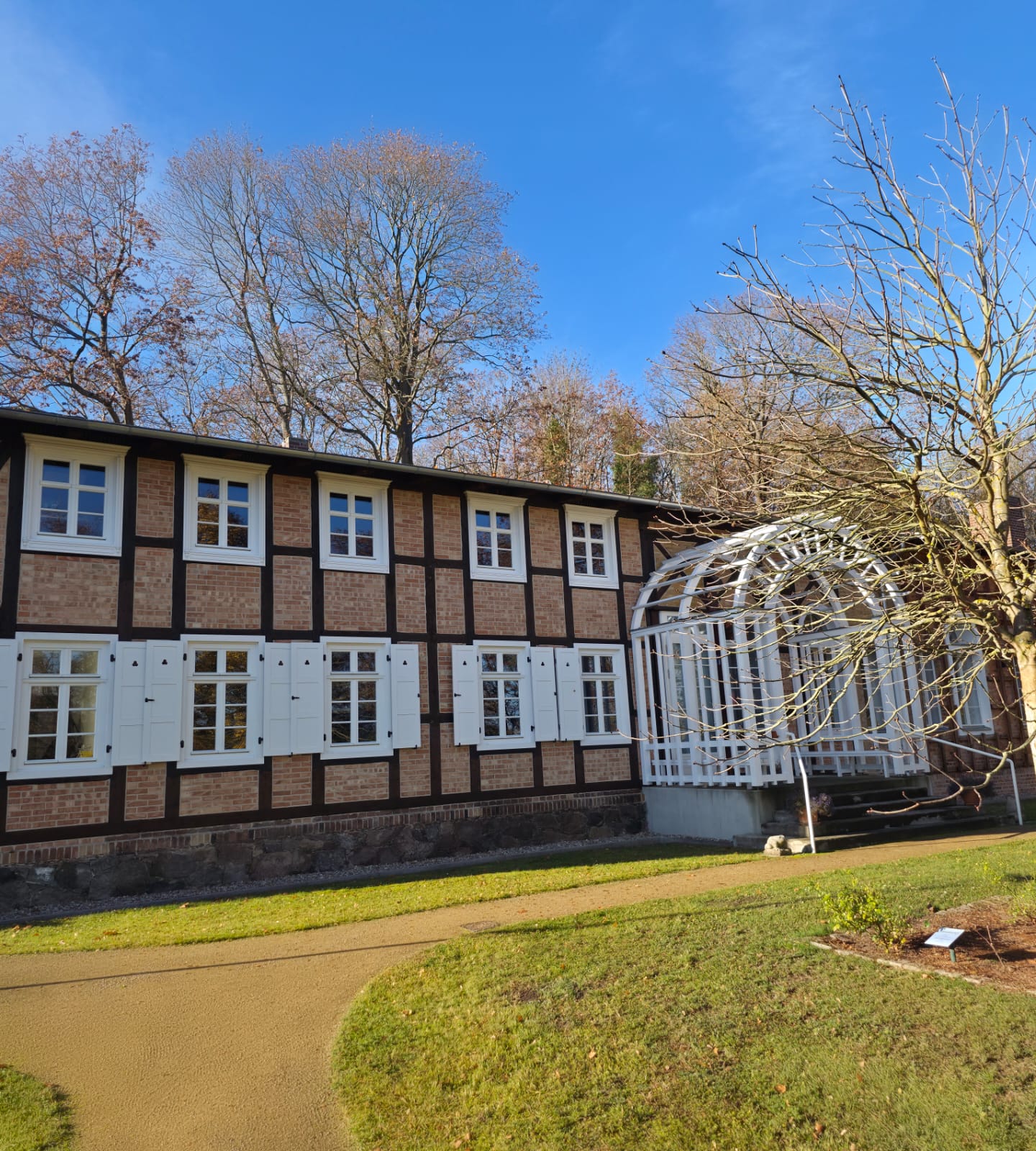
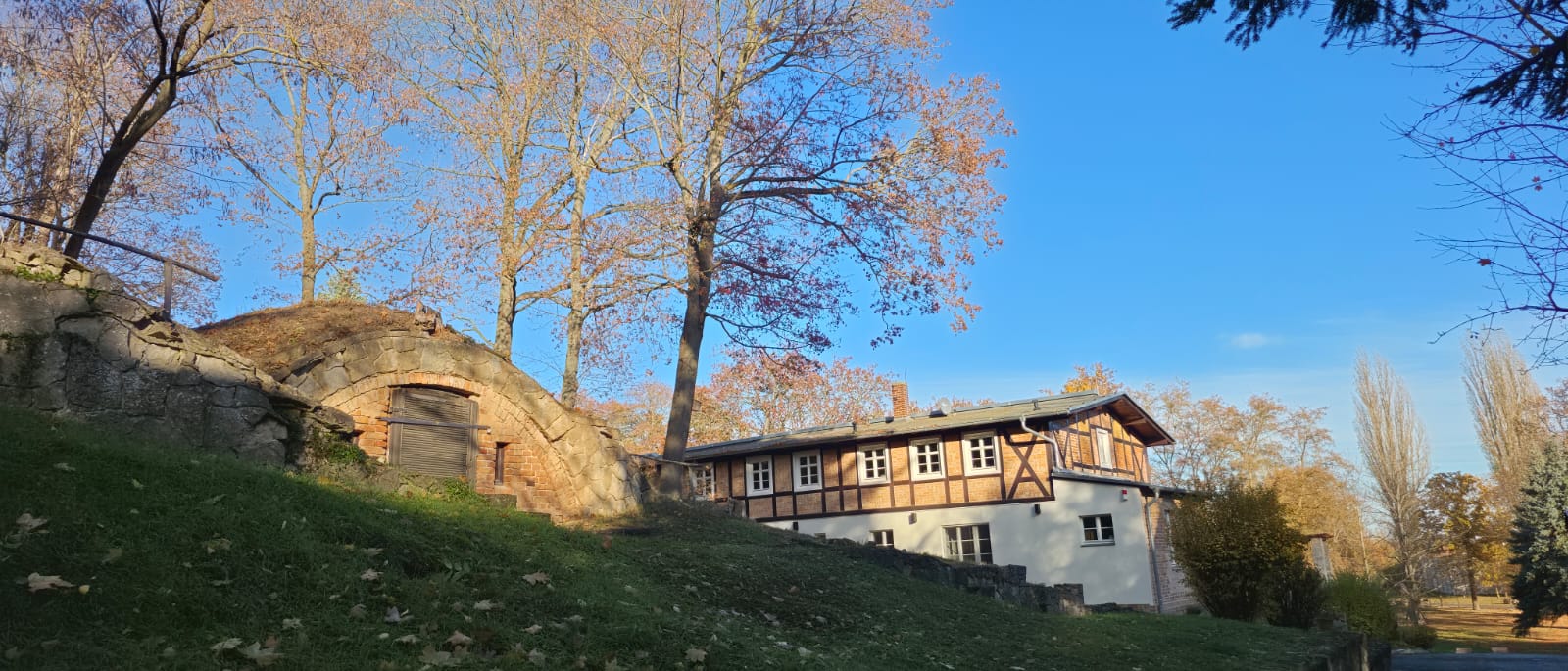
The venue itself was part of the topic. That Swiss House It is closely linked to the biography of the Jewish banker, politician, art collector and patron Hugo Simon. In 1919, Simon acquired the former tavern and transformed the premises into a country estate. The Swiss House also became a meeting place for important cultural figures such as Thomas Mann, Alfred Döblin or Max Pechstein.
After the National Socialists came to power in 1933, Hugo and Gertrud Simon left Germany and went to Brazil. The Swiss House is today once again a place for culture, nature and encounter, where history can be experienced.
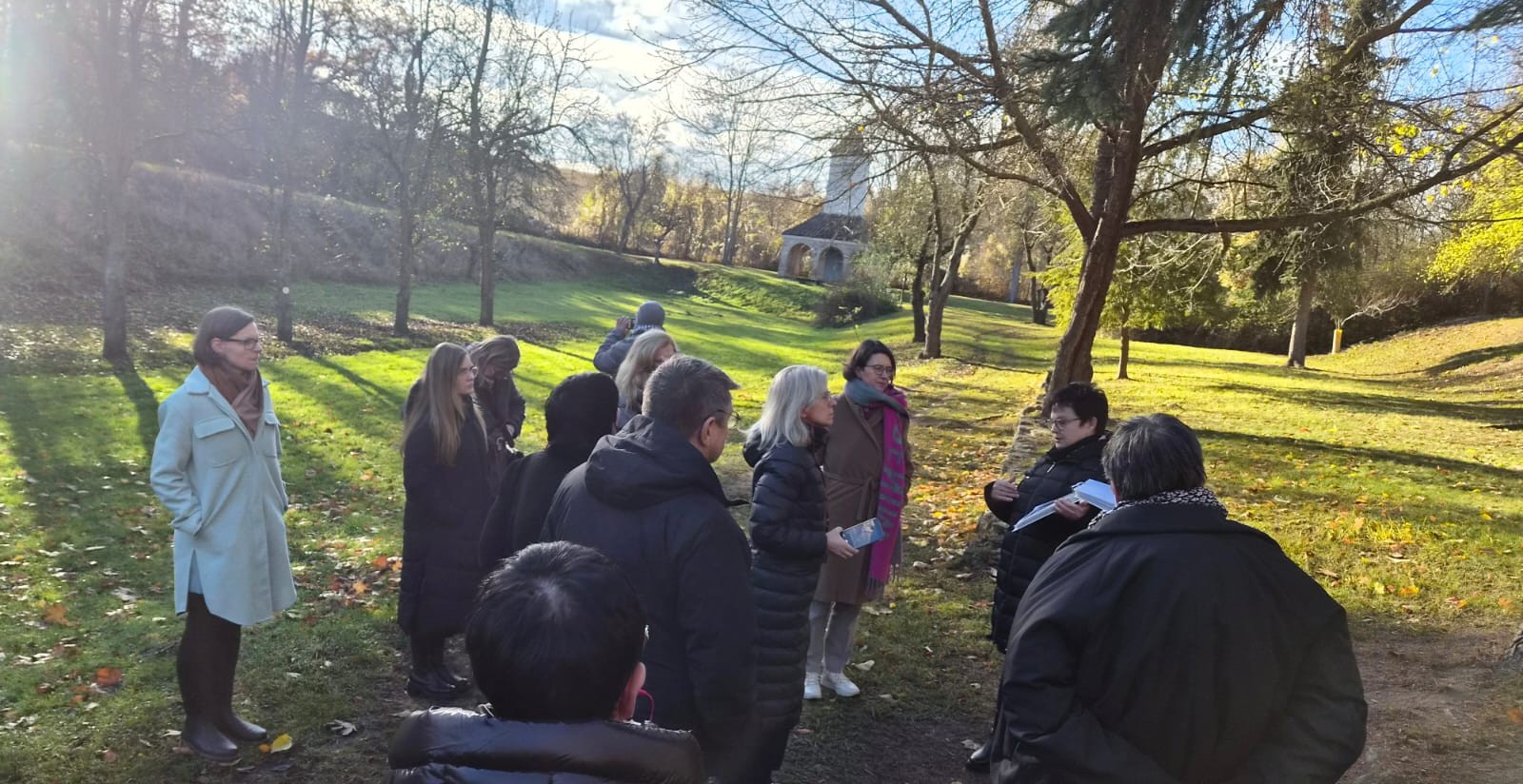
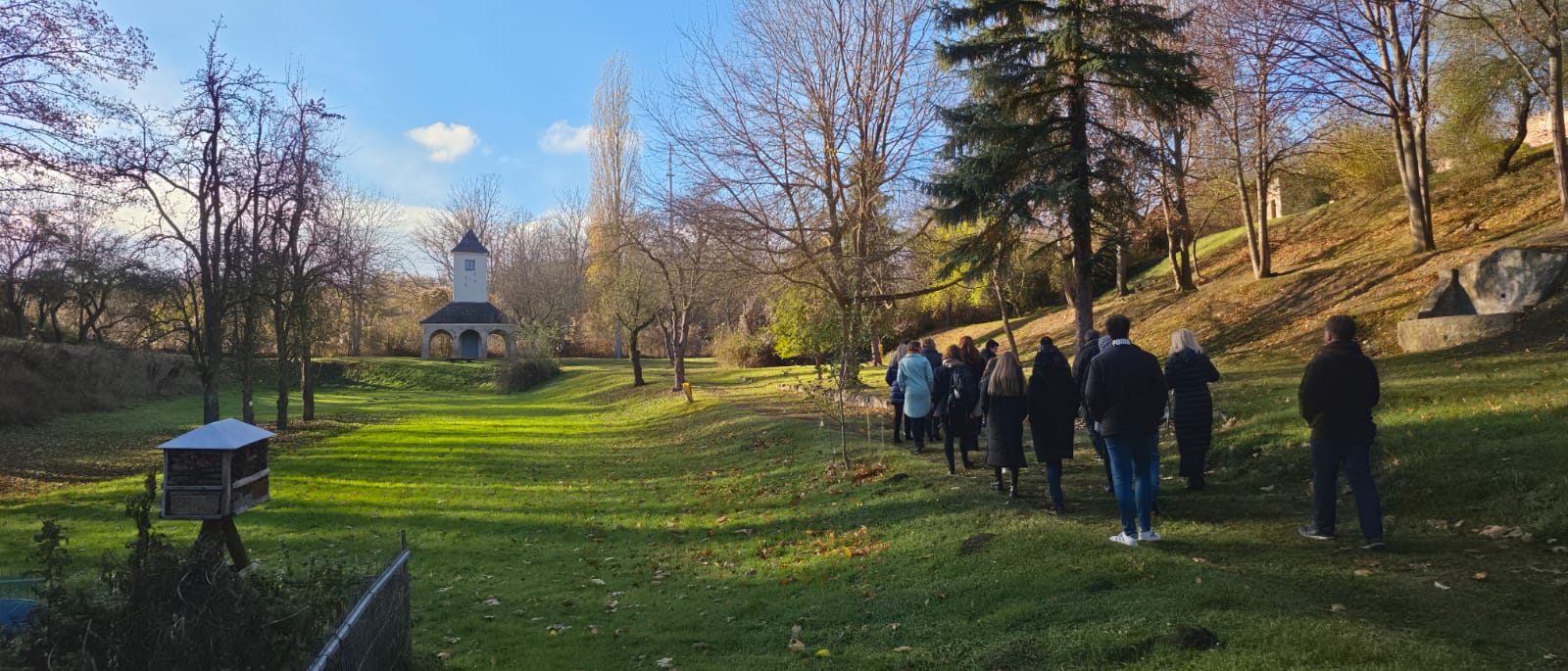
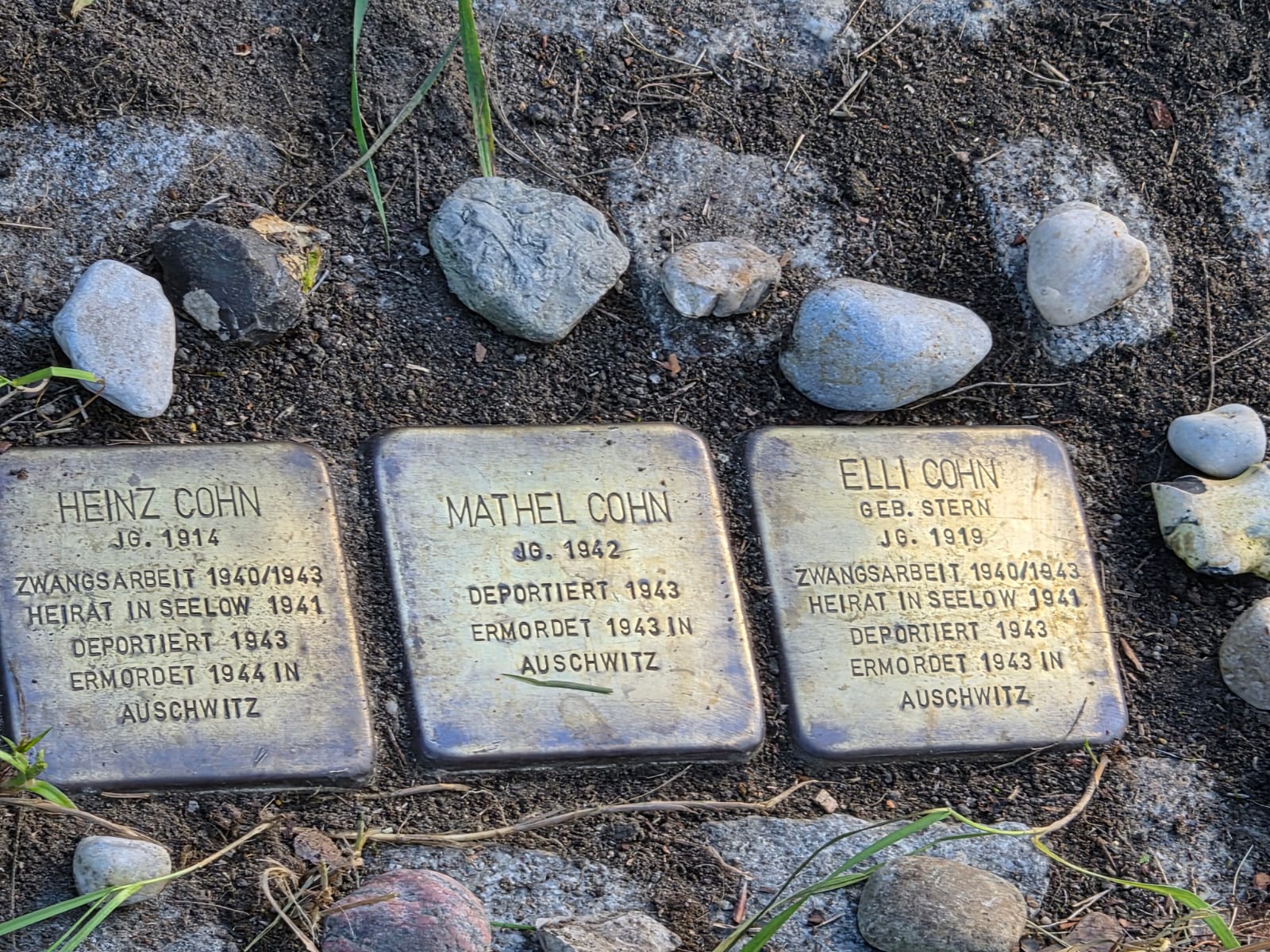
Further biographies of former Jewish citizens of Seelow were made visible during the workshop. In April 1942, for example, Jewish families from Seelow were deported. Further Jewish life stories lead to forced labor and subsequent deportation. These local stories, already visible through „stumbling stones,“ are to be further connected with each other in the future. This also applies to the Schweizerhaus, where the participants in the workshop were able to visit the „stumbling stones“ at the Goethehaus as part of a guided tour and learn more about the personal life stories of the persecuted and murdered Jewish residents of Seelow. The combination of historical buildings, authentic places in the urban space, and individual biographies also made it clear how the planned tour „traces Jewish life“ can convey history directly on site in the future.
New meeting and remembrance place at the former Jewish cemetery
With the redesign of the former Jewish cemetery, Seelow receives a new meeting and remembrance place in a historically authentic location within the project. The cemetery, established in the 19th century, was desecrated and partially destroyed during the Nazi era; during the GDR period, the area was cleared and paved over to become a parking lot. The now completed fundamental expansion makes the place, which had long disappeared from the cityscape, once again visible as part of Seelow’s Jewish history.
The new memorial site is intended to be more than just a memorial: it creates an accessible space for information, historical learning and encounter, and at the same time becomes a central station of the planned „Footprints of Jewish Life“ trail in Seelow, featuring analog and digital elements. Its stations include the city’s 13 stone milestones, the meeting and remembrance site on the former Jewish cemetery, and the Swiss House.
Different places, a common task
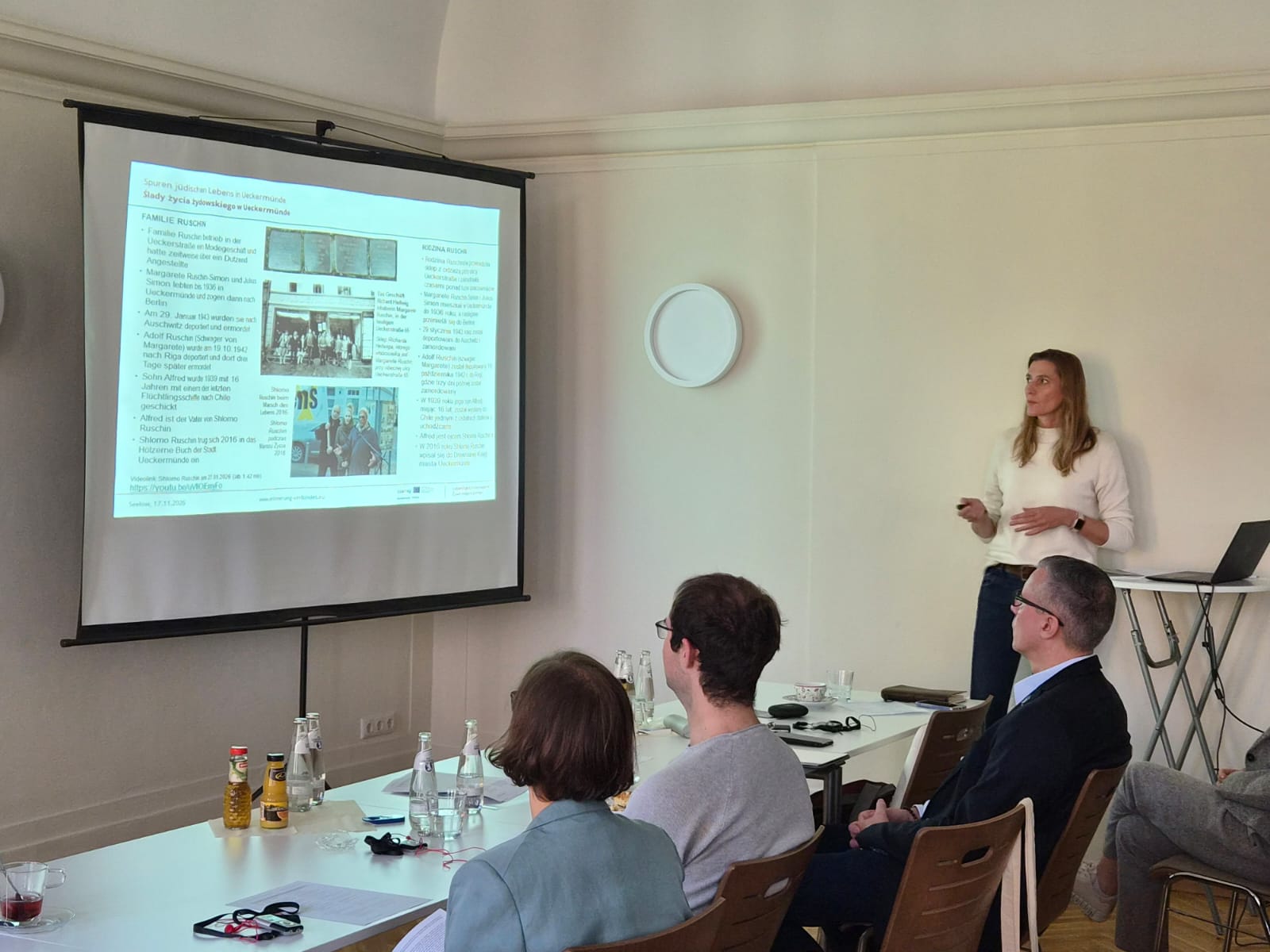
The view from the project partners showed how diverse the initial situations were. Ueckermünde. There are a former synagogue, a Jewish cemetery, an information board and 19 cobblestones in the memorial landscape. Based on the Ruschin family, it became clear how local economic and family history is intertwined with persecution, flight and murder during the Nazi era.
For Ueckermünde, it is planned to connect the decentralized memorial sites more closely with each other. Multilingual memorial plaques with QR codes, digital information, and accompanying materials are intended to make the local history more accessible. This, in turn, should create an offering for schools and tourism.
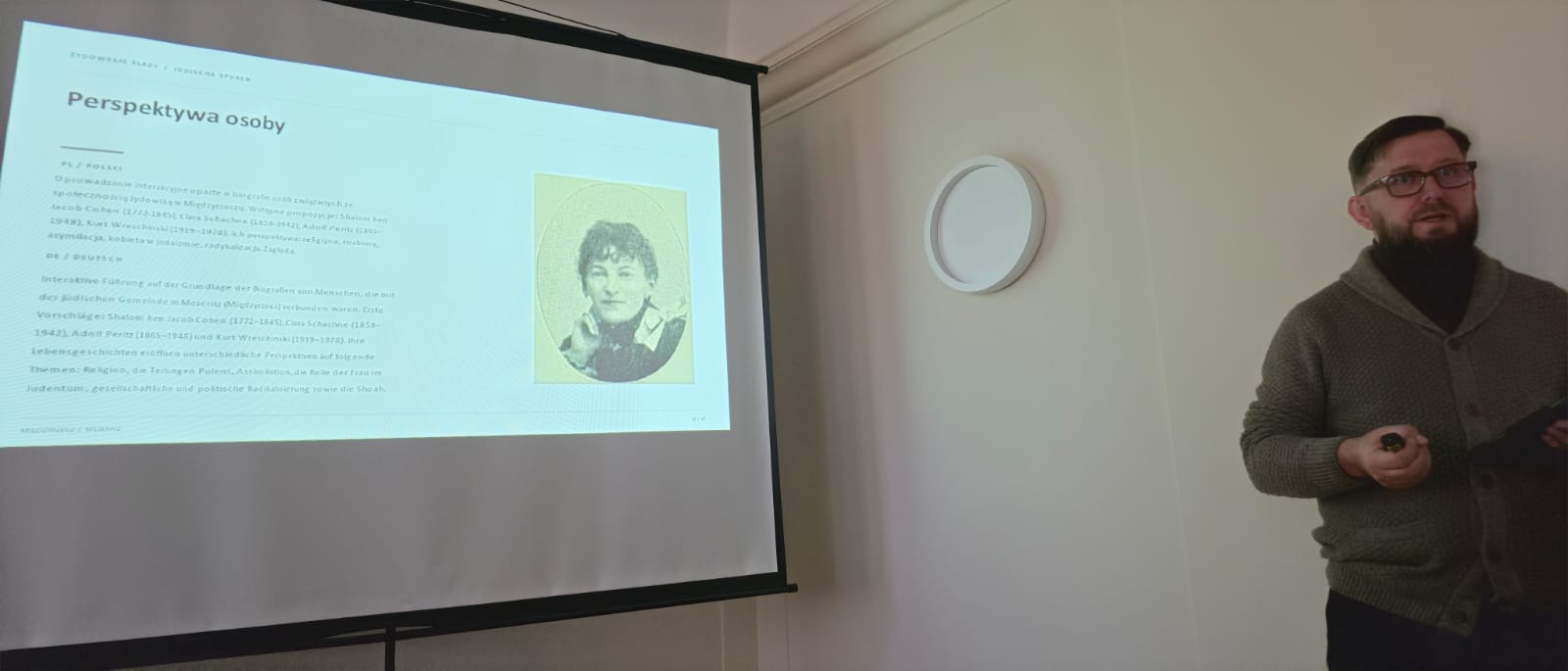
It brought a different perspective. Międzyrzecz, the former Meseritz, a Jewish settlement that can probably be traced back to the 14th century. In 1793, around 700 Jewish residents lived in the city, about 28 percent of the population at the time. Among the important architectural monuments are the synagogue built between 1825 and 1827. The Jewish cemetery was largely destroyed after 1945; seven gravestones remained intact. In 2015, a lapidarium and a memorial stone were inaugurated there.
Two interconnected perspectives were presented for the presentation of this story: the Perspective of the place and the Human perspective. Visitors can, for example, ask themselves what is still visible in a historical place today and what it might have looked like in the past. In addition, biographies of Jewish residents explore topics such as religion, assimilation, social changes, persecution, and the Holocaust.
Thinking across borders about remembrance work
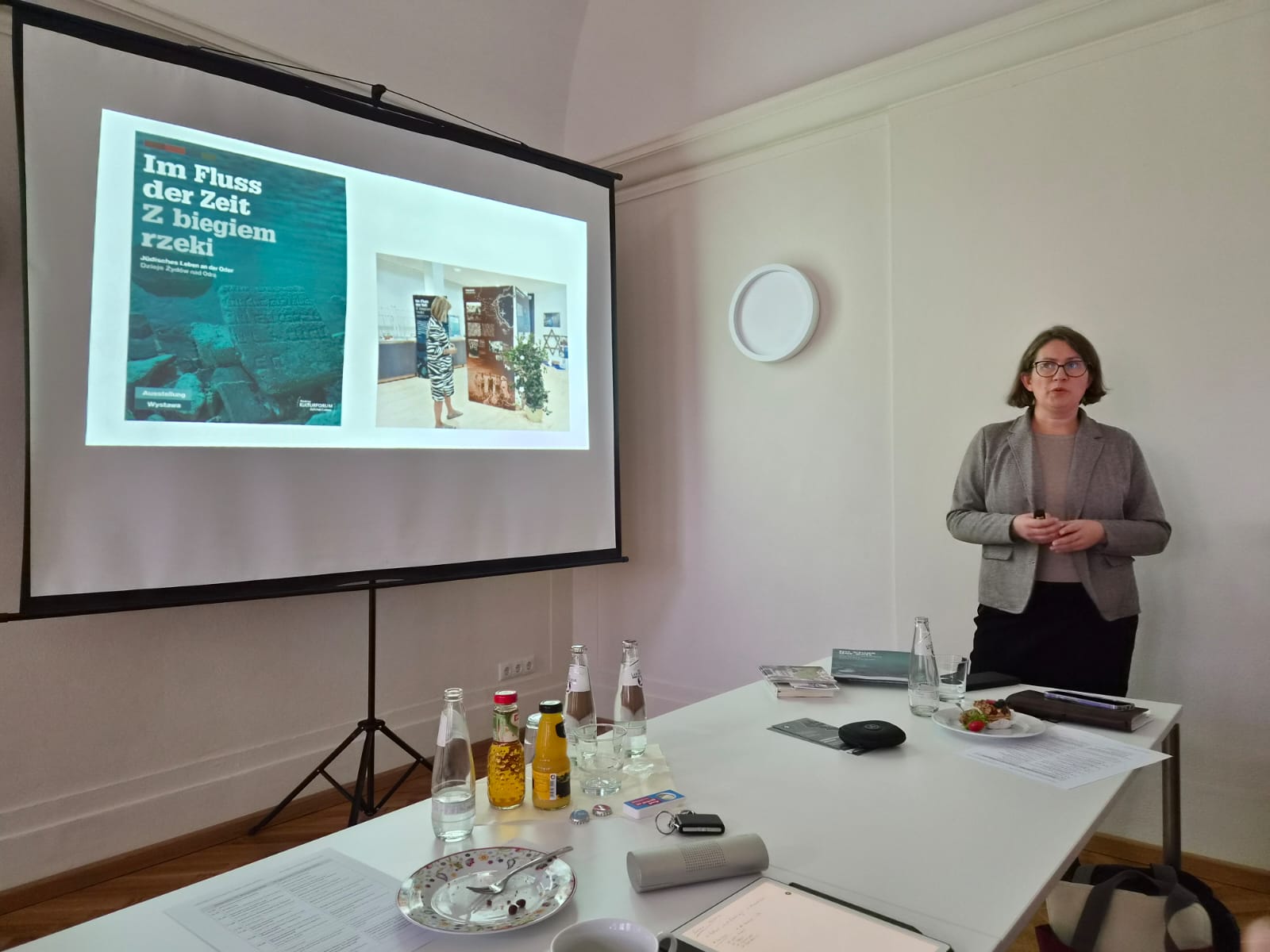
Expanded the regional historical context Dr. Magdalena Abraham-Diefenbach by the Europa-Universität Viadrina. Her contribution showcased experiences from research, dissemination, and German-Polish cooperation. One example is the documentation of Jewish cemeteries on both sides of the border. For the areas of the former province of Brandenburg on the present Polish side, 46 Jewish cemeteries were recorded. In 26 of them, there are still tombstones or burial structures, while others are empty or partially or completely overgrown.
As a further idea, a cross-border route of Jewish culture and history was presented. Possible stops range from Słubice and Skwierzyna via Międzyrzecz and Obrzyce to Zbąszyń and Zielona Góra. The German side of such a route still needs to be developed.
The experiences gained from previous work also make it clear that conservation alone is not sufficient. The tasks include restoration and maintenance as well as research, documentation, public outreach, networking, and educational and dissemination work. It is also crucial to integrate Jewish history into the respective city and regional history.
Neuendorf im Sande: A special place in German-Jewish history
The contribution by the author also showed how important authentic places are for conveying Jewish history. History has a future – Neuendorf im Sande e.V. Since 2018, the association has been dedicated to researching, documenting, and publically communicating the history of the former estate of Neuendorf im Sande. The historic manor house is a former Hachschara site where young Jewish women and men prepared for emigration and a new life. Some historical buildings are still preserved today. According to the association, this is the only former Hachschara site in Germany with such preserved structures. This contribution made it clear what potential lies in the combination of historical sites, biographical research, and direct educational work. Neuendorf im Sande adds another important aspect of German-Jewish history to the traces of Jewish life in Seelow presented in the workshop.
Providing historically accurate and at the same time accessible information
Another focus of the workshop was therefore the question of how Jewish history should be taught. A common approach was formulated for future educational tourism initiatives: local biographies and documented facts should be at the center. Nazi crimes, contemporary Jewish life, and current geopolitical conflicts must be distinguished from one another. Memory must not be used politically to serve a political purpose, nor must Jewish history be told exclusively as a history of persecution and victims.
For practical mediation work, this means making sources transparent, identifying uncertainties, and having materials professionally reviewed. This applies explicitly to digital and AI-based content as well. At the same time, Jewish perspectives and memory education expertise are to be included.
From the professional workshop to the concrete offer
The workshop forms a component of a longer-term work process. Educational tourism offerings are to be created for Seelow, Berlin-Charlottenburg, Międzyrzecz and Ueckermünde that will make „traces of Jewish life“ visible again as circular routes with digital and analog content. Common marketing instruments, a networking conference, and opening events for the local circular routes are also planned. A cross-border memory landscape is to be created from individual landmarks, cemeteries, synagogues, buildings, and personal life stories.
The professional workshop in Seelow brought together different experiences and at the same time showed what the partners have in common: Jewish history is part of the local and regional history on both sides of the German-Polish border. Preserving its traces means making the people, their lives, and their contribution to the history of the respective places visible again.


Leave a Reply