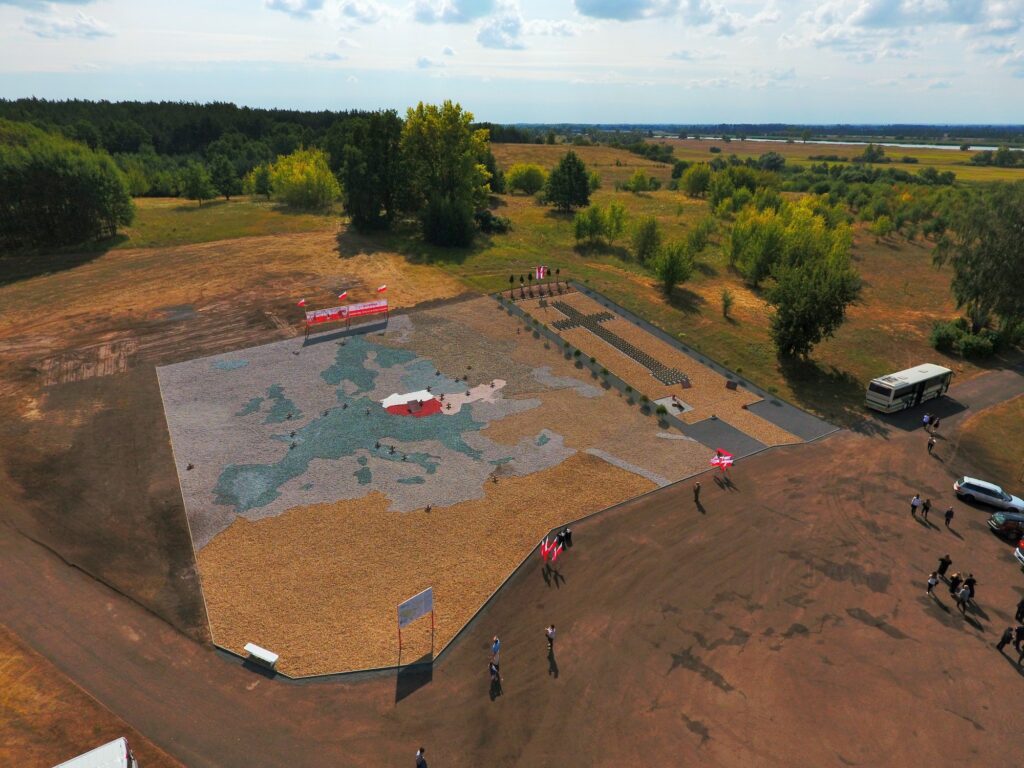
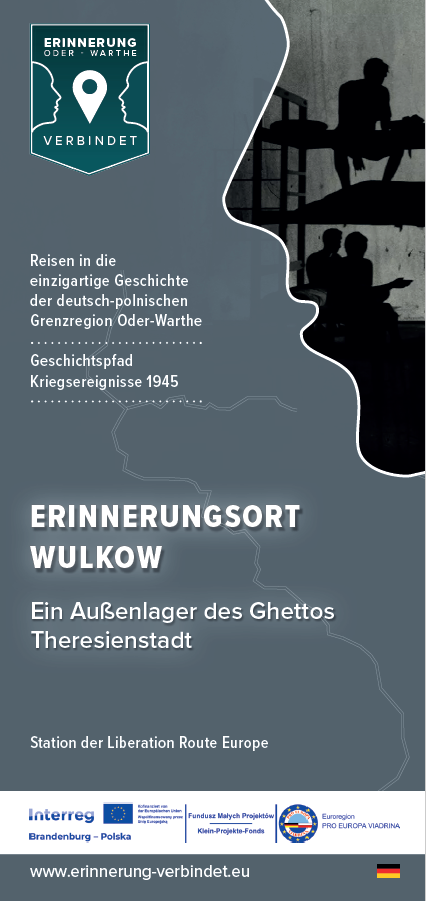
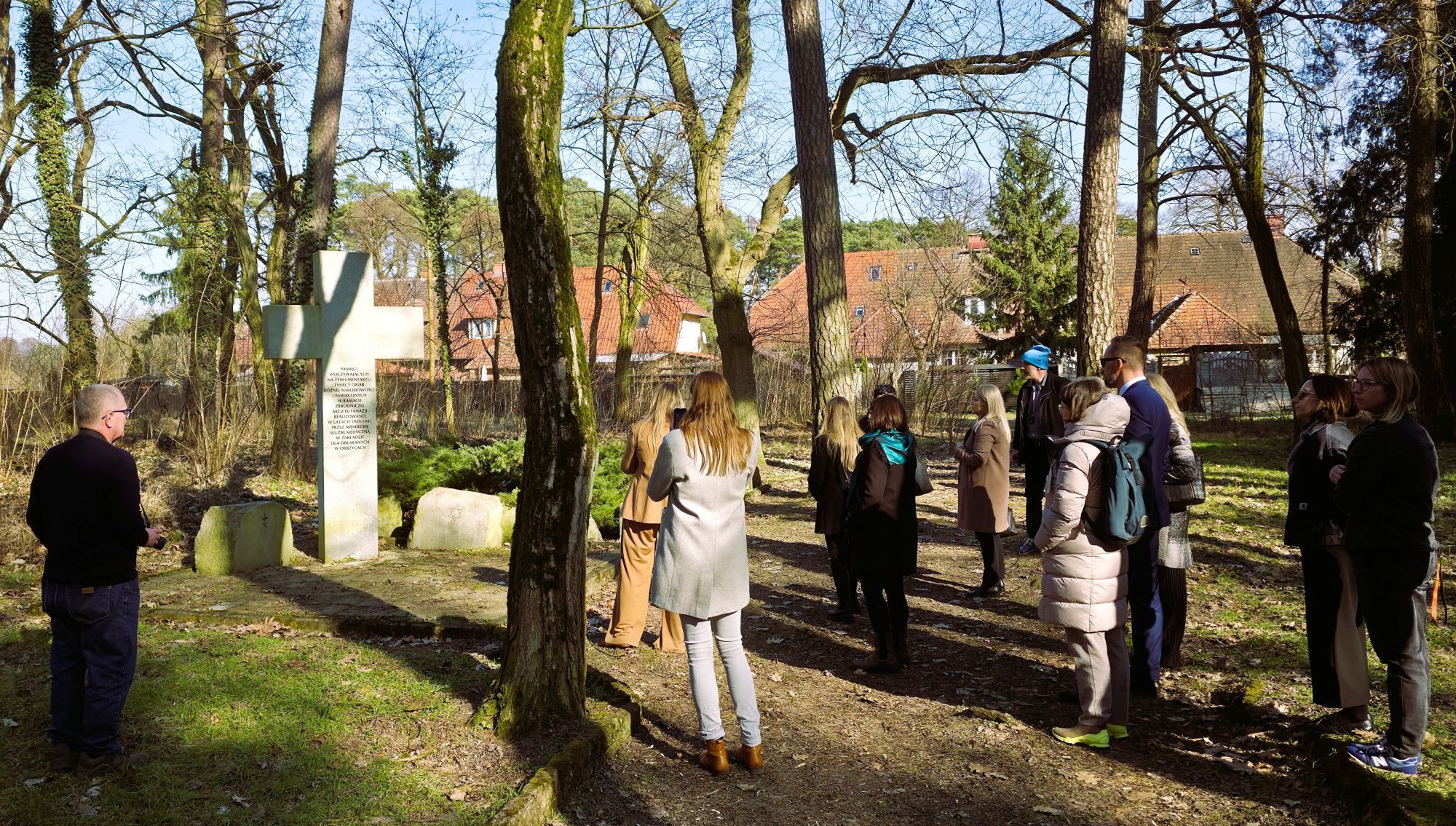
As part of the project, several German-Polish commemorative events were held, which served to jointly remember the events of 1945 and to publicly present the extended stations of the cross-border history trail. The events took place in Seelow, Dobiegniew, Anklam, Santok, Mieszkowice/Stare Łysogórki, and at the former Wulkow concentration camp subcamp, among other locations. In addition to commemorating the victims of the war, the vector markers of the Liberation Route Europe (LRE) and the respective information boards were ceremoniously inaugurated, and the newly developed site flyers were presented.
A key component of the project was also the 2026 annual congress of the Liberation Route Germany (LRG) in Seelow and Anklam. Representatives from Germany, Poland and the European network of the Liberation Route Europe used the event for professional exchange, joint excursions and the presentation of project results. This allowed the new stations of the history trail to be presented to a supra-regional and international audience, and their importance as a cross-border educational and tourism offering to be strengthened.
The project helped to further expand cooperation between Liberation Route Germany and Liberation Route Poland. With the extension of the German-Polish historical trail, a permanently usable cross-border offer was created that strengthens shared remembrance culture, promotes international networking among the participating institutions, and sustainably conveys the history of 1945 in the German-Polish border region.
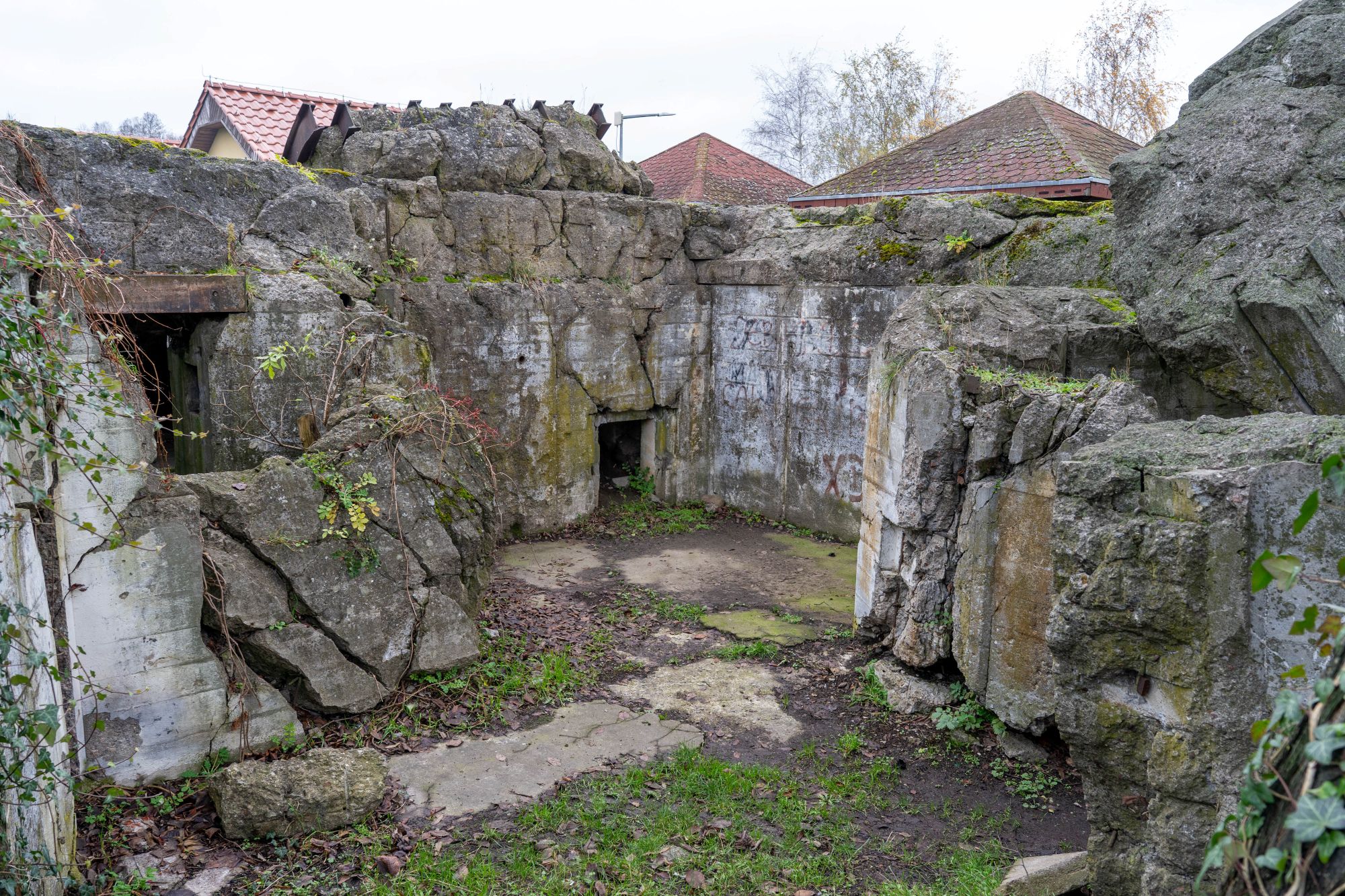
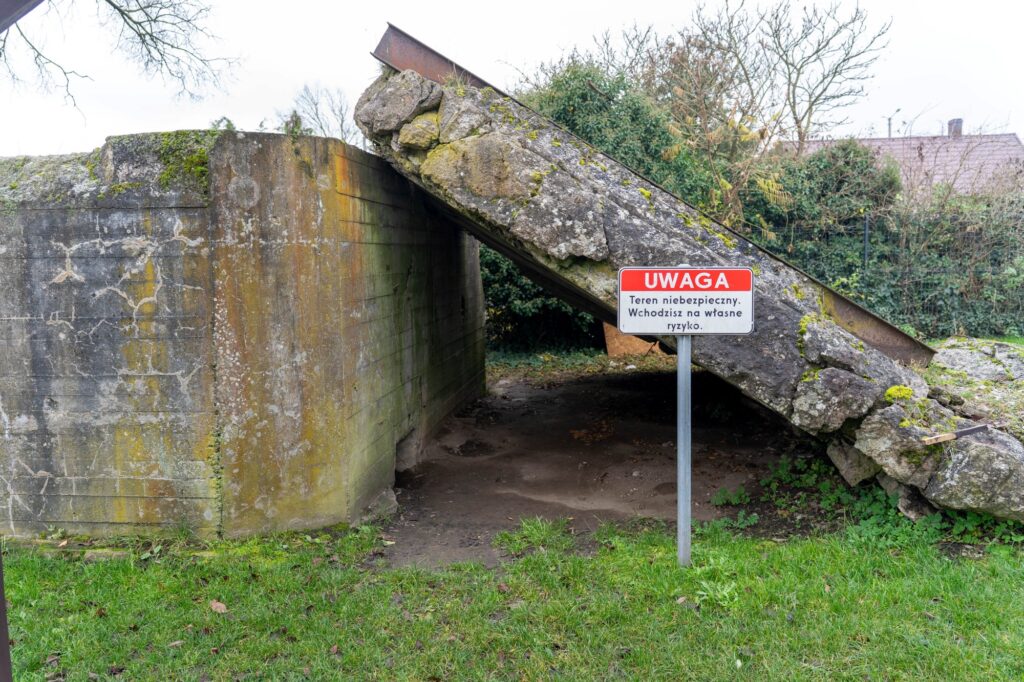
The ruins of the former network position in Santok are silent witnesses to the dramatic upheavals in Europe in 1945. They are an impressive reminder of war, flight and new beginnings - and of how fragile peace and freedom in Europe can be.
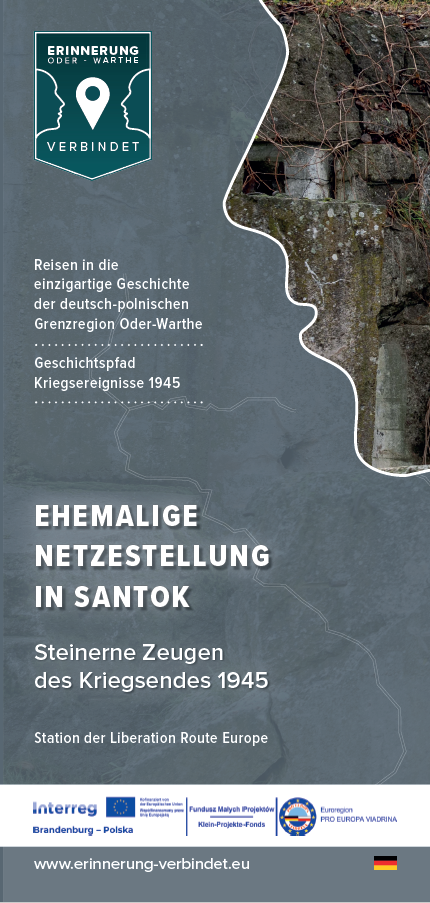
Where the Noteć River flows into the Warta today was a focal point of world history in January 1945. The ruins of the Netze position in Santok are not only military remnants, but also a reminder of the end of the Second World War and the profound upheavals in Europe.
The end of the „house of cards“
On 12 January 1945, another decisive advance towards Berlin began with the Soviet „Vistula-Oder Offensive“. The German Wehrmacht, with around 450,000 soldiers facing a superior force of 2.2 million Red Army soldiers, attempted to stop the advance at fortified lines such as the Pomeranian Wall and the Oder-Warthe Line.
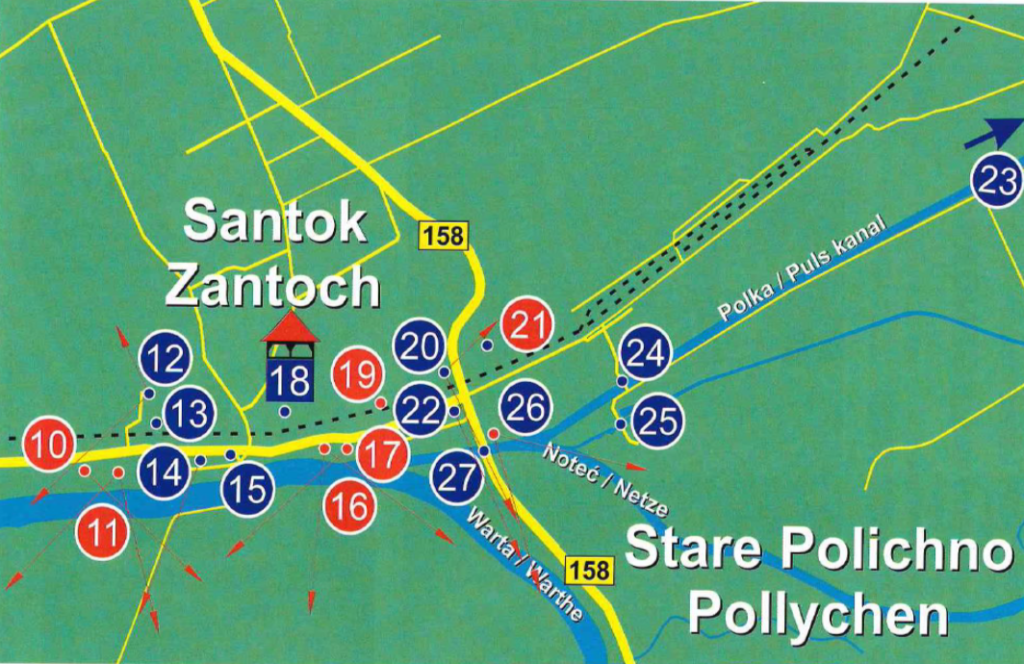
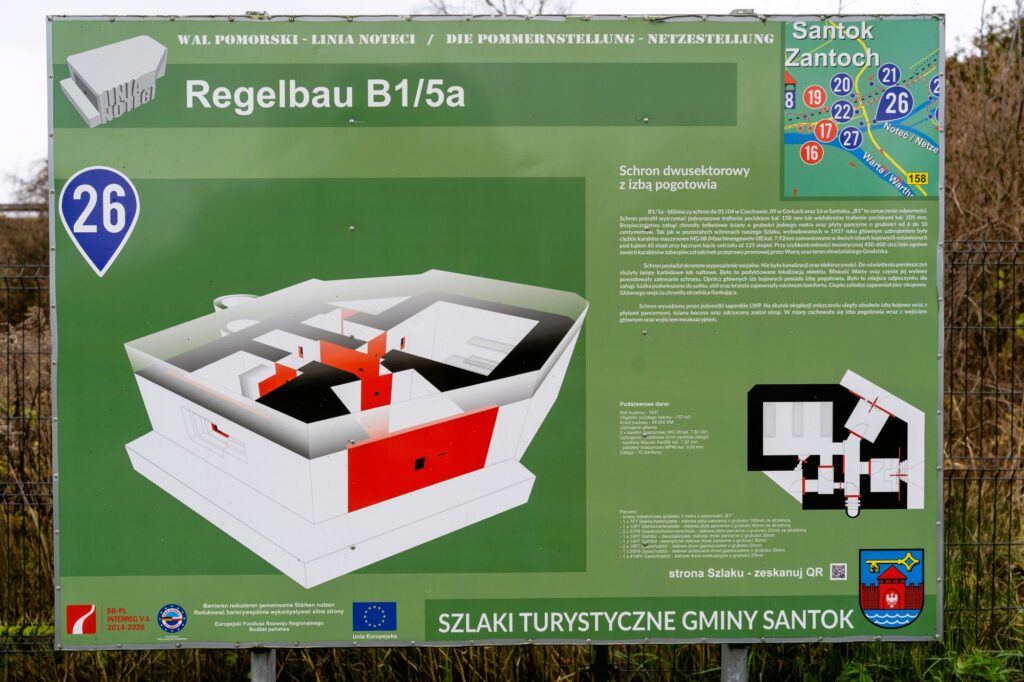
Santok functioned as a strategic bridgehead at the confluence of the Netze and Warta rivers. Massive concrete bunkers were intended to secure the river crossings. However, the Soviet troops utilised their enormous mobility, bypassing the fixed positions or destroying them with direct fire from modern artillery. Santok fell at the end of January 1945, along with a number of other defence positions. The German Eastern Front collapsed like a „house of cards“, as the German General Guderian had predicted.
Santok thus marks a stage on the „road to liberation“ from Nazi tyranny. A path that also liberated extermination camps such as Auschwitz and revealed the cruelty and horror of Nazi rule to the world.
At the same time, the military caesura was associated with great human hardship: Millions of German civilians fled to the west. The subsequent „westward shift of Poland“ led to an almost complete population exchange. Large parts of the network were destroyed by pioneers of the Polish People's Army after the end of the war.
A memorial for Europe
Today, the bunker ruins in Santok have been included in the Polish register of monuments as a memorial to the war. They invite you to reflect on the common European history, e.g. along the fortification path (Szlak). Discover almost completely preserved facilities such as the circular defence bunker Object 19 or the huge concrete blocks of blasted works. Visit Santok and experience history at the place where it happened - as part of a route that reminds us how precious peace and freedom are in Europe.
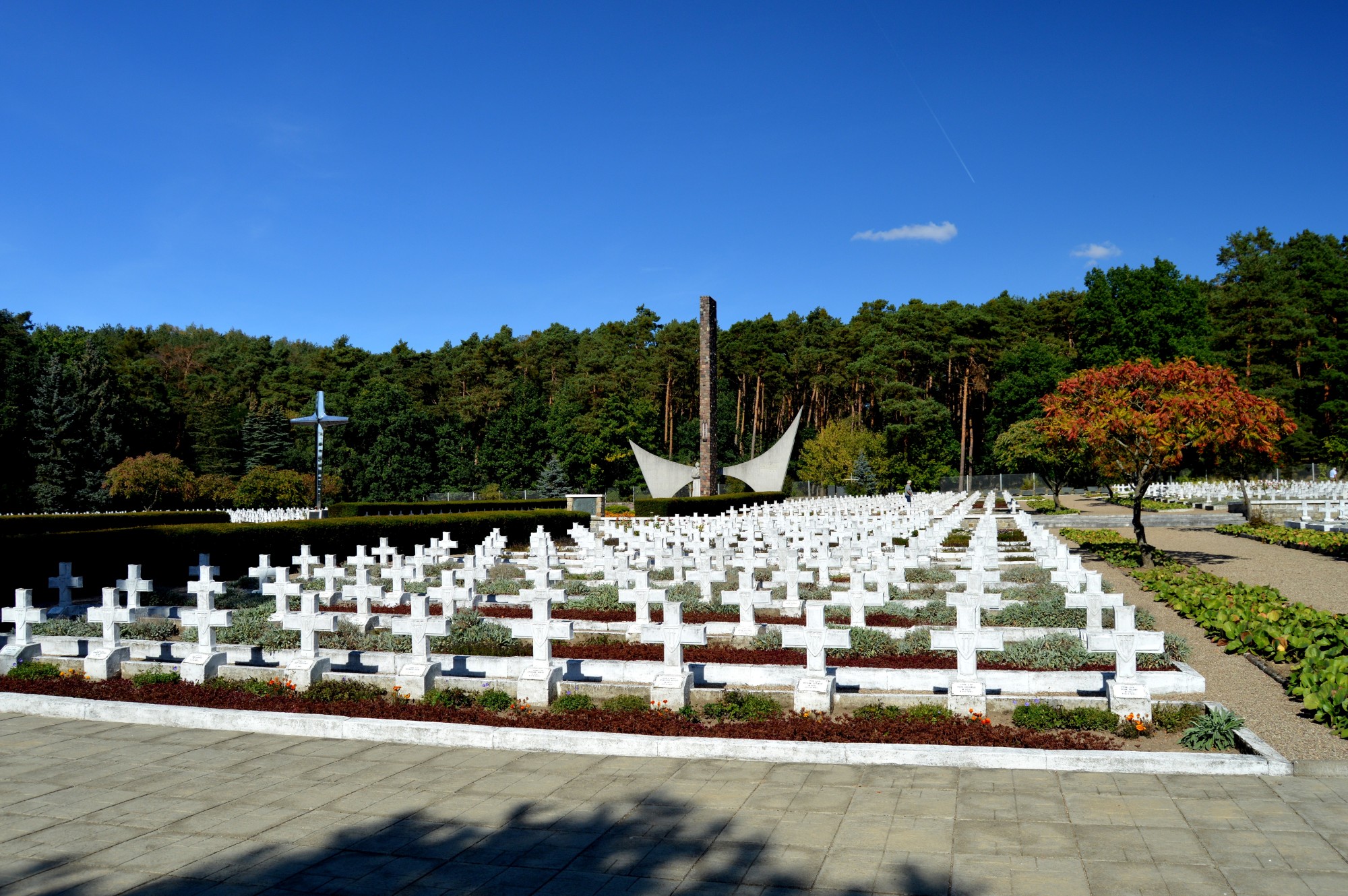
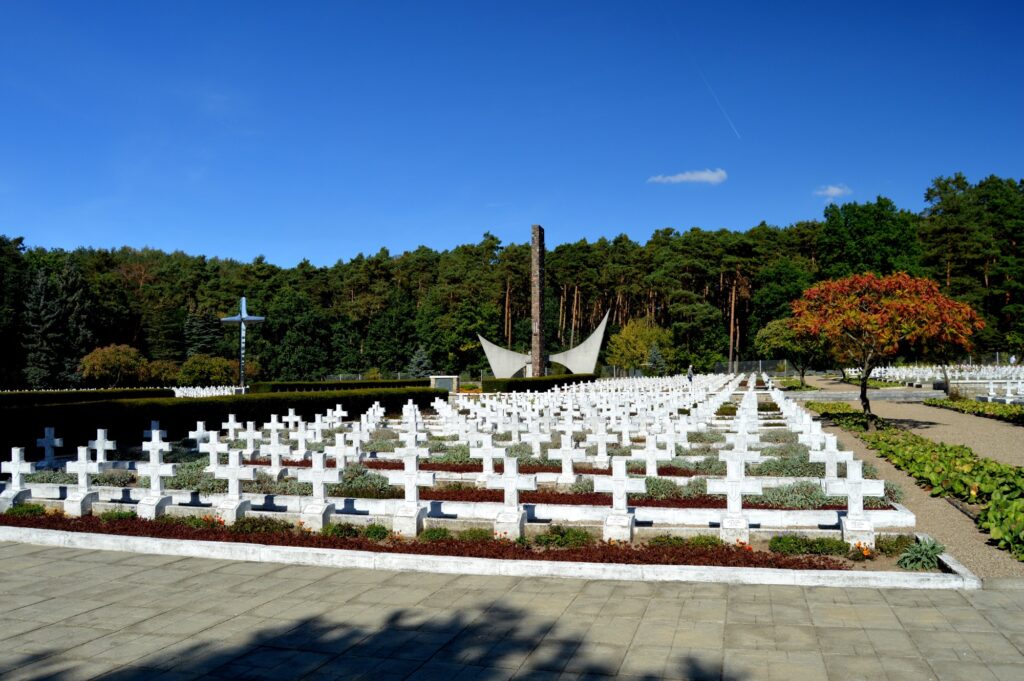
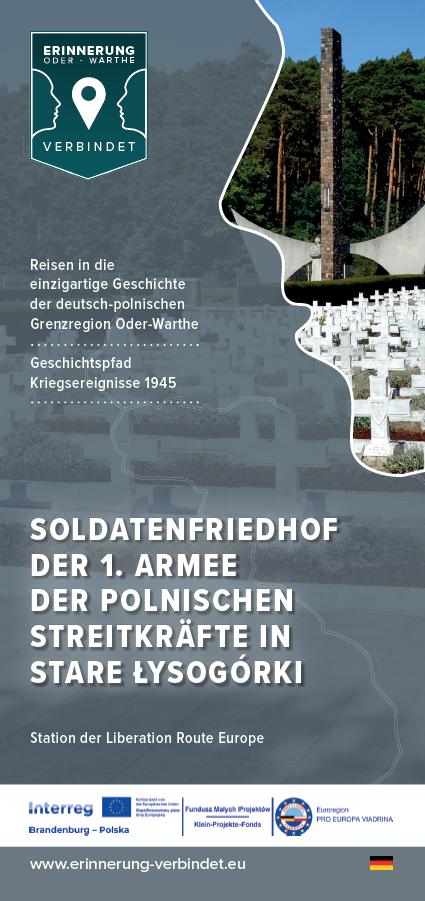
The military cemetery of the 1st Polish Army in Stare Łysogórki is a place of silence and contemplation on the Oder, where history and landscape merge. The necropolis commemorates the dramatic endeavours of the soldiers who fought shortly before the end of the Second World War.
The military cemetery of the 1st Polish Army in Stare Łysogórki, also known as the Siekierki military cemetery, is one of the most important places of national remembrance on the Oder. The necropolis is the final resting place for soldiers who crossed the Oder and took part in the Berlin Operation in 1945.
Some 1,977 soldiers of the 1st Polish Army who lost their lives in one of the most difficult operations of the Second World War on the Eastern Front - during the crossing of the Oder and the further fighting towards Berlin - rest here.
The cemetery was laid out on a square plan and is divided into regular plots with characteristic Grunwald cross monuments, which symbolise the bravery and sacrifice of Polish soldiers. The centrepiece of the necropolis is a monumental memorial by sculptor Stanisław Lewiński, which was unveiled in 1961. It depicts a woman with a child as well as floating sails and swords, symbolising the sacrifice, hope and hardships of the military crossing of the river.
The Oder River, which the soldiers of the 1st Polish Army crossed under enemy fire, became not only a natural border in 1945, but also a symbolic gateway leading to the final victory. Crossing it meant overcoming the last major obstacle on the way to Berlin and the end of the suffering of the war on Polish soil.
Every year in April, on the anniversary of the crossing of the Oder, ceremonial commemorations of the fallen soldiers are held at the cemetery. War veterans, representatives of the military, local authorities, schoolchildren and residents of the region take part in these events to commemorate those who fought for the freedom of their homeland.
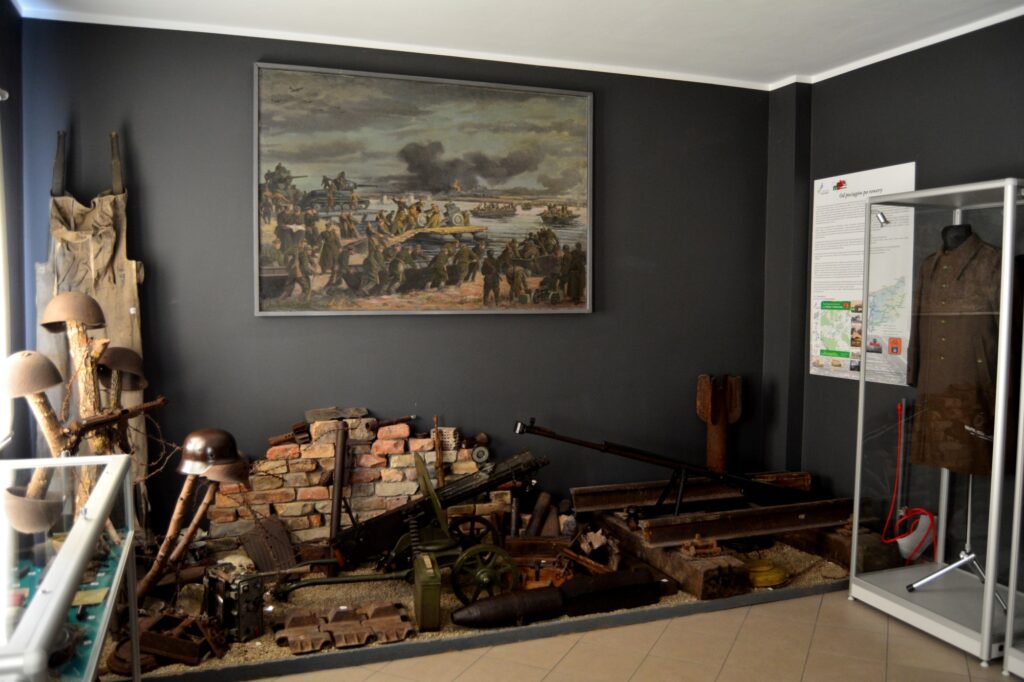
Together with the nearby Museum of Engineering Weapons History of the 1st Polish Army, the cemetery forms the centrepiece of the National Memorial Area on the Oder - an area that links memorials, monuments and museum exhibitions from Czelin to Cedynia. It is a place of contemplation, history and education and at the same time an important point on the region's historical and natural history trail.
Oflag IIC Woldenberg was a German prisoner of war camp for Polish officers during the Second World War. Despite its imprisonment, it became a place of learning, culture and resistance, demonstrating the strength of spirit, solidarity and patriotism of the prisoners.
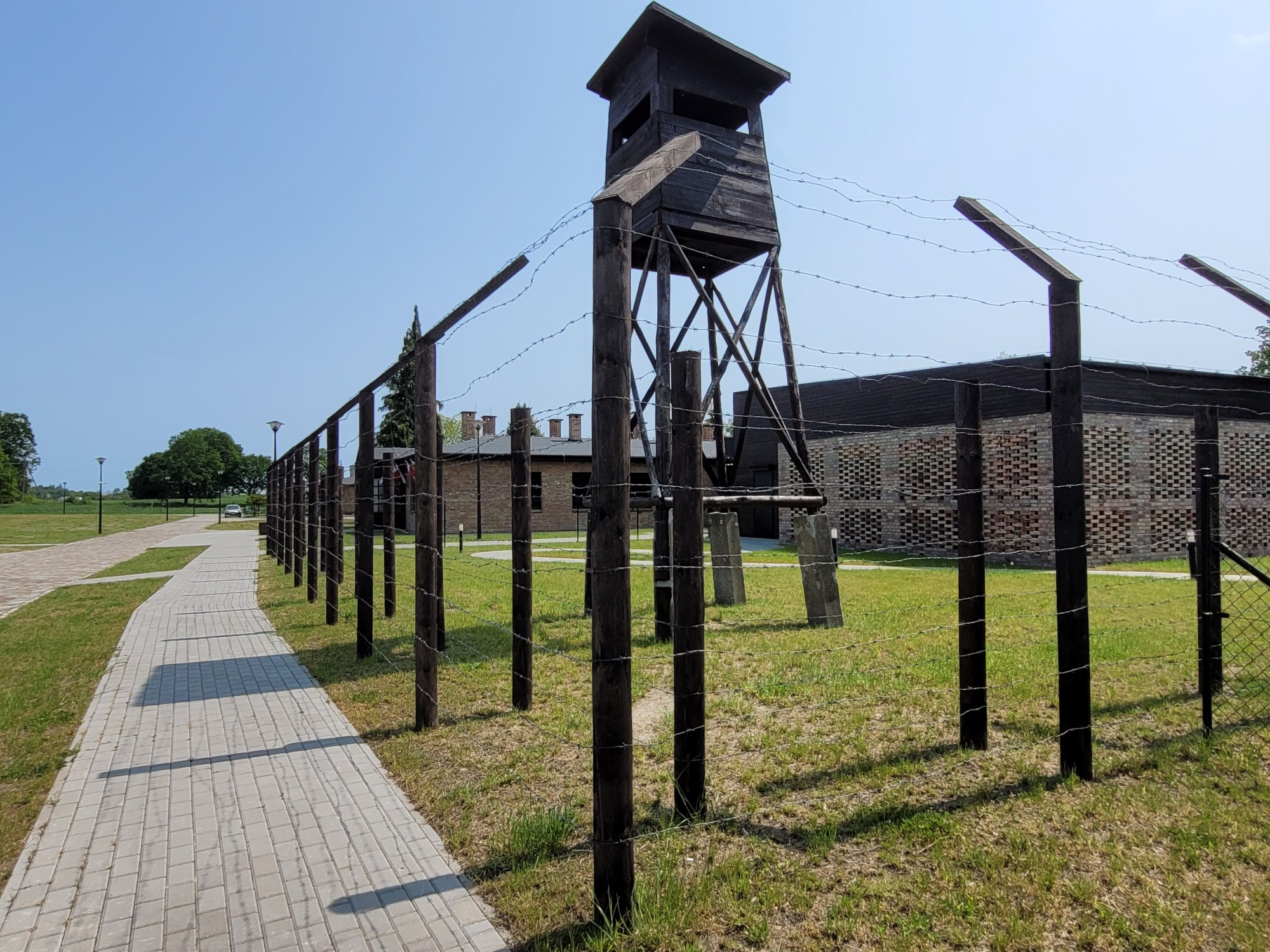
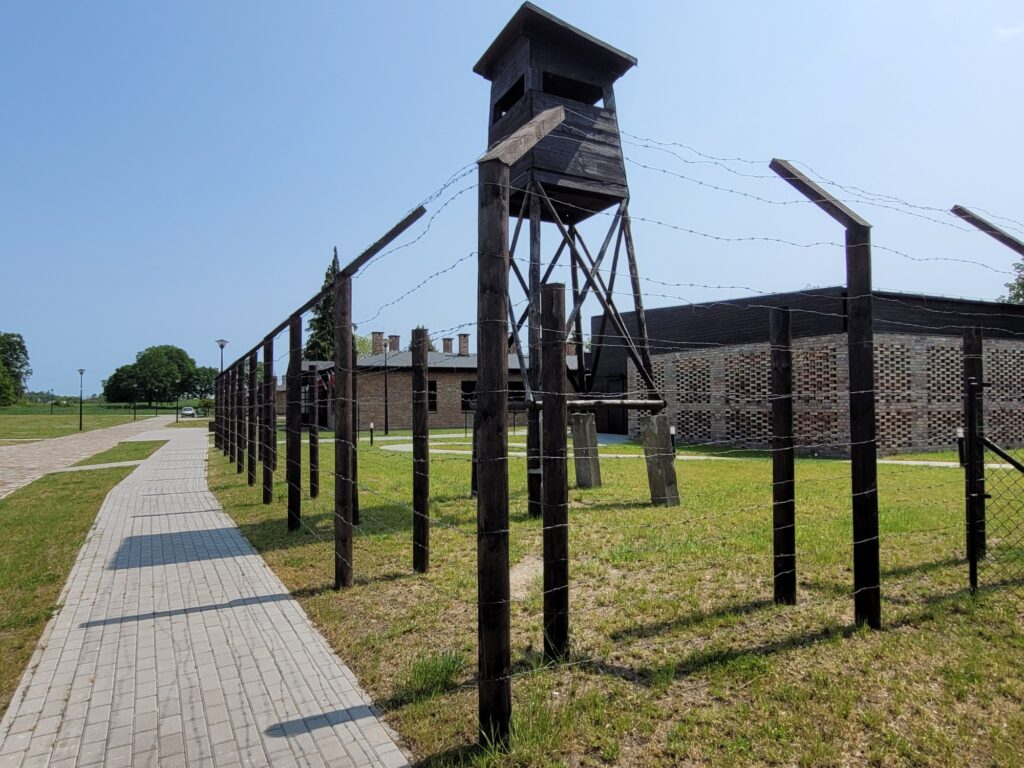
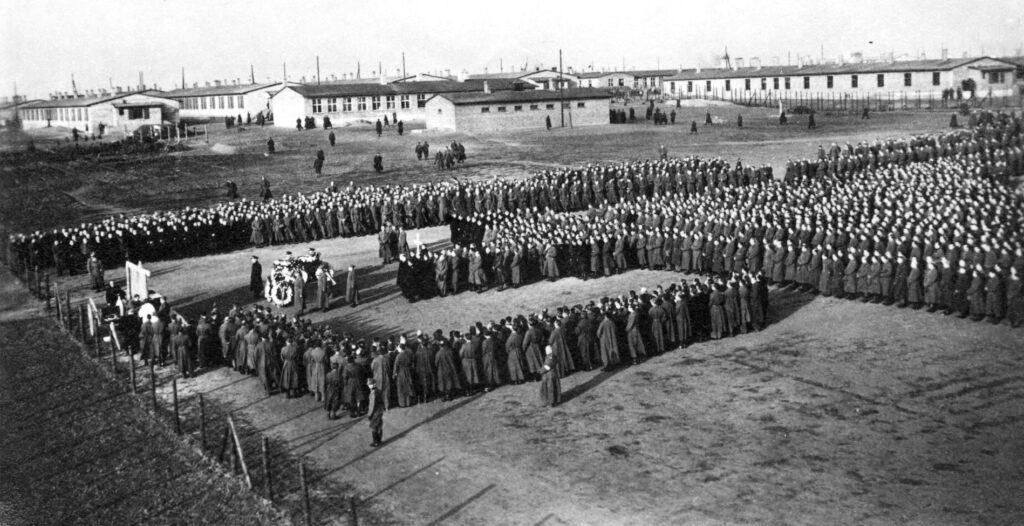
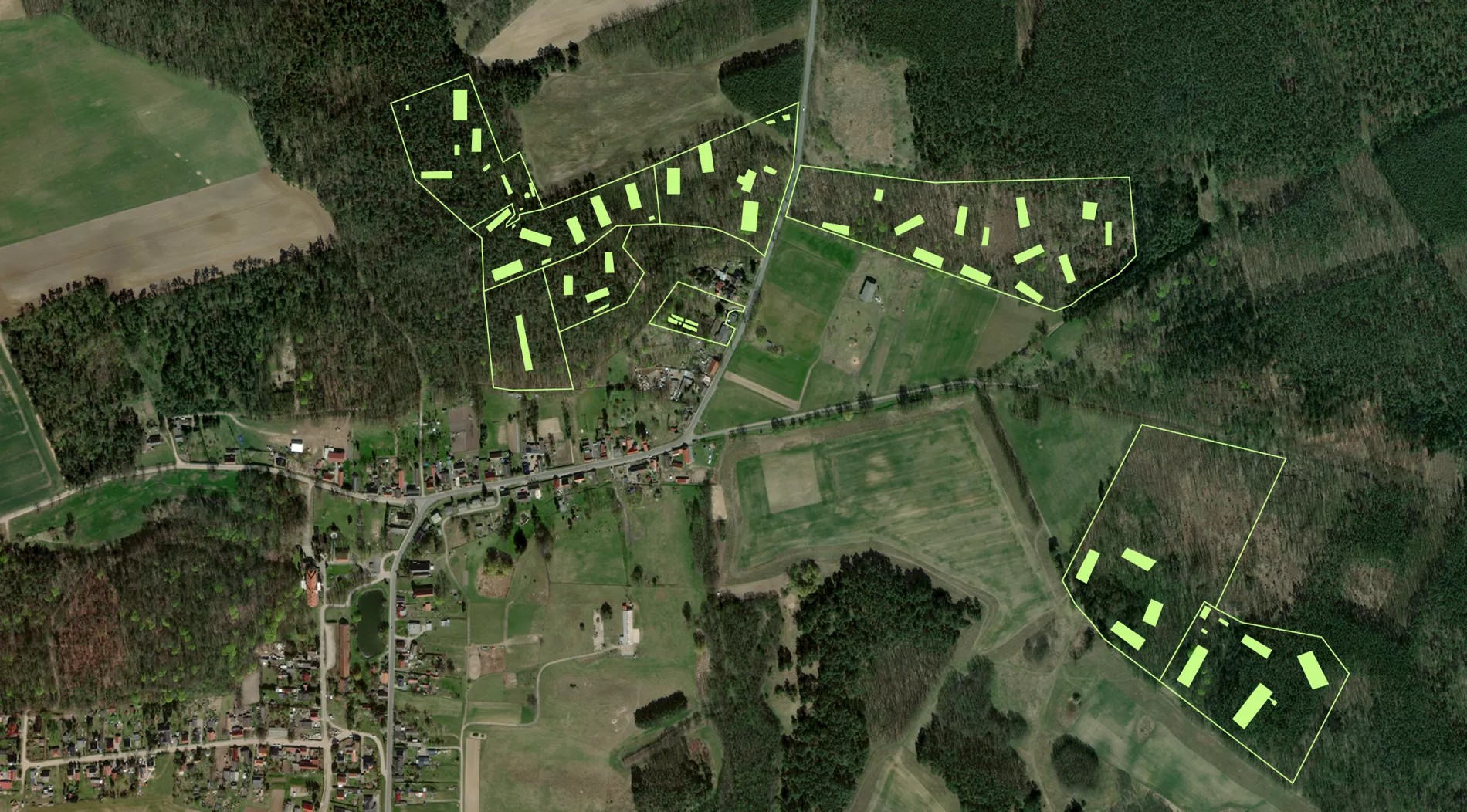
Oflag II C Woldenberg was the largest German prisoner of war camp for officers of the Polish army during the Second World War. It was established in autumn 1939 on the site of today's Dobiegniew, then known as the German Woldenberg. The camp covered an area of 24 hectares and was surrounded by double barbed wire fences and watchtowers. Over 6,000 Polish officers and officer cadets who had taken part in the September offensive and later battles in Europe were housed in several barracks.
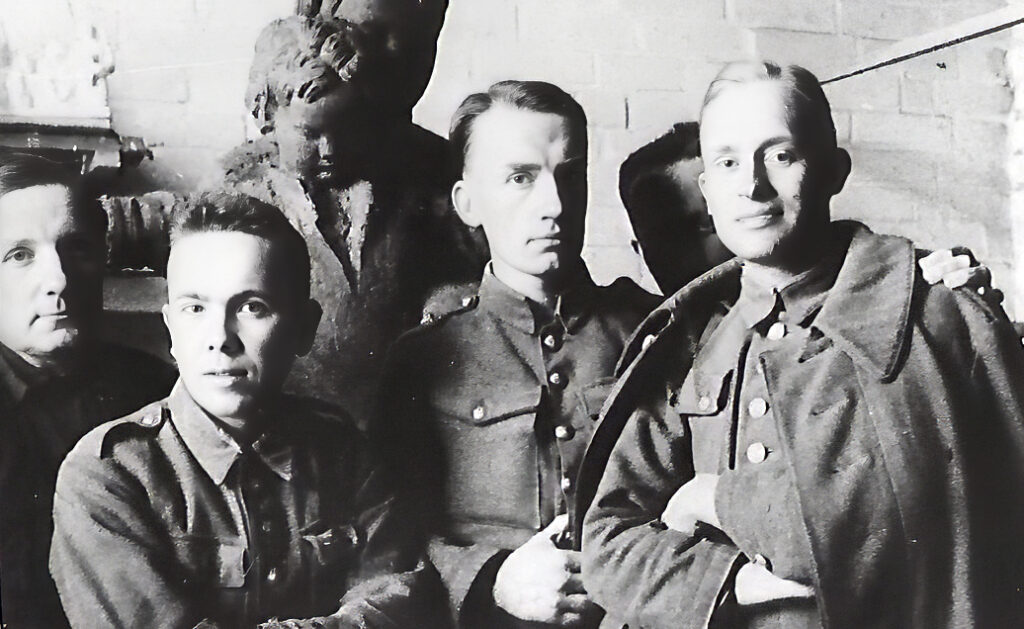
Everyday life in the camp was tough. Hunger, illness, monotony and deprivation of liberty were hard on the prisoners. Nevertheless, they led an intensive cultural and intellectual life. There were three choirs, a symphony orchestra and a theatre, and lectures, vocational training courses and courses of study were organised as part of the University of Woldenberg. There was also a conspiratorial independence organisation. Of particular importance was the conspiratorial radio listening organised by the „R” group, which provided information from the front lines of the war and from the occupied country.
Sport was an important part of life behind barbed wire. Football and volleyball matches were played regularly, and in 1944 a large tournament was organised under the name „Olympic Year 1944 in Camp II C”, which followed on from the cancelled Olympic Games in London. In the autumn of the same year, after the failure of the Warsaw Uprising, over 100 Home Army officers came to the camp, which intensified the conspiratorial and patriotic activities.
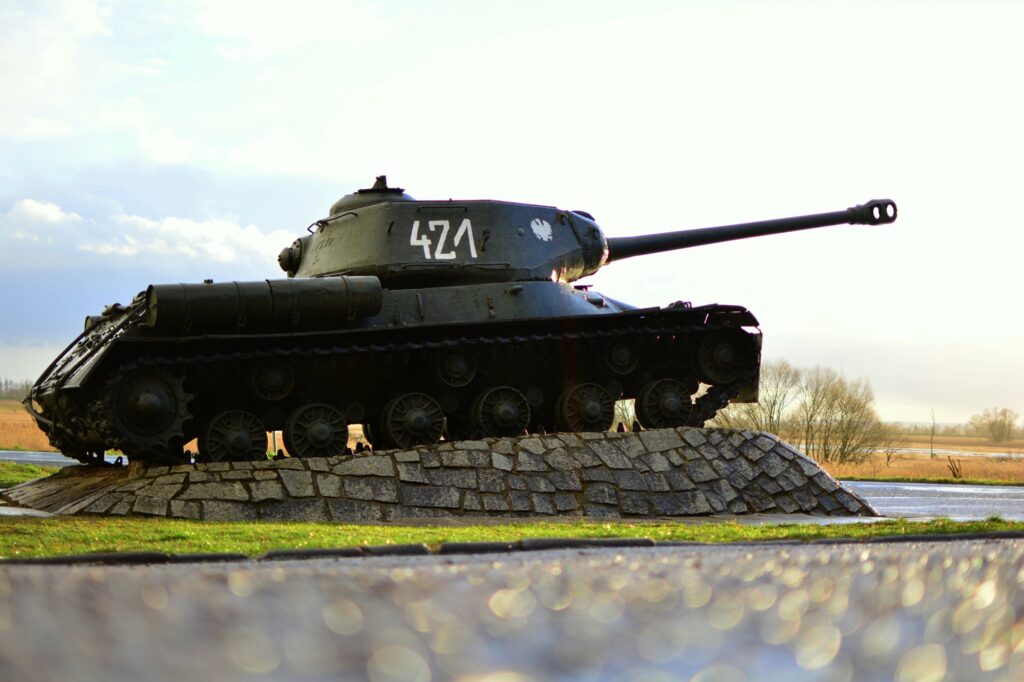
On 25 January 1945, the Germans ordered the evacuation of the camp in view of the approaching Eastern Front. The prisoners were led away under heavy guard in two columns, „East” and „West”. The eastern column was liberated on 30 January 1945 in Dziedzice by tanks of the Soviet 55th Tank Brigade. The western column was driven across the Oder, where it was liberated by American and Canadian troops. Finally, on 3 May 1945, the last prisoners of Oflag II C Woldenberg regained their freedom.
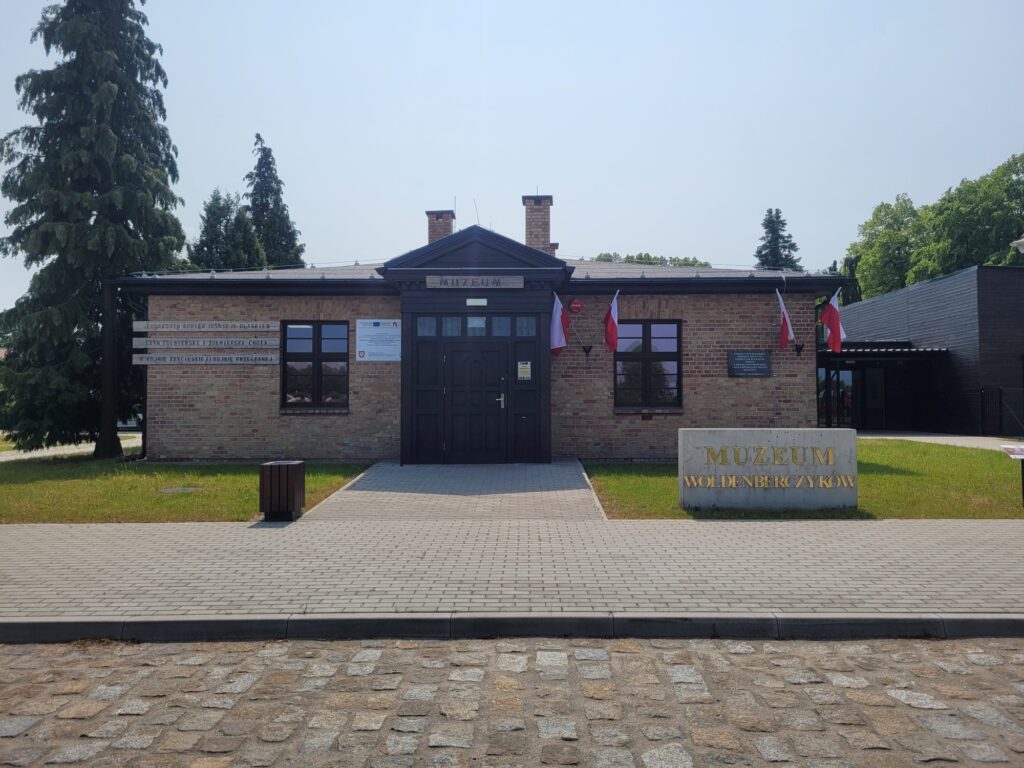
Today there is a museum on the site of the former camp, a memorial dedicated to the fate of the Polish officers, their resilience, their solidarity and their struggle to preserve their dignity and national identity under the conditions of imprisonment.
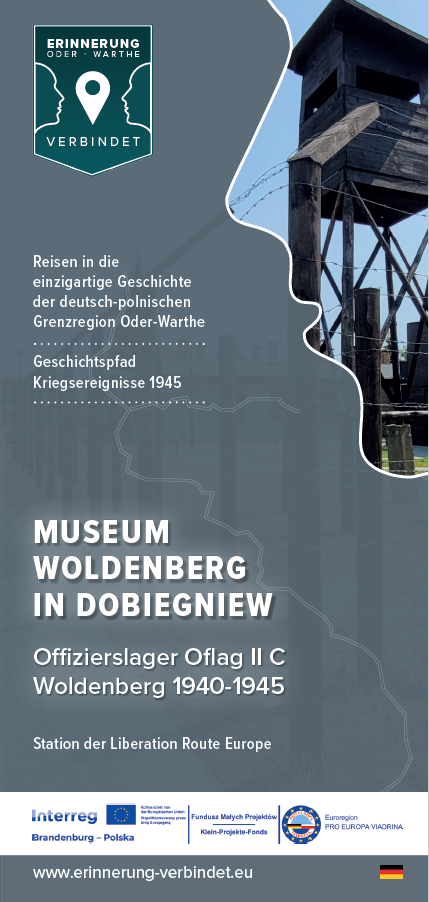
Museum Woldenberg in Dobiegniew, PL
Museum Woldenberg in Dobiegniew, PL
Historical picture of Oflag IIC Woldenberg, Dobiegniew, PL
Historical picture of Oflag IIC Woldenberg, Dobiegniew, PL
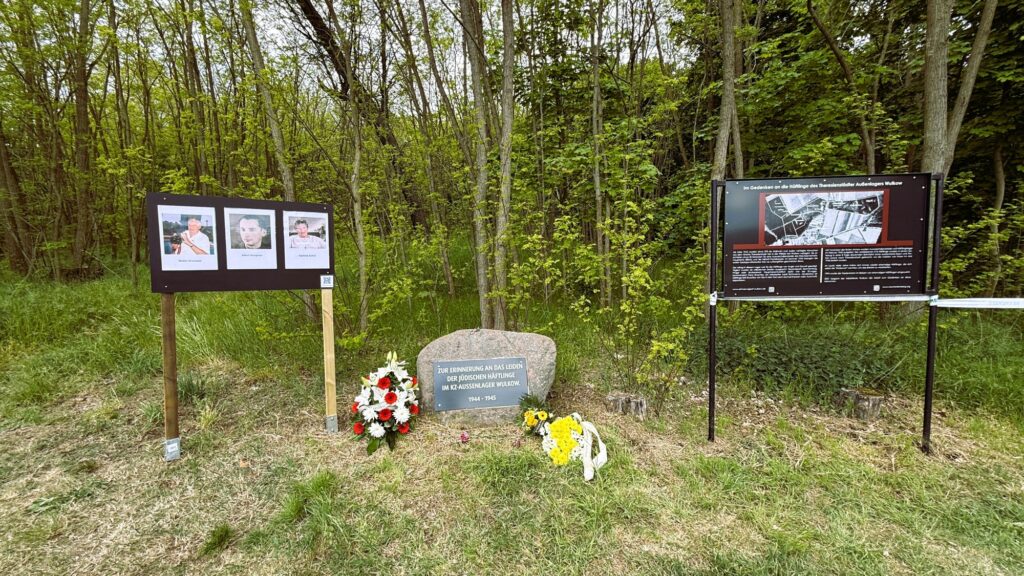
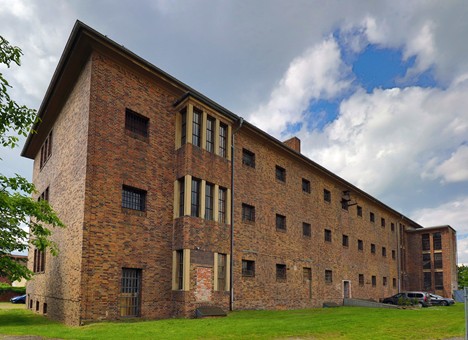
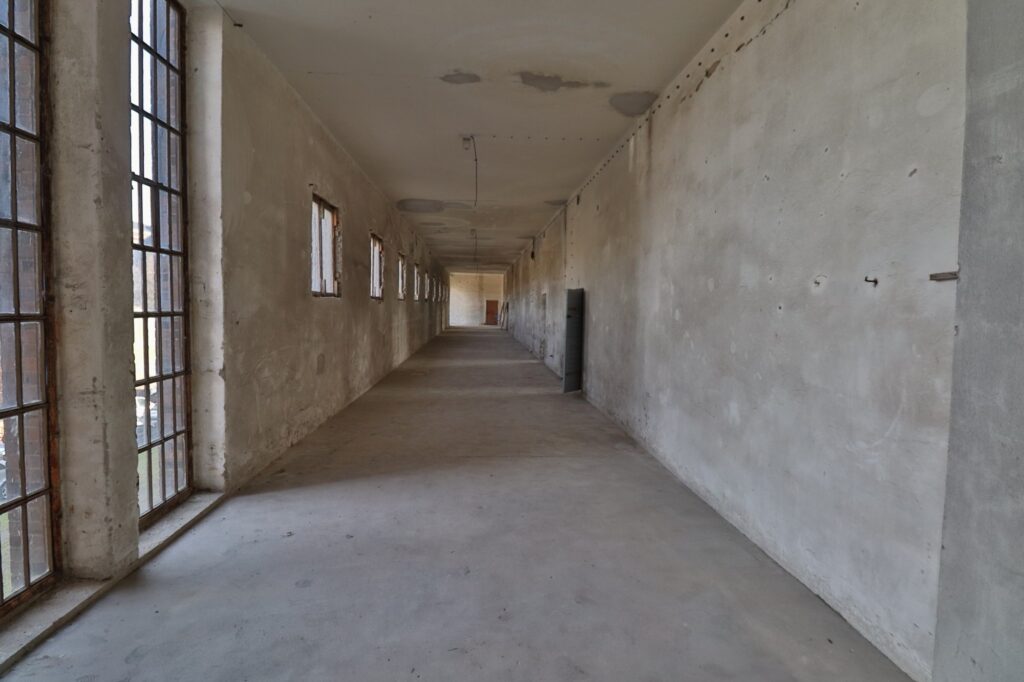
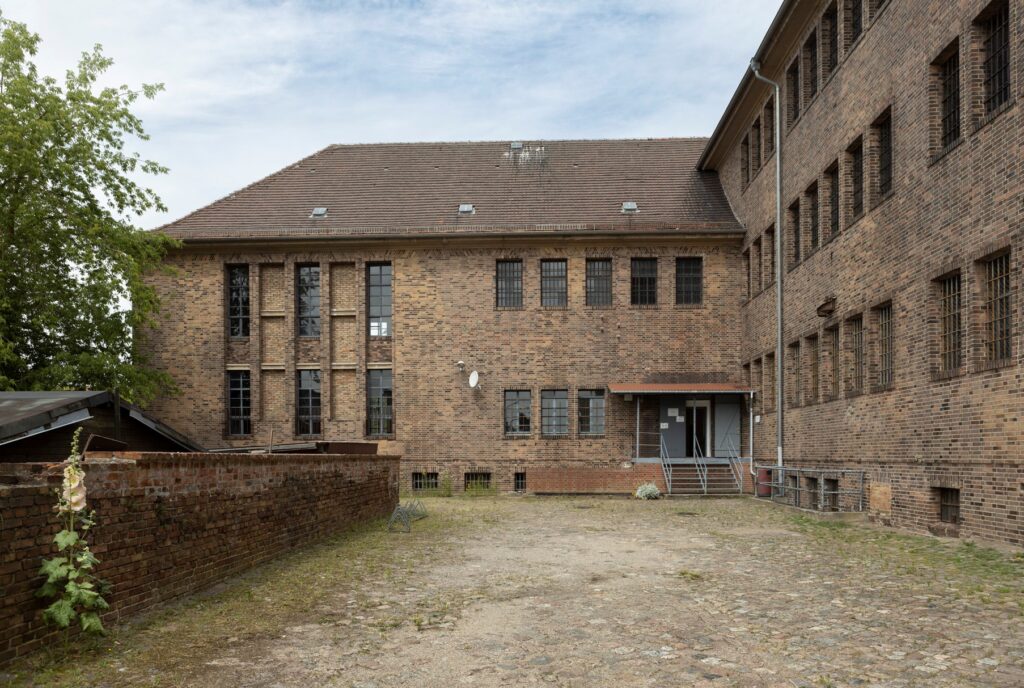
The Wulkow memorial site has been a digital memorial since 2024. It commemorates the subcamp of the Theresienstadt ghetto of the same name, which existed from 1944 to 1945. Almost 400 Jewish prisoners performed forced labour there for the construction of a secret alternative site for the Reich Main Security Office (RSHA).
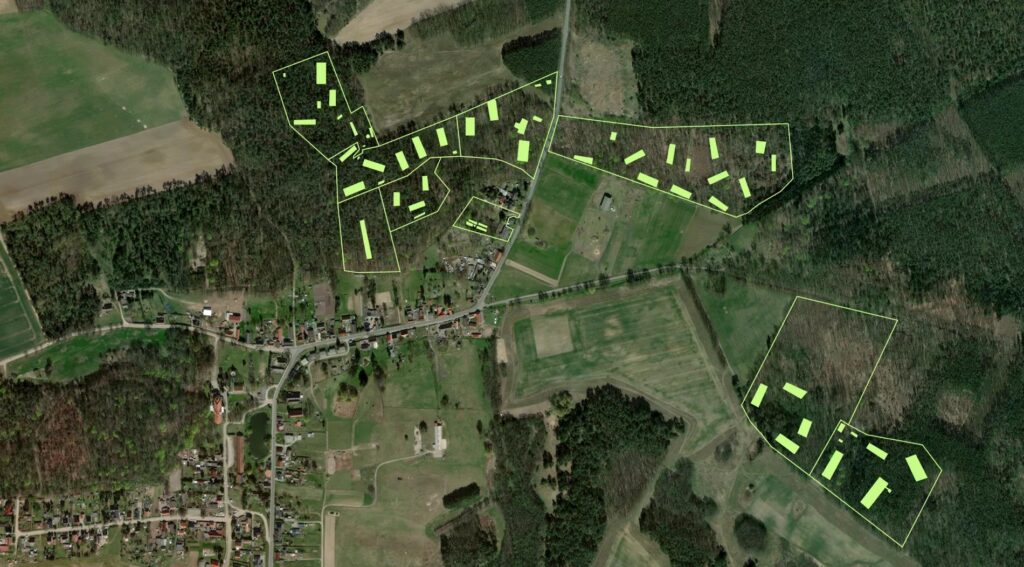
The Wulkow satellite camp was established in March 1944 in a wooded area near Neuhardenberg in Brandenburg. The strategic purpose was to build an alternative service centre for Office IV RSHA (Gestapo) and the NSDAP party chancellery.
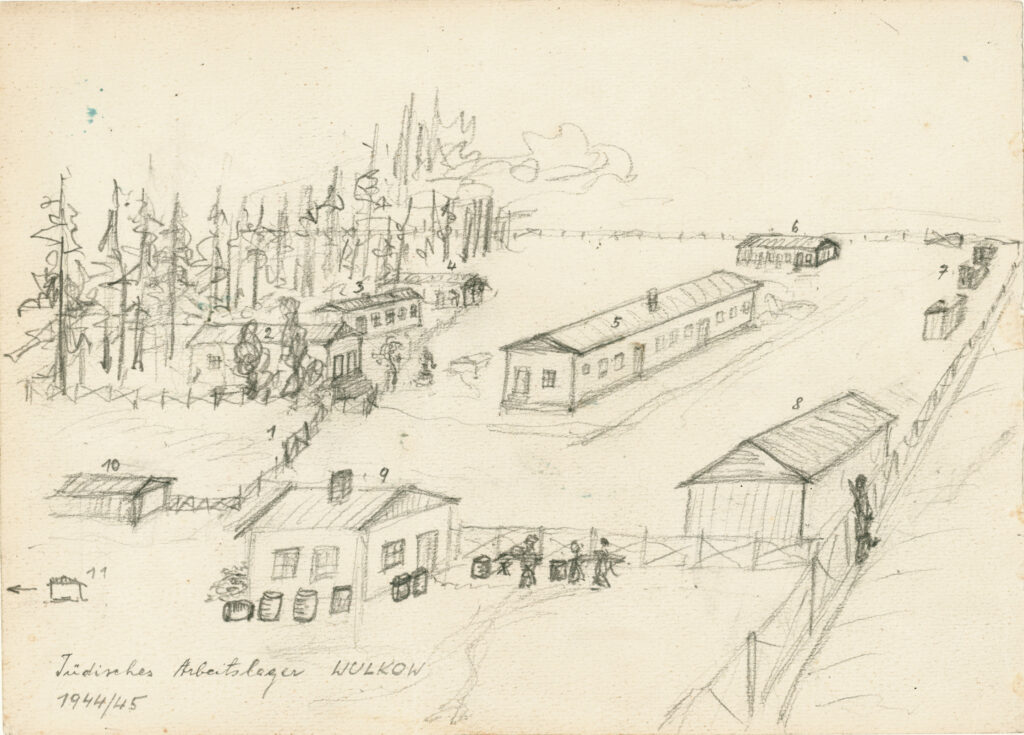
Under camouflage names such as „Dachs“ or „Barackenbau Zossen“ and under the initial direction of Adolf Eichmann, administrative offices and secret archives were to be protected from Allied air raids. The prisoners had to build barracks, intelligence facilities and a file bunker under extreme time pressure and with the utmost secrecy.
The victims and their living conditions
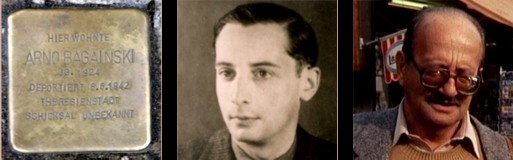
A total of almost 400 Jewish prisoners were deported from the Theresienstadt ghetto to Wulkow, including highly qualified craftsmen and engineers. The prisoners, including around 34 women, came from the Czech Republic, Germany and Austria. The work was seen as a deceptive „life insurance policy“ for the prisoners, as they were supposed to be protected from deportation to extermination camps in exchange for their labour. However, everyday life under the sadistic commandant Franz Stuschka was characterised by brutal violence, hunger and inhumane punishments.
In February 1945, the camp was evacuated due to the approaching Red Army; the prisoners were taken back to Theresienstadt in cattle wagons under agonising conditions.
Meaning today
Today, Wulkow functions as a digital place of remembrance, which was opened in April 2024. As there are hardly any structural remains on site, the memorial uses modern digital formats to bring together the scattered biographies of the victims and make their voices heard after decades of silence. Through seminars, memorial walks and the online exhibition, the Wulkow working group, in cooperation with the Campus Schloss Trebnitz educational centre, makes an important contribution to coming to terms with regional Nazi crimes and to political education. This place of remembrance acts like a digital echo that carries the fragments of history that were once hidden in the forest into the global public sphere in order to permanently preserve the identity of the victims.
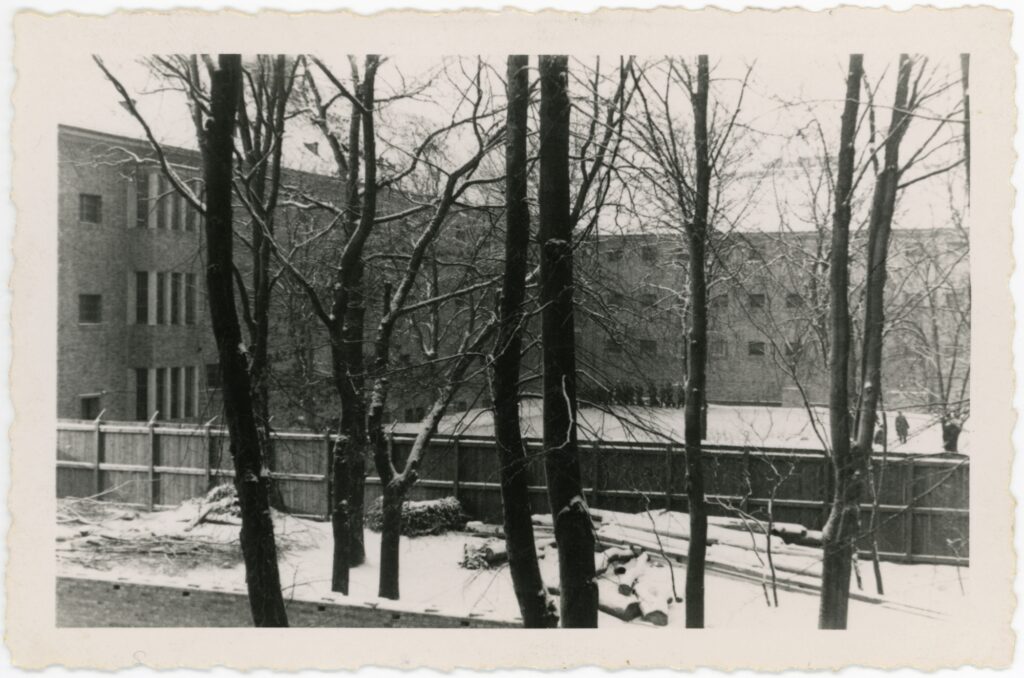
From 1940 to 1945, the prison served as a detention centre for members of the Wehrmacht. Sentences included desertion, disobedience, homosexuality, subversion of military power, theft, unauthorised removal, self-mutilation and murder.
The Anklam Wehrmacht prison began operating as a prison for military justice on 25 November 1940. The prisoners were male members of the Wehrmacht who had been sentenced by the courts, remand prisoners or prisoners in transit from Wehrkreise I, II and XX, Luftgauen I and XI, the Baltic Sea area of the navy and Army Group North.
In at least 139 cases, the Anklam prison can be shown to have applied the Special War Criminal Law Ordinance, which was linked to the imposition of the death penalty. The sentences of those not sentenced to death varied greatly. Among them, however, the prison routine or their labour assignments in the city and its surroundings were similar. The structures of the Anklam Wehrmacht prison were maintained until the last days of April 1945. Executions and pardons of death sentences were still being carried out on 26 April 1945.
The shifting front line of the Soviet army, with a major advance towards the north of Germany, took place between 27 and 28 April 1945. On the night of 29 April 1945, the Allies entered Anklam. It was to be the day of the last major battle for Anklam. The town (70-80%) was almost completely destroyed by bombing, shelling and arson by German and Allied troops.
Alarm units were still deployed in the prison against the Soviet army. The guards set off with a group of prisoners on an evacuation march to the west on 28 April 1945. Two days later, the column had marched through Tribsees and continued on towards Bad Sülze. This unit was picked up on the morning of 1 May 1945. (Source reference: Das Anklamer Wehrmachtgefängnis, Schwerin 2021, published by the Mecklenburg-Vorpommern State Centre for Political Education)
The former Wehrmacht prison is part of Anklam's museum landscape and its content is designed together with the „Centre for Peace Work - Otto Lilienthal - Hanseatic City of Anklam“ foundation.
The main topics for visitors are guided tours and workshops on the history of the site and its surroundings, military justice and democracy, everyday life and biographies of the prisoners. The death cell section of the building, which was set up as a memorial in the 1960s, is open to the public as a place of remembrance and as part of a museum visit.
Networking of German-police memorial sites for the victims of National Socialist tyranny, especially Nazi murders of the sick; development of educational and memorial tourism programmes
Interreg VI A funding project 2026-2028
The project is concerned with the reappraisal, visualisation and networking of the „History of the Nazi murders of the sick“ in Międzyrzecz, Berlin and Ueckermünde and the „Traces of Jewish life“ in Seelow, Międzyrzecz, Berlin and Ueckermünde.
In cross-border cooperation, the project partners are revitalising or re-establishing nationally significant places of remembrance, equipping them with digital exhibitions and linking them thematically with each other. In addition to sustainable investments in the expansion of the places of remembrance, the development of cross-border educational tourism offers is a project focus, with inclusive elements and the involvement of relevant target groups.
The aim is to improve access to the places of remembrance involved and thus to the shared history of the German-Polish border region, which is unique in the context of the end of the Second World War and the westward shift of Poland.
Key project outputs
„History of the Nazi murders of the sick“
Cross-border measures for knowledge exchange and networking,
Revitalisation of the Międzyrzecz-Obrzyce cemetery and memorial,
Design and construction of a contemplation garden on the Międzyrzecz clinic grounds Obrzyce as part of a German-Polish youth project with trainees from gardening and landscaping companies in Berlin and Międzyrzecz,
Development of an exhibition on the history of Nazi hospital murders in Ueckermünde in the AMEOS Clinic,
Development and linking of new and existing digital exhibitions on the history of the Nazi murders in Międzyrzecz-Obrzyce and Ueckermünde, Polish translation and linking of the „Totgeschwiegen“ exhibition in Berlin,
Development of target group-orientated modules for educational tourism on the history of the Nazi murders of the sick at the project partners, networked in terms of content and for cross-border marketing.
„Traces of Jewish life“
Cross-border measures for knowledge exchange and networking,
Construction of a new memorial and meeting place „former Jewish cemetery Seelow“ at the former original site,
Development of four circular routes with digital elements on traces of Jewish life in Seelow, Międzyrzecz, Ueckermünde and Berlin-Charlottenburg,
Development of target group-orientated modules for educational tourism on traces of Jewish life at the project partners, networked in terms of content and for cross-border marketing.
In this way, the project meets the common challenge of improving mutual access to cultural heritage and to the tourist and cultural offerings in the assisted area and utilising the opportunities offered by culture and tourism to expand cross-border links.
The „Remembrance connects“ network provides a suitable framework for networking and disseminating the project's new educational tourism programmes. The project takes up the strategy of the multi-perspective remembrance landscape Oder-Warthe and consolidates the cross-border educational tourism offer for the significant era of the Second World War in the region.
Historical context
The cross-border approach and the need to involve partners outside the funding area arise from the distribution and role of the Nazi perpetrator sites in the former Reich territory. People with mental disabilities were isolated in the former clinic in Berlin, selected and deported to the sanatorium in Meseritz-Obrawalde, where around 10,000 people were murdered. A crematorium for the extermination of Nazi victims was set up and trialled for the first time on a hospital site at the Ueckermünde State Sanatorium. In line with the small number and distribution of today's memorials to the complex of Nazi hospital murders, there is a need to utilise previously untapped potential for remembrance work (Międzyrzecz, Ueckermünde) and to make it possible to experience history in context.
Preserving the traces of Jewish life is also an important task of German political remembrance work. Jews were repeatedly subjected to persecution and expulsion, most recently during the Nazi era, when the National Socialists systematically expelled and exterminated the entire Jewish population.
The forced migration of the population in connection with the westward shift of Poland as well as politically and ideologically driven cultures of remembrance in the former GDR and the People's Republic of Poland led to the neglect of many Jewish sites such as cemeteries and synagogues. There is a need to preserve traces and make history tangible across borders. The existing knowledge and experience of the project partners as well as locations and networks outside of the funded area are utilised and linked in order to achieve positive effects in the funded area.
Project partners
Municipality of Międzyrzecz (Lead Partner)
Marshal's Office of the Lubuskie Voivodeship, Department of Geodesy, Real Estate Management and Spatial Planning - Subdepartment of Spatial Planning
Charlottenburg-Wilmersdorf district of Berlin
City of Seelow (Mark)
Town of Seebad Ueckermünde
Rostock University Medical Centre
Brandenburg Memorials Foundation, Memorial to the Victims of the Euthanasia Murders (associated partner)
Project duration: 01.01.2026 - 31.12.2028
Next activities
September/October 2026, Berlin: Trainee Project Week 1 with workshops „Nazi Medical Murders“ and „Inclusion“
October 2026, Brandenburg: Expert workshop „Educational Tourism with People with Disabilities“
Nov. 2026, Seelow: Workshop „Traces of Jewish Life“
The kick-off conference for the German-Polish project „Living Places of Remembrance“ brought together representatives of the project partners at Międzyrzecz Public Library.
5 November 2025, Kulturhaus Küstriner Vorland (DE)
The symposium „Expulsion, Forced Migration, Loss of Culture 1945 in the Oder-Warthe Region“ focussed on the complex German-Polish history in the border region, particularly after the Second World War. It opened up a space for German-Polish dialogue about the profound upheavals of 1945.
The region exemplifies forced migration, loss and new beginnings, the after-effects of which can still be felt today. Here, memory is understood as a relationship - open, multi-perspective and in dialogue. The aim is not a ready-made narrative, but a responsible narrative that combines science and personal experience, involves young people and builds bridges between research, education and the public.
The „Remembrance connects“ funding project creates a cross-border network that makes historical sites visible and preserves traces. In this way, remembrance becomes a process that opens up horizons, enables understanding and shapes the future.
Programme:
Opening:
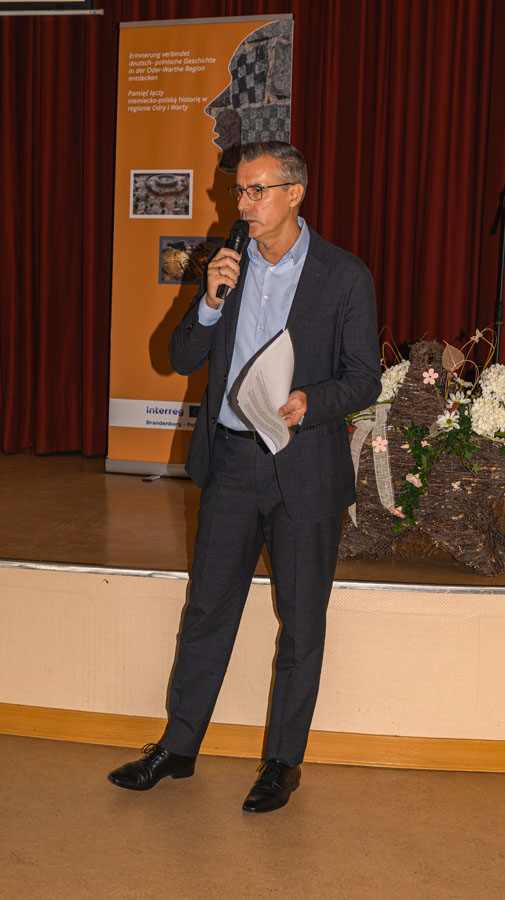
Robert Nitz
Mayor of Seelow (Mark)
„Preserving history – shaping the future: Welcome to the symposium in the Oder-Warthe region“
The welcoming speech emphasises the importance of the symposium as part of the German-Polish project „Memory Connects“, honours the shared history and highlights the responsibility to actively address the issues of expulsion, forced migration and cultural loss. Mr Nitz underscores the relevance of remembrance culture for the present and future, calls for dialogue and cooperation, and urges us to learn from history in order to achieve peaceful coexistence in Europe.
Dirk Röder
City of Seelow (Mark)
Opening speech at the symposium „Expulsion, forced migration, cultural loss in 1945 in the Oder-Warthe region“
It is emphasised that remembrance is a living, communal process. It requires courage, respect and openness, and thrives on diversity and dialogue. The symposium „Remembrance Connects“ promotes the exchange of different experiences and perspectives in order to build bridges between generations and disciplines. The aim is not to create a finished narrative, but rather an open, responsible account of the past.
Panel I: Historical classification
Przemysław Słowiński
Jakub von Paradyż Academy
Population changes in the German-Polish border region after the Second World War. History. Politics. Semantics.
The Second World War was a defining event in human history. It led to numerous changes around the world. There is no doubt that responsibility for this armed conflict lay with the German state, and the crimes committed by the Third Reich, which led to the deaths of millions of people in Poland and other countries, to an enormous amount of physical and mental suffering, and to material destruction on an unprecedented scale, have had repercussions that are still felt today.
Reinhard Schmook
Oderland Museum Bad Freienwalde
Flight and expulsion in the Oder-Warthe region using the example of Königsberg/Nm. (Chojna)
The speech deals with the topic of flight and expulsion in the Oder-Warthe region using the example of the district town of Königsberg/Neumark. The rapid approach of the Red Army at the end of January/beginning of February 1945 led to chaotic conditions here, because the party authorities prevented an orderly evacuation of the town until the very end. What then happened in Königsberg from 4 April to 23 June 1945 is described by the local second pastor Fritz Bliedner. He was a member of the Confessing Church, an opposition movement of Protestant Christians against attempts to bring the doctrine and organisation of the German Protestant Church into line with National Socialism. The entries in his diary are both credible and illuminating, allowing us to form a picture of the terrible events between the invasion of the Red Army and the expulsion of the city's population. They reflect death and destruction, the suffering of the remaining inhabitants and, finally, the extensive destruction of the town with its medieval monuments.
Ryszard Skalba
Museum of the Kostrzyn Fortress
The pioneering years of Kostrzyn in Poland
In mid-1945, Küstrin's Old Town and New Town were among the most destroyed towns in the former German Reich. The expulsion of the German inhabitants paved the way for Polish settlers, and the town was given a new name - Kostrzyn. The first settlers were mainly railway workers and customs officials who were supposed to ensure the functioning of the basic transport and border structures. Over time, they were joined by labourers who worked on the reconstruction of the pulp and paper mill, which revived economic life.
Kostrzyn developed on the site of the former New Town, constructing new buildings and facilities from scratch. Offices, schools and workplaces were gradually established and the town increasingly gained its Polish character.
Tim Müller
Eigenbetrieb Kulturbetriebe Frankfurt (Oder) Viadrina Municipal Museum
The lost museum. The Frankfurt Oderland Museum in the former Lienauhaus
The fate of the Frankfurt City Museum's collection is traced using historical archive sources and eyewitness accounts. While important art objects were secured by Prof. Dr. Karpa in March 1945 and presumably taken out of the country, less valuable exhibits were left behind and were largely destroyed. The whereabouts of key pieces in the collection remain unclear; it is possible that they are stored in Potsdam or in Russian museums. This means that there is still hope that items believed to be lost can still be found. Intensive research is still required to clarify the whereabouts of the Frankfurt collection.
Agnieszka Lindenhayn-Fiedorowicz
Eigenbetrieb Kulturbetriebe Frankfurt (Oder) Viadrina Municipal Museum
A Cranach in the provinces - and his fate after 1945
The Neudamm Altarpiece from the workshop of Lucas Cranach the Younger was one of the most important Renaissance retables in the Oder region. Donated in 1562 by Duchess Katharina von Braunschweig-Wolfenbüttel for the town church in Neudamm (Dębno), it was transferred to the village church in Nabern (Oborzany) after the church was rebuilt in 1852. Its post-war fate is exemplary for the loss of movable cultural assets in the Oder-Warthe region. The destruction caused by the war, the passage of the Red Army and the subsequent population movements led to the destruction, looting or devaluation of numerous church furnishings. The population exchange was accompanied by a change of denomination: the newly settled Catholic Poles were often indifferent or hostile to Protestant art. As a result, the Neudammer Altar was dismantled in the 1950s and banished to the attic, where it suffered severe damage and fell into oblivion. It was not until 1998 that it was rediscovered by a regional historian, badly damaged and incomplete. In 2002, it was taken away for restoration - not to a specialised workshop, but to the private workshop of the diocesan conservator in Szczecin. As the altar was not entered in the list of monuments after 1945, it is still not subject to state protection. The lecture takes this work as a case study to visualise the complex post-war fates of works of art in the region: between war destruction, confessional alienation, neglect and uncertain preservation.
Henriette Brendler
Frankfurt (Oder)
Saved, lost, returned: the medieval choir windows of St Mary's in Frankfurt (Oder)
The three late Gothic choir windows of St Mary's Church in Frankfurt (Oder) are not called a glass treasure without good reason. Nowhere else in Brandenburg is there a comparable collection of medieval stained glass; the Antichrist window is even considered unique. The article focusses on the fate of the Frankfurt Picture Bible during the Second World War, the handling of this subject in the GDR and the long journey from rediscovery to repatriation and restoration.
Marek Karolczak
Myślibórz
Material losses of cultural heritage using the example of the municipality of Myślibórz (Soldin)
The lecture describes the situation in Soldin/Myślibórz in February 1945 after the invasion of the Soviet army and presents preserved documents from the collections of the Museum of the Myślibórz Lake District in Myślibórz. They show the fate of the exhibits that were in the collections of the Regional Museum - Museum of Local History of the Soldin District, which existed from 1928 to 1945.
Christian Hirte
Museum Lebuser Land Müncheberg
The loss of inventory in the Museum Lebuser Land Müncheberg 1945 ff.
Panel II: Local perspectives - cultural loss - cultural appropriation?
Kamila Pałubicka
Kulturerben e.V.
Artistic-creative history mediation using the example of the Martyrium Museum Słońsk (Sonnenburg)
The town of Słońsk (formerly Sonnenburg) is a prime example of the difficult legacy of National Socialism. One of the first concentration camps was located here, where numerous political prisoners from all over Europe were imprisoned. In the final phase of the Second World War, more than 800 prisoners fell victim to a planned massacre. Dealing with this historical legacy and remembering the victims remains a central social task.
The Kulturerben e.V. association has been working with German-Polish youth groups for over ten years on innovative artistic approaches to this difficult chapter of European history. In various projects, performative, media and participatory approaches have been trialled that enable young people to actively engage with the culture of remembrance and develop their own forms of expression.
As part of the current workshops, we combine historical knowledge transfer with artistic and creative methods. After a guided tour of the central places of remembrance in Słońsk and a visit to the museum memorial, the young people work independently in German-Polish teams to create lay films. This technique allows them to combine images, symbols and texts and condense their reflections on the history of Sonnenburg into short film sequences. The work is complemented by spoken word texts and audio recordings, which are incorporated into a joint performance for the memorial service.
The result is a multi-layered, transnational approach to the culture of remembrance that combines historical facts with creative self-activity and enables young people to experience themselves as active shapers of a living European culture of remembrance.
Thomas Drewing
History and local history association Gusow-Platkow e.V.
New museums - the approach of the next generation
A conference volume will be produced, which will contain additional specialist contributions:
Friedrich Adolph Baron von Dellingshausen
Bailiwick of Brandenburg of the Order of St John
Sonnenburg – 500 years as the centre of the Balley Brandenburg of the Knightly Order of St. John of the Hospital to Jerusalem
The Order of St John has shaped and developed the Oder-Warthe region like no other over the centuries. Against the backdrop of the events surrounding 1945, the text shows how the Order of St John responded to the consequences of these historical upheavals. The recovery of lost works of art, the preservation of archival materials, and investments and activities aimed at preserving historical buildings are symbolic of the efforts to recover lost cultural assets and create a shared space of remembrance. The initiatives for tourist and cultural revitalisation in cooperation with Polish partners are an expression of the will to overcome the ruptures of the past and promote cross-border dialogue on the shared heritage of the region. The Order of St John's commitment thus documents not only the preservation of objects, but also the attempt to preserve and jointly reshape identity and continuity in the face of loss and change.
Andrzej Kirmiel
Alf Kowalski Międzyrzecz Museum in Międzyrzecz
Międzyrzecz and the Międzyrzecz Land 1933-1947 in the face of great changes
The article presents the history of the inhabitants of Międzyrzecz and the Międzyrzecz region in the years 1933-1947 from the perspective of national changes. The author describes the process that led to the destruction of the multi-ethnic structure of the city that had developed over centuries. He reports on the history of the Jewish community of Międzyrzecz, which was the first to disappear from the ethnic landscape, and describes the further population shifts, this time after the end of the Second World War. At that time, the German inhabitants of the town and the neighbouring villages had to leave their homes. What remained were the locals, the Polish population, who spoke little or no Polish and with whom the new rulers did not really know what to do. In the end, they were treated like foreigners who expressed their desire to remain in Poland and were subjected to the same scrutiny. The final part of the national changes in the area between the Międzyrzecz and Wisła rivers was the influx of people from central and eastern Poland, as well as Ukrainians and Lemkos from south-east Poland, who had been expelled from their homeland as part of the „Wisła” campaign, which began in 1947.
Such mass resettlements lead to a situation in which ethnically foreign population groups arrive in areas where there are no longer any former inhabitants, but everything around them bears witness to their long-standing presence. The author describes what happened to the material culture of the communities that lived in Międzyrzecz and the neighbouring villages until 1945.
Andy Steinhauf
Association for the History of Küstrin e.V.
The Küstrin / Alt-Drewitz reception camp 1945
The article examines the establishment and brief existence of the Küstrin/Alt-Drewitz reception camp in autumn 1945. Following the order of the Soviet military administration to control the refugee convoys, the camp was set up as a central transit point for displaced persons. Despite massive destruction and a lack of infrastructure, up to 30,000 people had to be accommodated there at times. Reports describe chaotic conditions, inadequate medical care, assaults and logistical problems such as the „wagon crisis“. Between October and December 1945, over 52,000 people passed through the camp before it was closed down due to untenable conditions and conflicts with the local population. The reception camp is a prime example of the challenges of the post-war period and the precarious situation of displaced persons in the Soviet occupation zone.
Katarzyna Sztuba-Frąckowiak
Alf Kowalski Międzyrzecz Museum in Międzyrzecz
The coexistence of Germans and Russians on the estates of the Obrawalde State Hospital after the Red Army marched in in 1945, as recalled by Dorothea Neuss from Meseritz.
The article is about Germans who, together with Soviet soldiers, managed two institutional estates between Obrawalde and Meseritz. Their joint commander was the Ukrainian Sergeant Borodauku, who, during the expulsions, brought all his German estate workers safely across the Oder to their new home. It discusses their harmonious cooperation in the production of food for the Soviet units. It also addresses the relationship between the Germans from the institutional estates and the Polish and Soviet authorities in Międzyrzecz.
Dietmar Zimmermann
New Hardenberg
Neu Hardenberg becomes Marxwalde
The article sheds light on the eventful history of the place names of Neuhardenberg, from Quilitz to Neu Hardenberg to Marxwalde and back again. Particular attention is paid to the renaming to Marxwalde in 1949, the background to this, political influences and the role of the local council, as well as the significance of Karl Marx, which are traced on the basis of minutes and contemporary documents. The events show how political changes shape local identities.
We would like to thank our host at the Kulturhaus Küstrin-Kietz, our project partners and speakers, our interpreters, our photographer Mr Ahrendt and our film team from Parkosmedia. We would also like to thank our sponsor and the active participants of the symposium.
25 June 2025, Cultural Centre of the Municipality of Słońsk (PL)
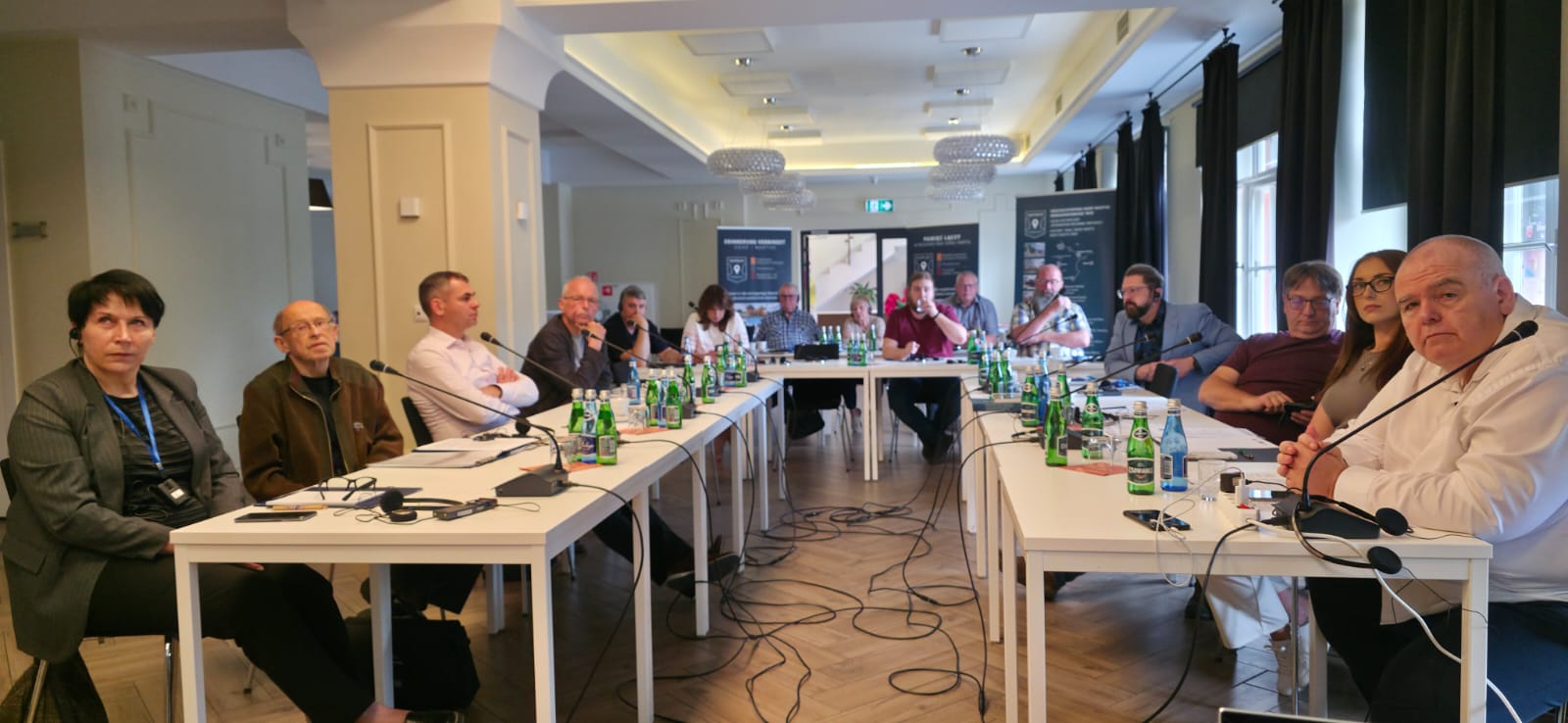
The workshop served to prepare the content of a symposium planned for the beginning of November 2025 in Küstrin-Kietz. It focussed on the complex German-Polish history in the border region, particularly after the Second World War, and discussed methods for communicating this history to younger generations. The participants, including representatives from Germany and Poland, exchanged views on various aspects such as museum work, cultural heritage and the culture of remembrance and emphasised the importance of coming to terms with the past together. Several projects and initiatives were presented that aim to promote understanding of the shared history and strengthen the German-Polish dialogue.
On the basis of initiative presentations and experience reports, topics of remembrance were discussed in connection with the effects of the events of 1945 on the population on both sides of the Oder, including the westward shift of Poland, flight, expulsion, forced migration, ideology-based changes in German and Polish cultures of remembrance, loss of culture, interpretation today - lessons for tomorrow.
In the stimulating discussion that followed, various perspectives and topics were added, including
Looted artefacts from all over Poland in manor houses in the region
"scorched earth" by the Soviet army as revenge for the attack and destruction of the Nazi Germans beforehand
Recommendation for a dialogue between German-Polish museums to provide impetus for joint education
Choice of title for the symposium: a positive connotation
"Cultural appropriation processes"
Films, culture and art as tools for communicating history
Recommendation for 2 films on the history of the town of Landsberg (YouTube)
many personal stories of the participants with family roots in the region.
The last item on the programme was a visit to the Słońsk Martyrdom Museum with a detailed guided tour by Prof. Smolinski. Here, various participants also reported on their personal experiences in conversations with contemporary witnesses in their families.
The Active Remembrance Youth Programme (ARYP) comprises nine different youth exchange events throughout Europe. The project is organised by Liberation Route Germany and runs from 2024 to 2026. It is funded by the EU and includes partners from the Netherlands, Belgium, Luxembourg, Germany, Poland, France, Italy and the Czech Republic.
The aim of the project is to actively involve and inspire young Europeans from different backgrounds to explore and commemorate the Second World War from different perspectives. Through a series of youth encounters, participants will visit significant World War II sites across Europe and engage with history first-hand. This immersive experience encourages active learning, including conducting interviews, curating historical content and creating podcasts and videos, all of which will feed into an online exhibition.
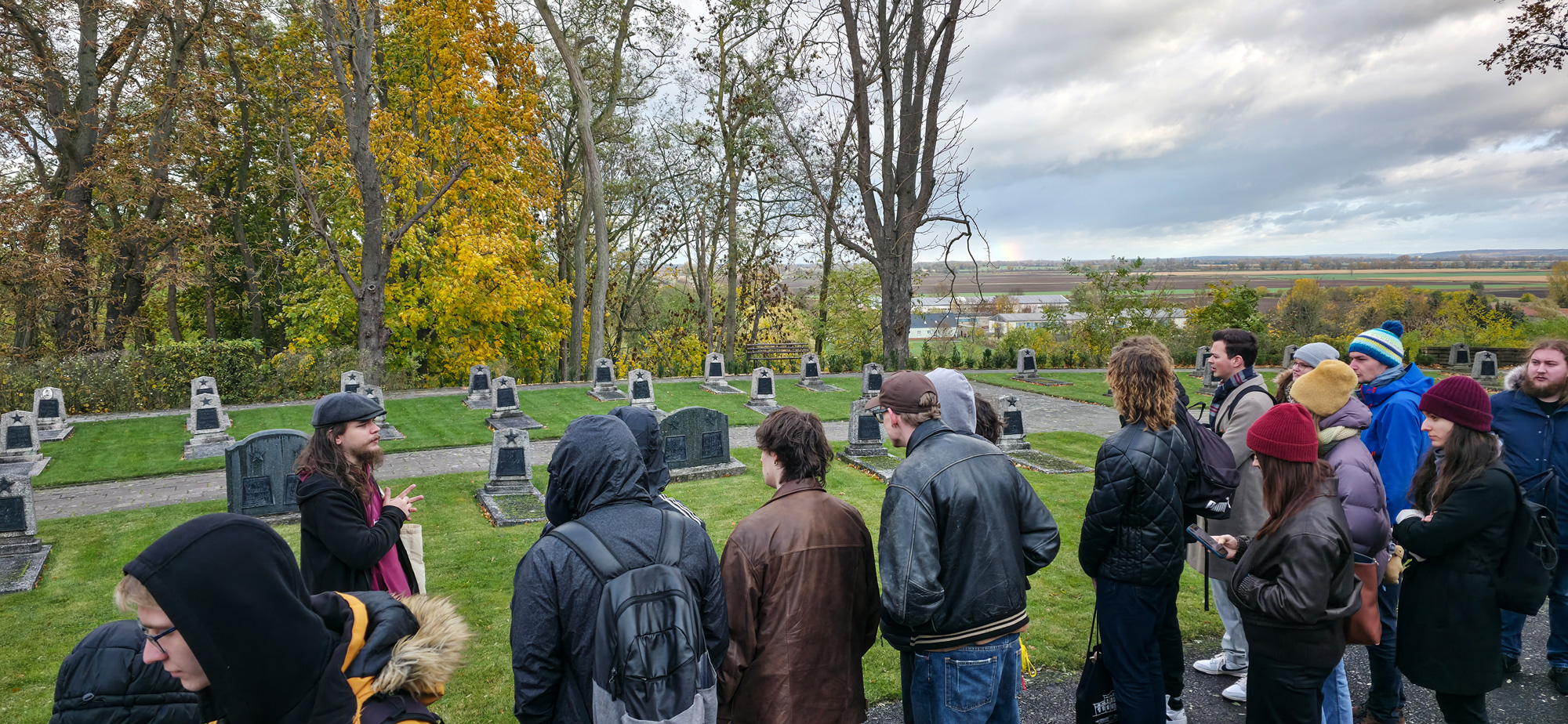
In October 2025, a youth exchange week took place in the Oder-Warthe region. 18 young people from all over Europe learnt about the special history of our region at locations such as Slonsk, Kostrzyn nad Odra, Seelow, Klessin and Berlin-Karlshorst. Their task was to reflect on this history in podcasts and videos, to scrutinise it in interviews and to interpret it from their own perspective.
The youth exchange week in the German-Polish border region was organised by the Liberation Route Europe in cooperation with the Liberation Route Poland, the Liberation Route Germany and the city of Seelow, funded by the European Union. The preliminary programme and further information can be found at https://www.lre-youth.eu.
We've detected you might be speaking a different language. Do you want to change to:
To provide you with an optimised experience, we use technologies such as cookies to store and/or access device information. If you consent to these technologies, we may process data such as browsing behaviour or unique IDs on this website. If you do not give or withdraw your consent, certain features and functions may be impaired.
Functional
Always active
The technical storage or access is strictly necessary for the legitimate purpose of enabling the use of a specific service expressly requested by the subscriber or user, or for the sole purpose of carrying out the transmission of a communication over an electronic communications network.
Preferences
The technical storage or access is necessary for the legitimate purpose of storing preferences not requested by the subscriber or user.
Statistics
Technical storage or access for statistical purposes only.Technical storage or access used solely for anonymous statistical purposes. Without a subpoena, the voluntary consent of your Internet service provider or additional records from third parties, the information stored or accessed for this purpose alone cannot generally be used to identify you.
Marketing
The technical storage or access is necessary to create user profiles, to send advertising or to track the user on a website or across several websites for similar marketing purposes.