Tag: Seelow

  • Living places of remembrance

    Living places of remembrance

    Networking of German-police memorial sites for the victims of National Socialist tyranny, especially Nazi murders of the sick; development of educational and memorial tourism programmes

    Interreg VI A funding project 2026-2028

    The project is concerned with the reappraisal, visualisation and networking of the „History of the Nazi murders of the sick“ in Międzyrzecz, Berlin and Ueckermünde and the „Traces of Jewish life“ in Seelow, Międzyrzecz, Berlin and Ueckermünde.

    In cross-border cooperation, the project partners are revitalising or re-establishing nationally significant places of remembrance, equipping them with digital exhibitions and linking them thematically with each other. In addition to sustainable investments in the expansion of the places of remembrance, the development of cross-border educational tourism offers is a project focus, with inclusive elements and the involvement of relevant target groups.

    The aim is to improve access to the places of remembrance involved and thus to the shared history of the German-Polish border region, which is unique in the context of the end of the Second World War and the westward shift of Poland.

    Key project outputs

    „History of the Nazi murders of the sick“

    • Cross-border measures for knowledge exchange and networking,
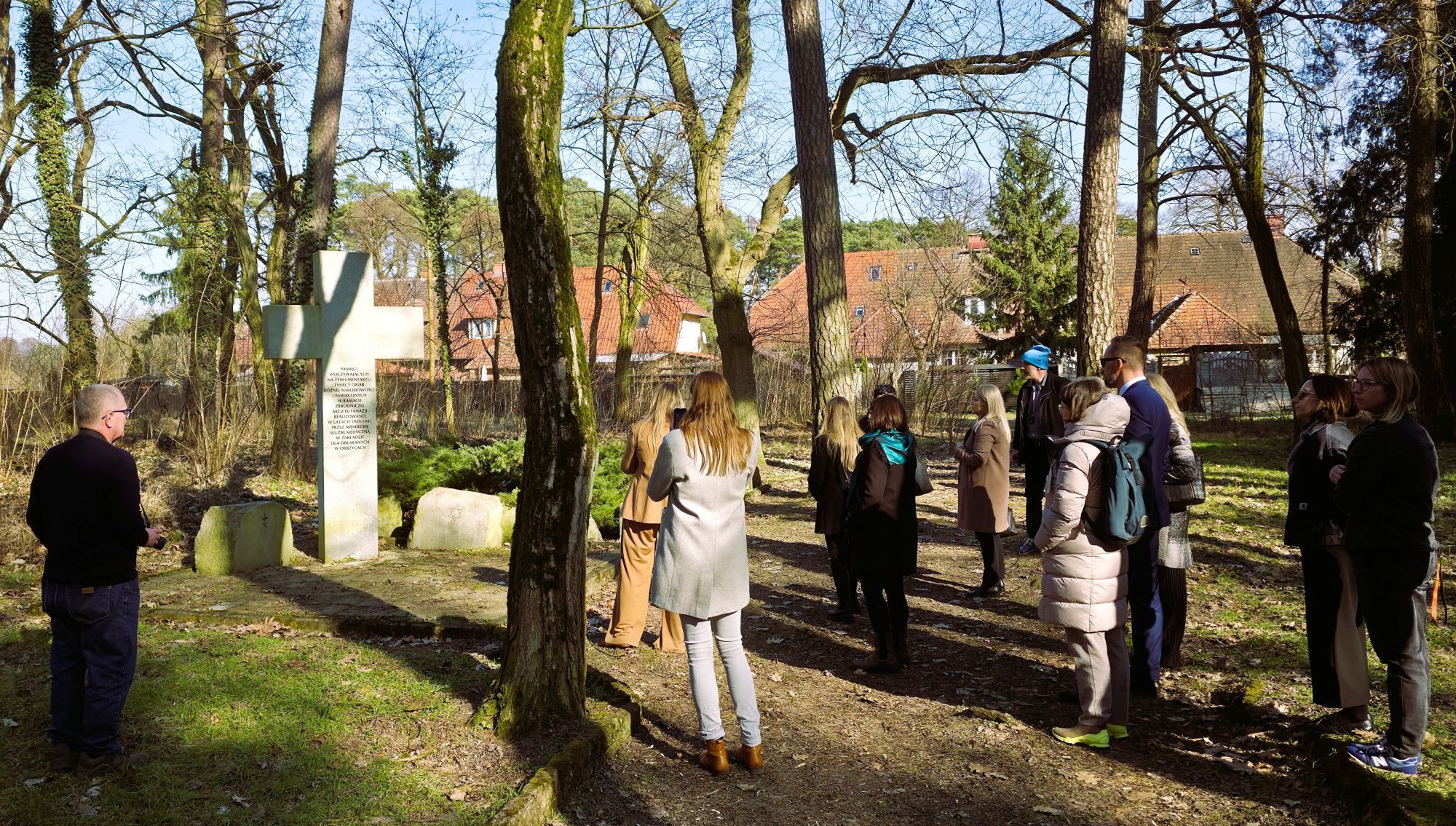
    • Revitalisation of the Międzyrzecz-Obrzyce cemetery and memorial,
    • Design and construction of a contemplation garden on the Międzyrzecz clinic grounds
      Obrzyce as part of a German-Polish youth project with trainees from gardening and landscaping companies in Berlin and Międzyrzecz,

      Development of an exhibition on the history of Nazi hospital murders in Ueckermünde in the AMEOS Clinic,
    • Development and linking of new and existing digital exhibitions on the history of the Nazi murders in Międzyrzecz-Obrzyce and Ueckermünde, Polish translation and linking of the „Totgeschwiegen“ exhibition in Berlin,
    • Development of target group-orientated modules for educational tourism on the history of the Nazi murders of the sick at the project partners, networked in terms of content and for cross-border marketing.

    „Traces of Jewish life“

    • Cross-border measures for knowledge exchange and networking,
    • Construction of a new memorial and meeting place „former Jewish cemetery Seelow“ at the former original site,
    • Development of four circular routes with digital elements on traces of Jewish life in Seelow, Międzyrzecz, Ueckermünde and Berlin-Charlottenburg,
    • Development of target group-orientated modules for educational tourism on traces of Jewish life at the project partners, networked in terms of content and for cross-border marketing.

    In this way, the project meets the common challenge of improving mutual access to cultural heritage and to the tourist and cultural offerings in the assisted area and utilising the opportunities offered by culture and tourism to expand cross-border links.

    The „Remembrance connects“ network provides a suitable framework for networking and disseminating the project's new educational tourism programmes. The project takes up the strategy of the multi-perspective remembrance landscape Oder-Warthe and consolidates the cross-border educational tourism offer for the significant era of the Second World War in the region.

    Historical context

    The cross-border approach and the need to involve partners outside the funding area arise from the distribution and role of the Nazi perpetrator sites in the former Reich territory. People with mental disabilities were isolated in the former clinic in Berlin, selected and deported to the sanatorium in Meseritz-Obrawalde, where around 10,000 people were murdered. A crematorium for the extermination of Nazi victims was set up and trialled for the first time on a hospital site at the Ueckermünde State Sanatorium. In line with the small number and distribution of today's memorials to the complex of Nazi hospital murders, there is a need to utilise previously untapped potential for remembrance work (Międzyrzecz, Ueckermünde) and to make it possible to experience history in context.

    Preserving the traces of Jewish life is also an important task of German political remembrance work. Jews were repeatedly subjected to persecution and expulsion, most recently during the Nazi era, when the National Socialists systematically expelled and exterminated the entire Jewish population.

    The forced migration of the population in connection with the westward shift of Poland as well as politically and ideologically driven cultures of remembrance in the former GDR and the People's Republic of Poland led to the neglect of many Jewish sites such as cemeteries and synagogues. There is a need to preserve traces and make history tangible across borders. The existing knowledge and experience of the project partners as well as locations and networks outside of the funded area are utilised and linked in order to achieve positive effects in the funded area.

    Project partners

    • Municipality of Międzyrzecz (Lead Partner)
    • Marshal's Office of the Lubuskie Voivodeship, Department of Geodesy, Real Estate Management and Spatial Planning - Subdepartment of Spatial Planning
    • Charlottenburg-Wilmersdorf district of Berlin
    • City of Seelow (Mark)
    • Town of Seebad Ueckermünde
    • Rostock University Medical Centre
    • Brandenburg Memorials Foundation, Memorial to the Victims of the Euthanasia Murders (associated partner)

    Project duration:          01.01.2026 - 31.12.2028

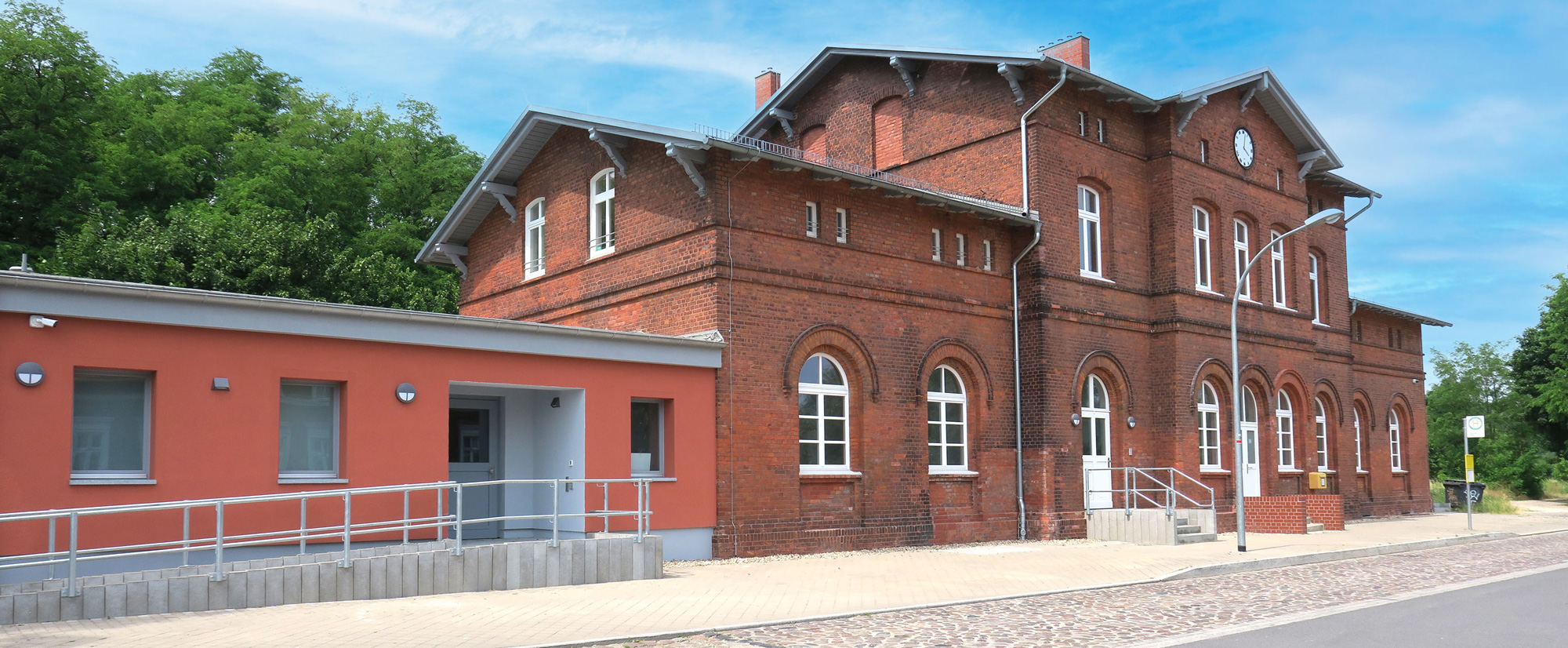
  • Seelow (Mark) railway station building

    Seelow (Mark) railway station building

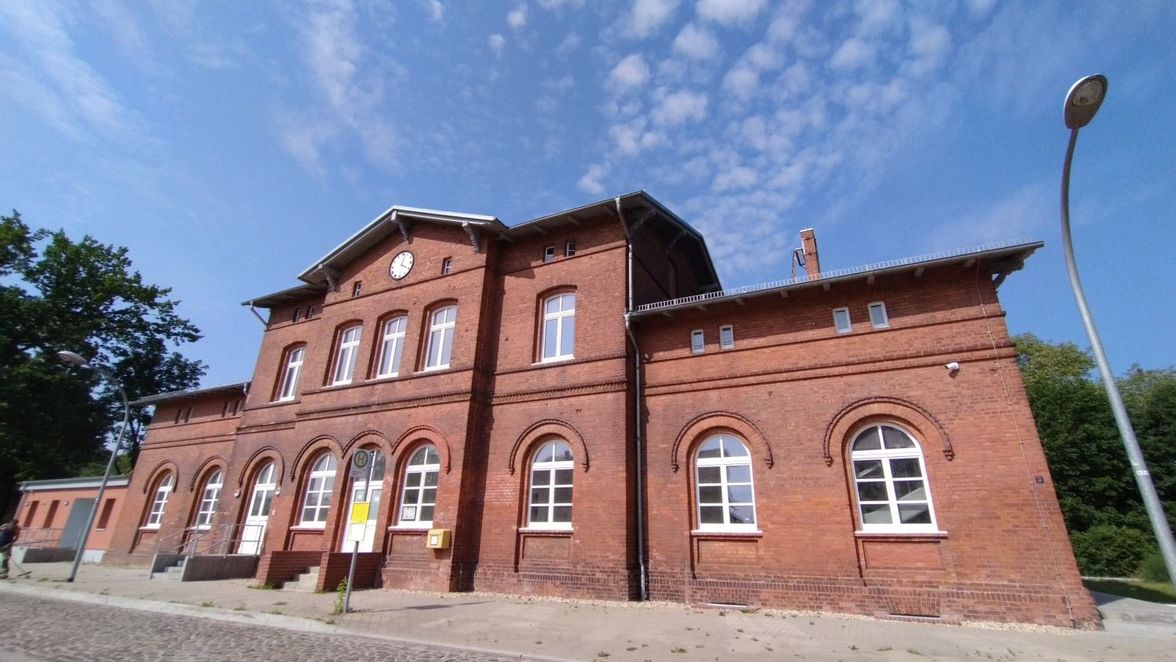
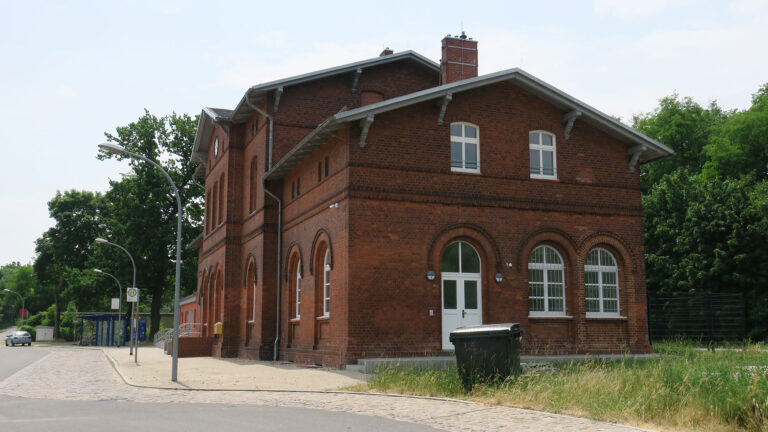
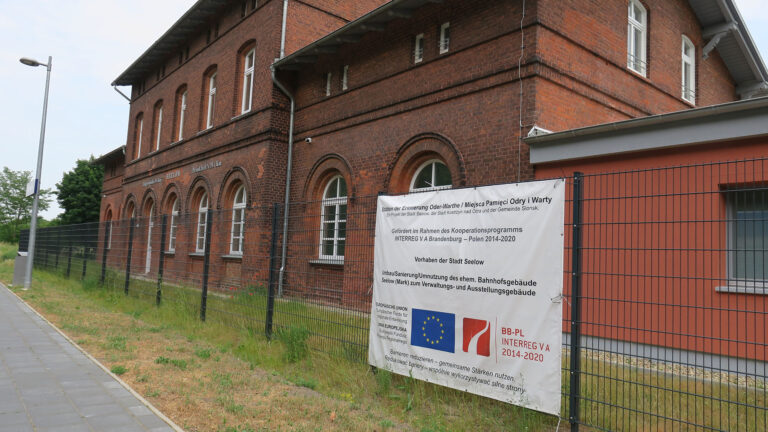
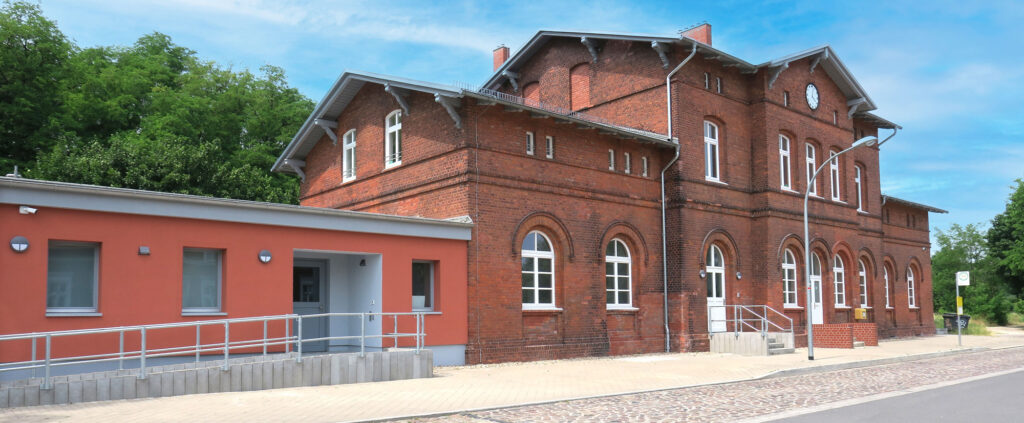
    The former Seelow (Mark) railway station building is a representative functional building from the 19th century in typical railway architecture. The reception building from the German Empire has permanently lost its function, although the station on the Frankfurt (Oder) – Eberswalde line is still in operation. The metropolis of Berlin and regional memorial sites can be reached by rail. The site also serves as a stop for regional bus services, and cycling and hiking trails (E 11) pass directly by the station.

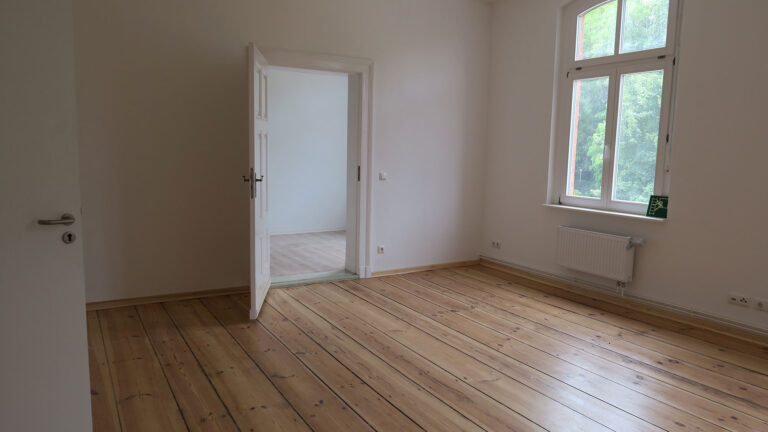
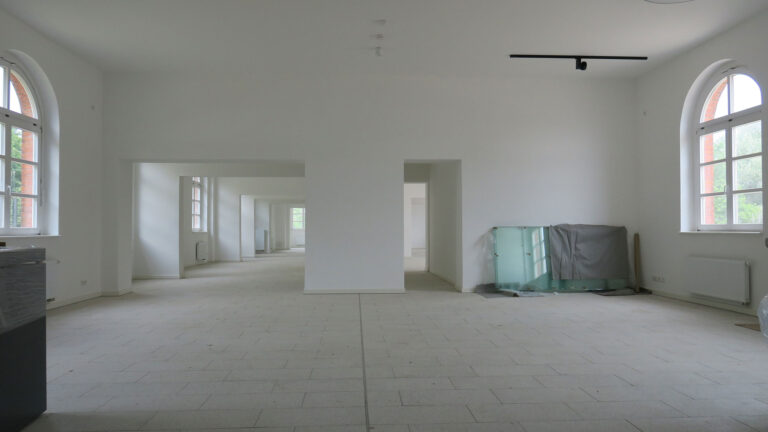
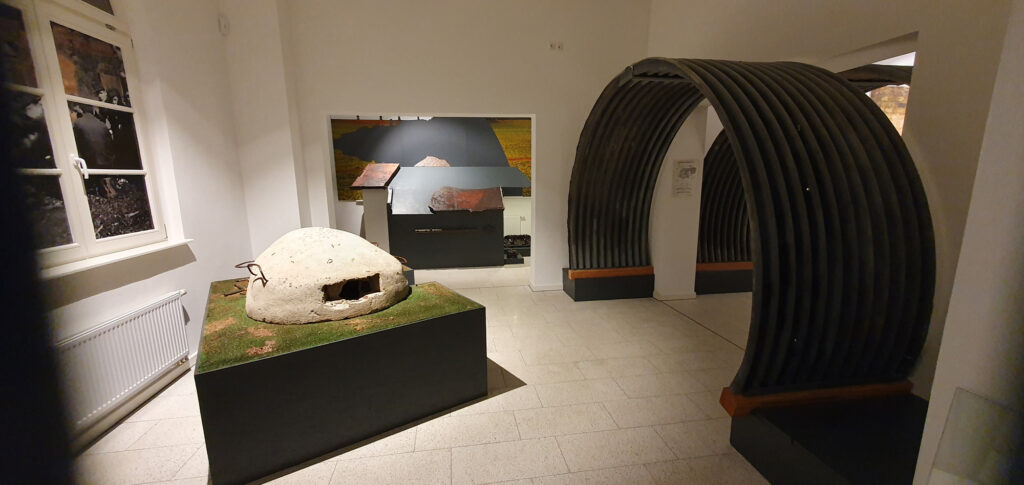
    As part of the funding project, the building was extensively renovated and converted into a history workshop with a documentation centre. On 200 barrier-free square metres on the ground floor, a modern museum-like place of learning and experience for recent regional history has been created, corresponding with the "Seelower Höhen" memorial site 300 metres away. A project flat and office and archive rooms are located on the upper floor.

    The organisation responsible for the content of the new memorial site is the Geschichts- und Heimatverein Gusow-Platkow e.V. (Gusow-Platkow History and Local History Association). The exhibition concept deals with the decisive epoch of the pre-war, war and post-war years between 1930 and 1960:

    The city of Seelow pursued the following primary objectives with the project approach:

    • Establishment of a history workshop focusing on the unique history of today's border region since 1930.
    • Thematic and spatial addition to the museum exhibition at the Seelow Heights Memorial and expansion of its sphere of influence
    • Establishment of a permanent exhibition and special themed exhibitions
    • Establishment of a documentation centre for further research and presentation of this period of history
    • Establishment of an office for network management for the cross-border tourism cluster ‘Remembrance connects’
    • Networking with other places of remembrance as a tourist brand and overall package for the Oder-Warta region, in particular with the communication centre in Kostrzyn nad Odra and the centre for historical education in Słońsk.
    • Sustainable change of use for a historically significant building

    In 2023, the Seelow History Station Museum (Mark) was officially opened: www.geschichtsstation-seelow.de

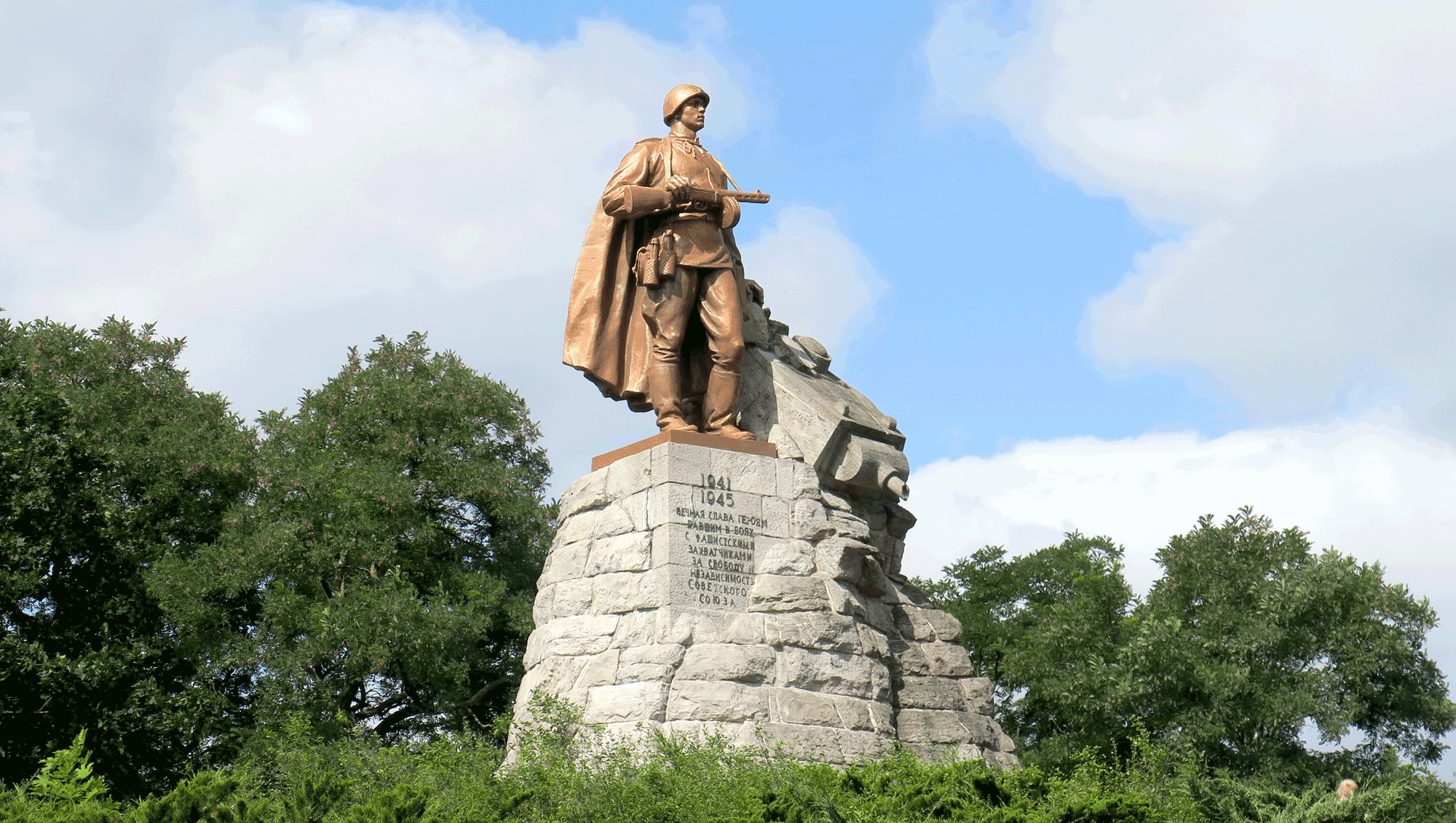
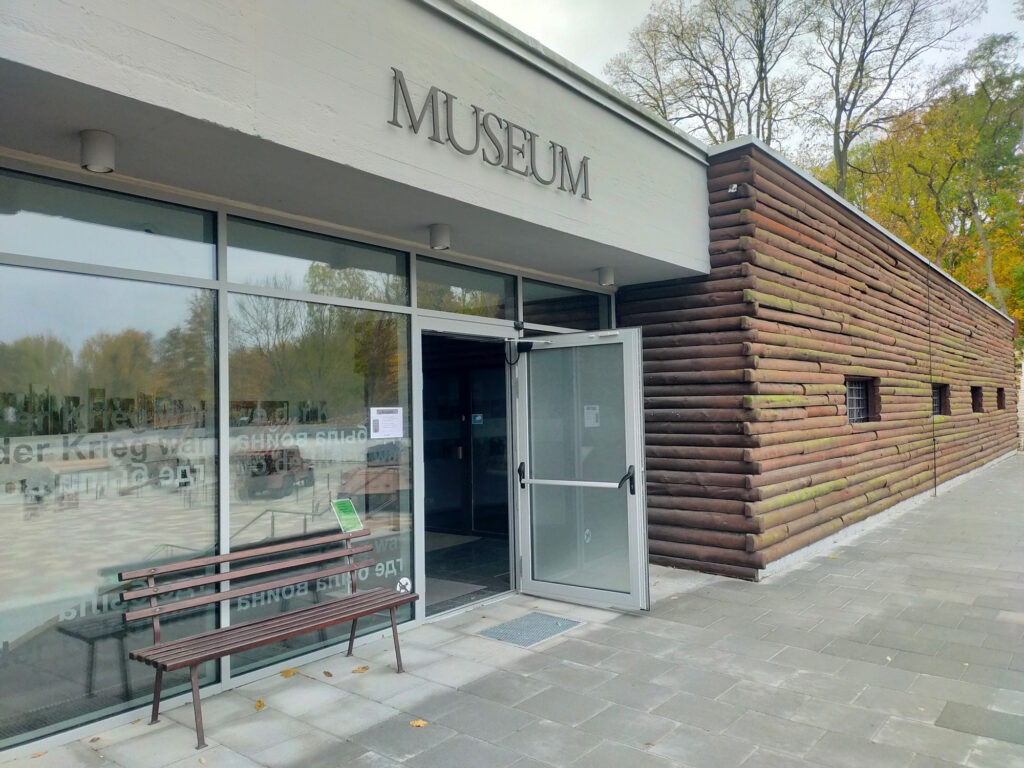
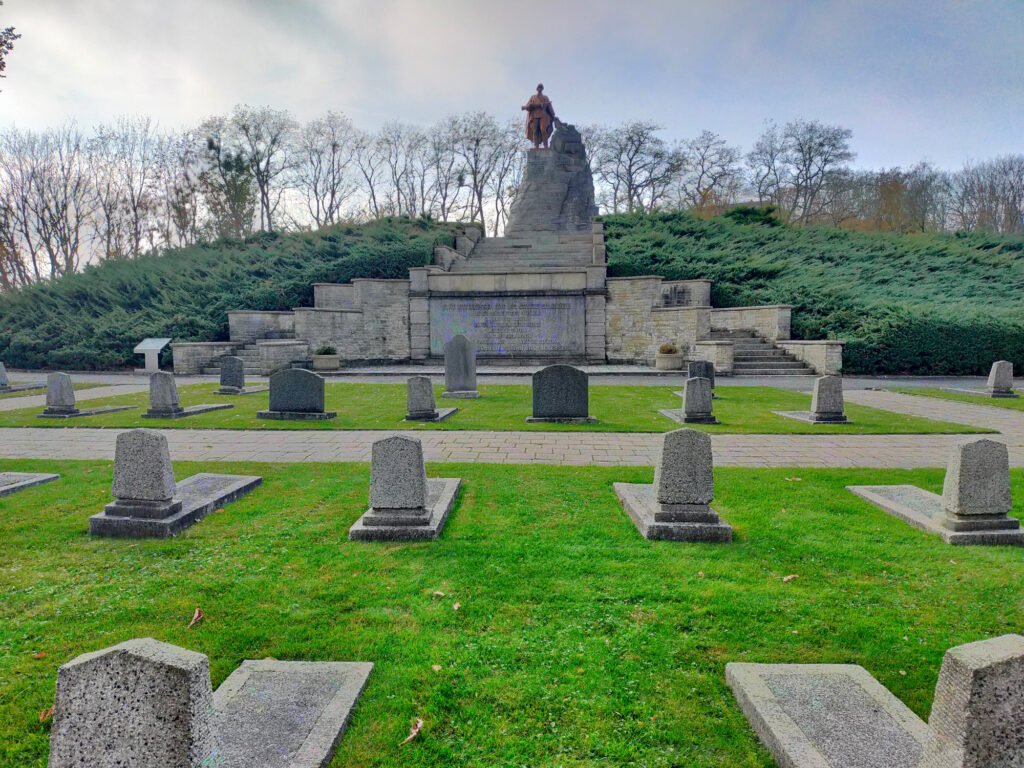
    Not far from the station is the Seelow Heights Memorial. The (victory) memorial to the Soviet soldier, including the war graves of his brothers in arms at his feet, provides a limited perspective for the memorial, which also contains a small museum and an exhibition of military equipment. This internationally significant site is to be expanded to include a regional perspective with the ‘History Station’ in the immediate vicinity, serving as an important addition to the ‘global view’ offered by the Seelow Heights Memorial.

  • MUSEUM HISTORY STATION SEELOW (MARK)

    MUSEUM HISTORY STATION SEELOW (MARK)

    The region. The events. The people.

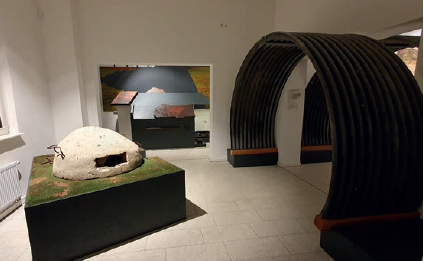
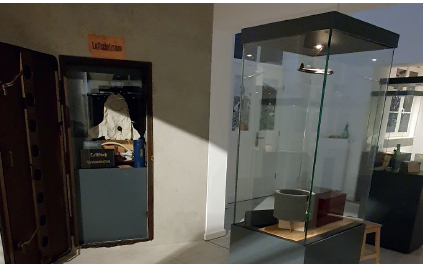
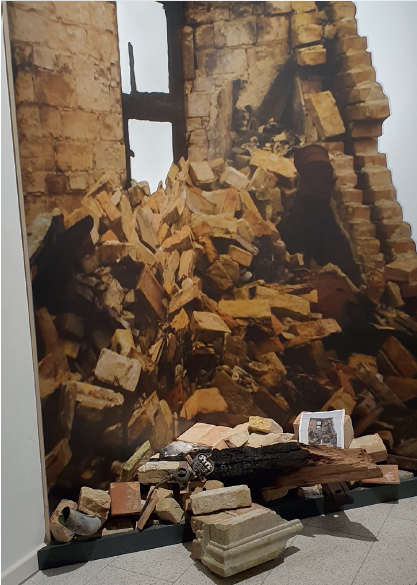
    The Seelow (Mark) History Station uses authentic exhibits and biographical details to document the transformation of the region over the course of a generation, offering a vivid insight into its eventful history.

    The end of the Weimar Republic in 1933 marked the beginning of the National Socialist dictatorship. The National Socialists exerted increasing influence on public life. The persecution of dissidents, the suppression of political opponents and the integration of young people into Nazi structures characterised the image of the region. The armament and forced labour in the region increased more and more from the mid-1930s. From 1939, with the outbreak of the Second World War, the image of the region changed dramatically. Accompanied by forced and concentration camp labour, regional production was converted to war-related products, and military trains, deportation and prisoner of war transports crossed the country in both directions.

    On the way to Berlin, the Red Army brought the war with full force to the Oder-Warthe region. The Battle of the Seelow Heights, one of the last major battles of the war, raged around Seelow and was a decisive moment on the road to liberation from Nazi rule. The end of the Second World War marked further dramatic changes for the region as part of the new Soviet occupation zone. The westward shift of Poland to the Oder-Neisse border led to the expulsion and forced migration of millions of people, creating a new physical national border and a language barrier. Political and social structures had to be reorganised. The resulting loss of culture continues to have an impact to this day.

    The reconstruction of the destroyed towns and villages and the implementation of the land reform, in which large estates were expropriated and distributed among the farmers, permanently changed the economic structure of the region. The founding of the German Democratic Republic as a socialist state in 1949 brought further changes. Agricultural production co-operatives (LPG) were founded, which shaped the structure of the rural economy. The construction of the Berlin Wall in 1961 was an important symbol of the division of Germany and Europe.

    Even though political life in the GDR was determined by the socialist order, the historical traces remained visible in the region - from the destruction of the war to political repression. Today, the Oder-Warthe region is a place of remembrance, dialogue and change. As a multi-perspective landscape of remembrance, it brings the dramatic events of the century to life and tells of the difficult path from destruction, division, expulsion and reconstruction to a new beginning after the end of the Cold War.

    The story of the museum as an audio contribution (Language: German)

    (Language: English)

    (Language: Polish)


    History trail war events 1945

  • SEELOW HEIGHTS MEMORIAL AND MUSEUM

    SEELOW HEIGHTS MEMORIAL AND MUSEUM

    Where the war was.

    The Battle of the Seelow Heights was one of the last and largest battles of the Second World War on German soil. It took place from 16 to 19 April 1945 and marked the beginning of the Soviet attack on the German capital.

    By mid-April 1945, the Red Army on the Oder had completed its preparations for the general attack on Berlin.
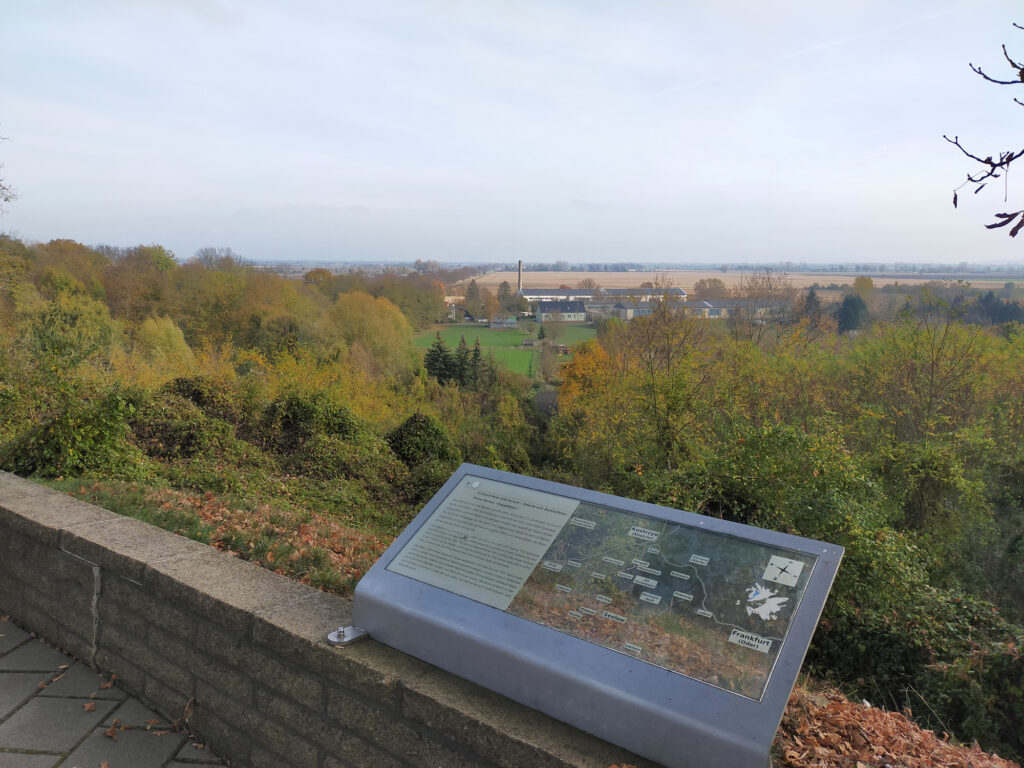
    The damp and wet lowlands of the Oderbruch and the Seelow Heights, which rose up to 70 metres behind it, were the last major natural barriers before Berlin. Supreme Commander Zhukov planned a massive attack to break through the German defences there. The German leadership hoped that a successful defence would split the anti-Hitler coalition. The Soviet side aimed to defeat the Wehrmacht once and for all and end the war. The battle began with a massive barrage of Soviet artillery. It was one of the most intense bombardments of the war, although some of it rained down on positions that had been evacuated according to plan. While the night was still foggy, the Soviet ground troops opened the main attack and crashed into the deeply echeloned German positional system. On the second day of fighting, the Red Army succeeded in breaking through the positions on the Seelow Heights on both sides of the Seelow base and, on the fourth day, the third and final defence strip.

    On 20 April, their combat units reached the outskirts of Berlin. The Soviet operational plan significantly shortened the subsequent battle for Berlin: at the same time as the breakthrough at the Seelow Heights, Soviet troops advancing from the south-east overflew the enemy flooding back from the Oder line. This prevented them from retreating to the Berlin area and reorganising in an orderly fashion. The Wehrmacht surrendered on 8 May. The war in Europe came to an end. Unable to accept the hopelessness of continued fighting, the Battle of the Seelow Heights illustrates the willingness of the Nazi state to throw all tangible human reserves against a vastly superior enemy in order to survive. At the same time, this raises the question of what kept the combatants on both sides willing to fight. Even today, combat equipment and human remains are still being recovered on site.

    For history buffs, the region thus offers a moving insight into the final days of the Second World War. In the memorial, visitors can experience a permanent exhibition with exhibits, maps and recorded eyewitness conversations that illustrate the dramatic course of the fighting. The open-air site, which is always accessible, includes tank and gun emplacements as well as a Soviet war cemetery with a representative memorial. Guided tours and information boards offer in-depth insights into the historical events and the significance of the site.

    The history of the Battle of the Seelow Heights as an audio report (Language: German)

    (Language: English)

    (Language: Polish)


    History trail war events 1945

en_GB