Project „Kulturland Spuren Lebus“
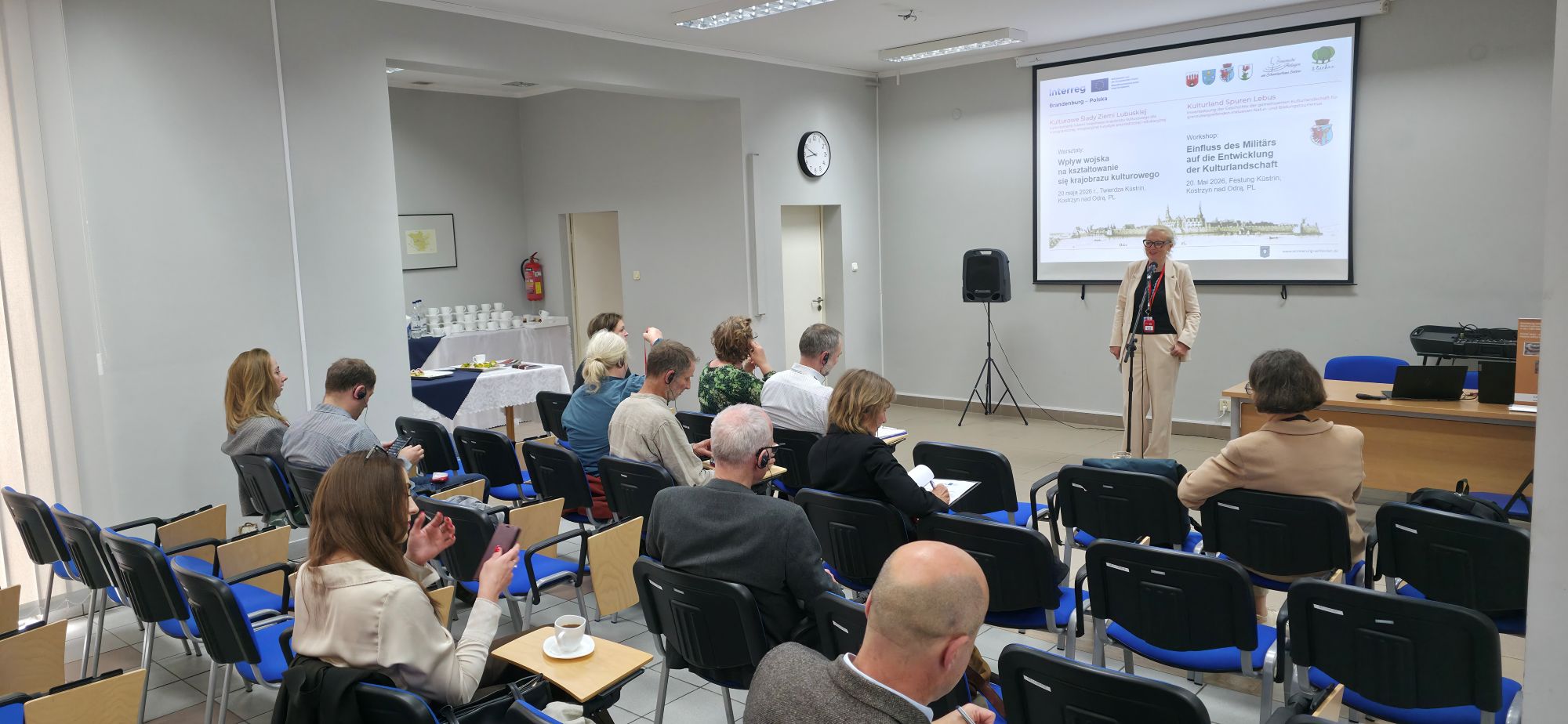
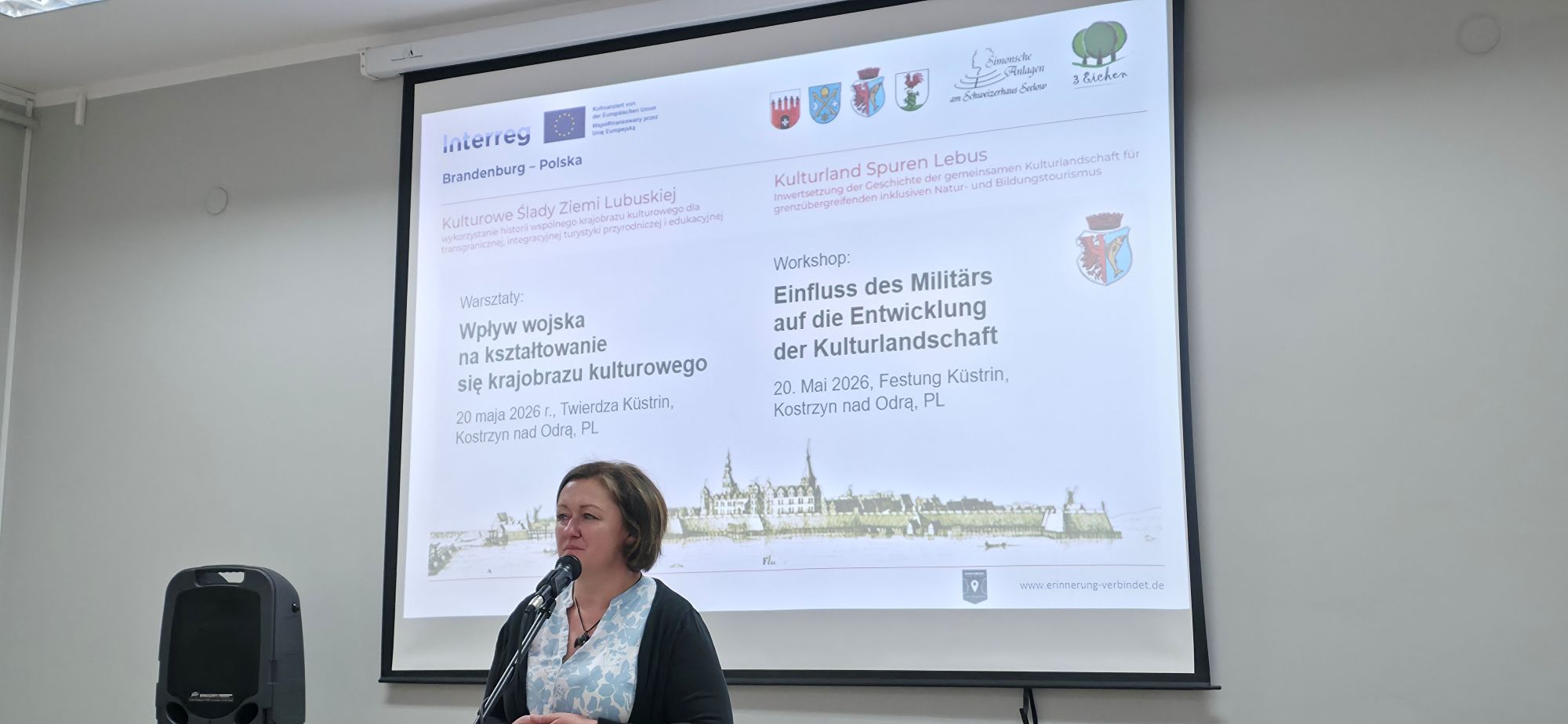
A.M. 20th May 2026 German and Polish professionals, local government representatives and experts arrived at the Fortress Museum in Küstrin Fortress (Kostrzyn nad Odrą) together. The German-Polish expert workshop was dedicated to the topic „Shaping of the cultural landscape for military purposes“ or rather the Influence of the military on the development of the cultural landscape. The event took place as part of the EU project „Cultural Landscape Traces of Lebus / Cultural Traces of the Lubusz Region“ (Interreg VI A Brandenburg–Poland 2021–2027) took place.
The objectives: Enhancement of the fortress heritage for cross-border tourism
The central objective of the workshop was to analyse the historical influence of the military on the creation and transformation of the shared cultural landscape using the specific example of Küstrin Fortress. At the same time, the symposium served to develop strategies for the Adaptive reuse and sustainable utilisation of former fortifications to develop cross-border, inclusive nature and educational tourism and to deepen professional exchange between Brandenburg and the Lubusz Voivodeship.
Expert articles and perspectives
The lectures in the restored casemates of the Philipp Bastion illuminated the fortress heritage from European, regional and architectural perspectives:
- European framework & project context: Following the welcome by the city of Kostrzyn nad Odrą and the museum director Julianna Sójkowska-Socha, Dirk Röder (Słońsk municipality) gave an overview of the overall project. He also presented the work of the network FORTE CULTURA e.V. vor, which manages the European Route of Fortified Monuments with currently 81 sites in 17 countries, and explained concepts for transforming military monuments into tourist and educational sites.
- Influence of the military on the development of the cultural landscape using the example of Küstrin FortressDirk Röder outlined what influences the military could have had on the development of the cultural landscape – particularly in the areas of fortress construction (Raw materials for the construction, maintenance and expansion of Küstrin Fortress, including military equipment), Food (long-standing supply of troops and service personnel) and Equipment (Military equipment for stationed troops and as an operational reserve). He raised the questions: What was the catchment area of Küstrin Fortress for many centuries? Which resources were utilised from the immediate surroundings or imported from further afield? Which „traces“ of this are still visible today and can be made tangible?
- History of Küstrin Fortress: Julianna Sójkowska-Socha traced the development of the fortress from the 15th to the 20th century. She highlighted key stages – including the construction of the modern bastion fortification based on the Italian model under the engineer Francesco Chiaramella from 1559 onwards, as well as the strategic role of the fortress in the Second World War.
- Municipal revitalisation: Agnieszka Żurawska-Tatała from the Kostrzyn nad Odrą city administration presented concrete development and revitalisation projects for the city. She showed how historical bastions are being repurposed for cultural purposes and integrated as an identity-building element into the local development strategy.
- Fortification, rayon zones & resource management: The fortress expert Marcin Wichrowski explained the structural evolution from the first earth-and-timber fortifications through French modernisations in the 17th and 18th centuries (e.g. hornwork, ravelins, contre-garde) to the spatial requirements. Around the fortress, so-called easement areas established, the use and development of which were subject to strict military regulations.
Practical part and overall result
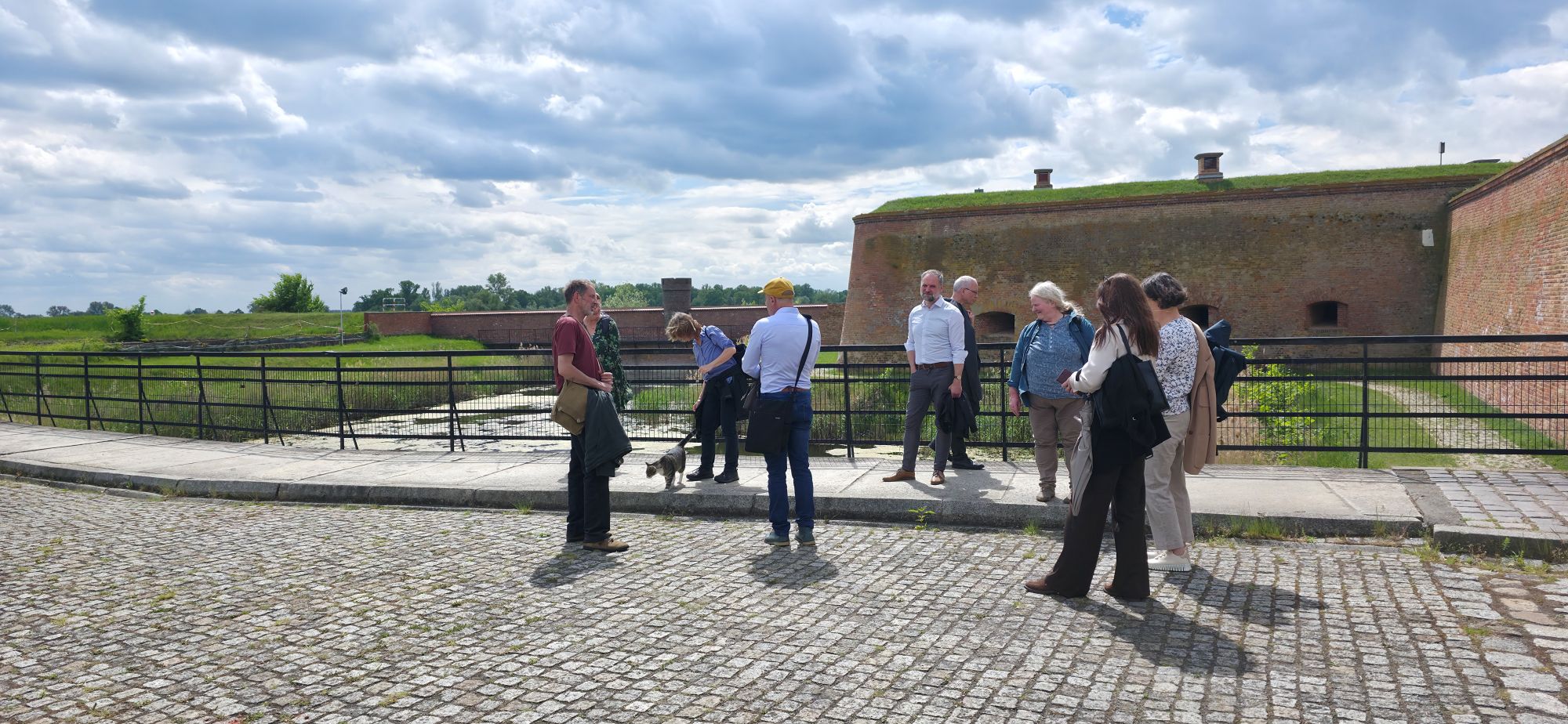
At the end of the event, the participants explored the preserved fortress structures, bastions and casemates of Küstrin Fortress during a joint tour.
The workshop combined theoretical insights of military architecture and spatial planning with practical concepts of heritage conservation and regional development. The knowledge developed flows directly into the design of the cross-border educational and leisure route „Cultural Landscape Spuren Lebus“ one that connects historical sites on both sides of the Oder and Warta.


Leave a Reply